Reaction equation
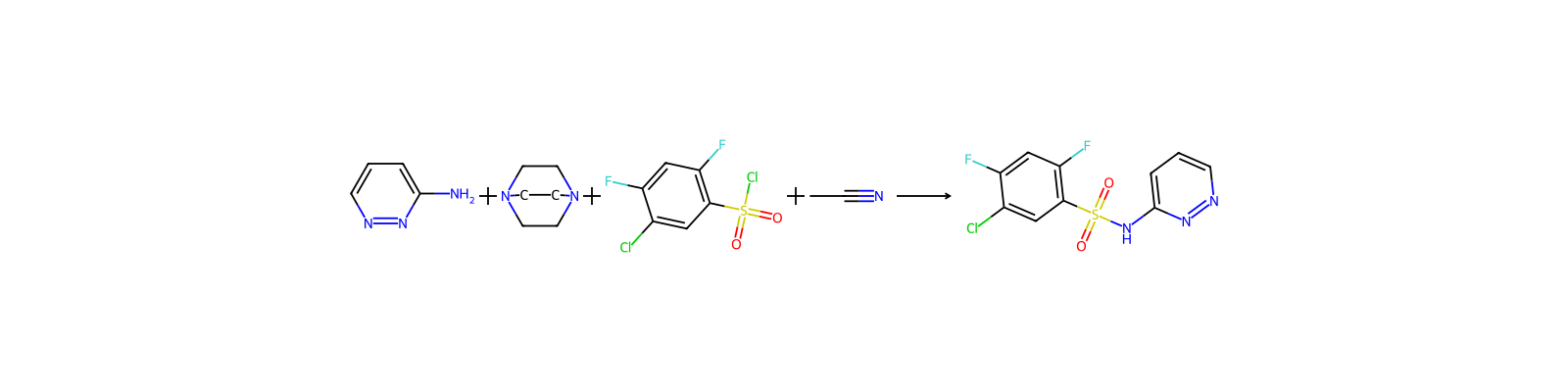
[N:1]1[CH:6]=[CH:5][CH:4]=[C:3]([NH2:7])[N:2]=1.C1N2CCN(CC2)C1.[Cl:16][C:17]1[C:18]([F:28])=[CH:19][C:20]([F:27])=[C:21]([S:23](Cl)(=[O:25])=[O:24])[CH:22]=1.C(#N)C>>[Cl:16][C:17]1[C:18]([F:28])=[CH:19][C:20]([F:27])=[C:21]([S:23]([NH:7][C:3]2[N:2]=[N:1][CH:6]=[CH:5][CH:4]=2)(=[O:25])=[O:24])[CH:22]=1Participants
5



Procedure
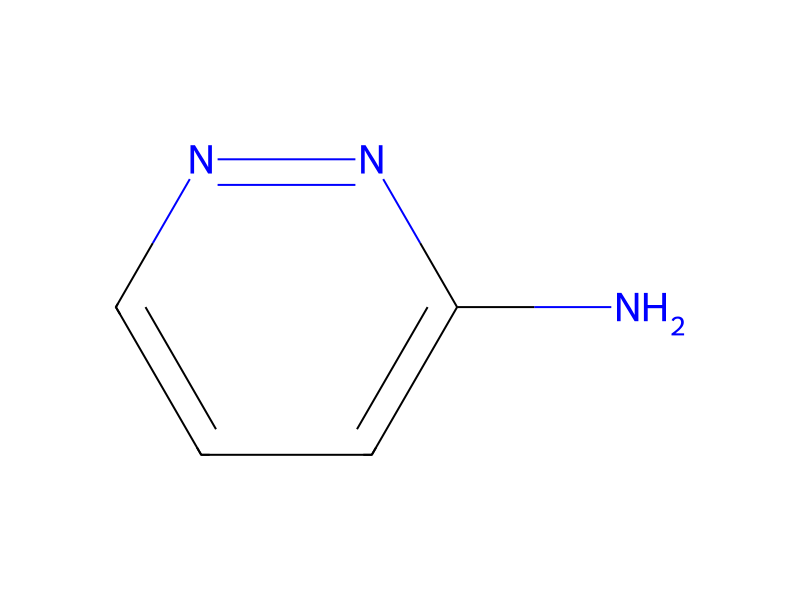
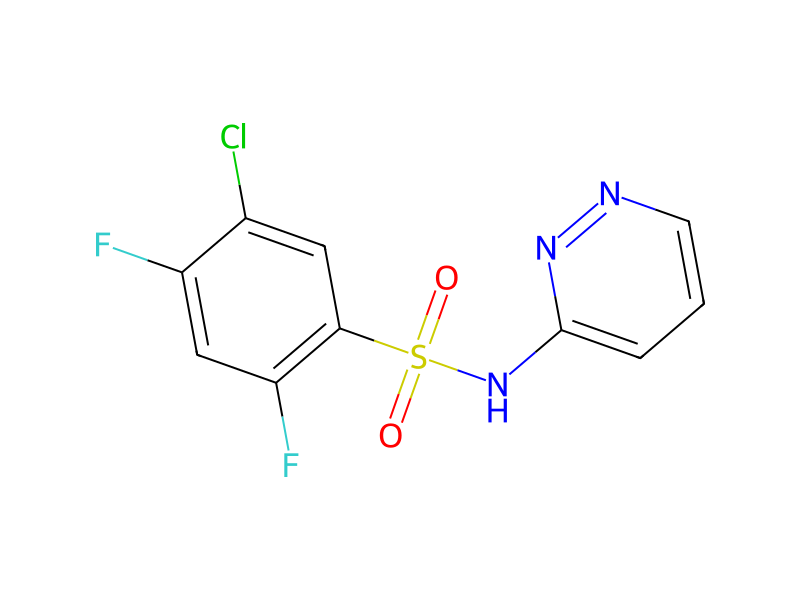
Pyridazin-3-amine (1.00 g, 10.5 mmol) and triethylenediamine (1.18 g, 10.5 mmol) was added concurrently to a solution of 5-chloro-2,4-difluorobenzenesulfonyl chloride (2.60 g, 10.5 mmol) in acetonitrile (50 mL, 1000 mmol). The reaction mixture was stirred for 18 h then concentrated. The residue was dissolved in ethyl acetate (30 mL), washed with water, brine, dried over sodium sulfate and concentrated. The residue was purified on automated silica gel chromatography (chloroform to 50% of 10% methanol in chloroform) to give 800 mg of the desired product as a yellow solid.
Workup
- concentrationthen concentrated
- dissolutionThe residue was dissolved in ethyl acetate (30 mL)
- washwashed with water, brine
- dry with materialdried over sodium sulfate
- concentrationconcentrated
- customThe residue was purified on automated silica gel chromatography (chloroform to 50% of 10% methanol in chloroform)
Sources & evidence
- ORD record
- ord-399920cb9fc04d8385b6711978db577e
- Source dataset
- uspto-grants-2014_12
- Patent number
- US08907101B2
Linked notes
Loading…