4-Cyanophenol → 4-(2,4-Dicyanophenoxy) benzonitrile
HRID 1413447
Reaction equation

[Na].[OH:2][C:3]1[CH:10]=[CH:9][C:6]([C:7]#[N:8])=[CH:5][CH:4]=1.[C:11]([C:13]1[CH:18]=[C:17]([C:19]#[N:20])[CH:16]=[CH:15][C:14]=1[N+]([O-])=O)#[N:12]>CS(C)=O>[C:11]([C:13]1[CH:18]=[C:17]([C:19]#[N:20])[CH:16]=[CH:15][C:14]=1[O:2][C:3]1[CH:10]=[CH:9][C:6]([C:7]#[N:8])=[CH:5][CH:4]=1)#[N:12]Participants
5
Reactant 3
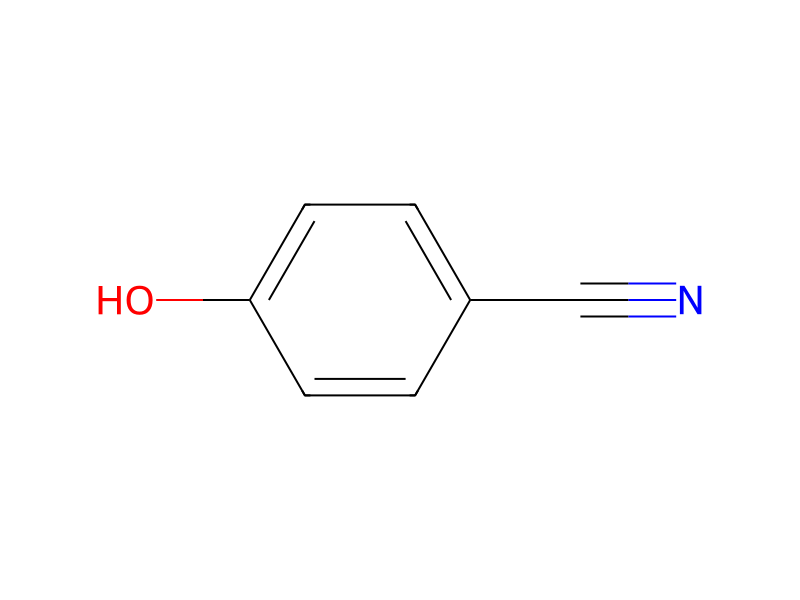


Product 1

Reagents, catalysts & solvents 1

Procedure
The sodium salt of p-hydroxybenzonitrile (1 ml) was heated with 2,4-dicyanonitrobenzene (1 mole) in dry dimethyl sulphoxide for 18 hours at 105° to form 4-(2,4-dicyanophenoxy) benzonitrile m.p. 222°-223°, which was recovered by dilution with water, and purified by crystallisation from acetic acid. This compound was hydrolysed with 60 w/w aqueous sulphuric acid (25 pts.) mixed with glacial acetic acid (10 parts), refluxing the mixture for 24 hours; on cooling, diphenyl ether 2,4,4'-tricarboxylic acid separated. The tricarboxylic acid was cyclized either (a) by heating to 300° for 5 minutes, or (b) dissolving in concentrated sulphuric acid, heating at 100° for 3 hours and subsequently diluting with water. The solid resulting from (a) or from (b) was recrystallised from dimethyl formamide to give xanthone-2,7-dicarboxylic acid identical with that prepared by Methods (i) and (ii).