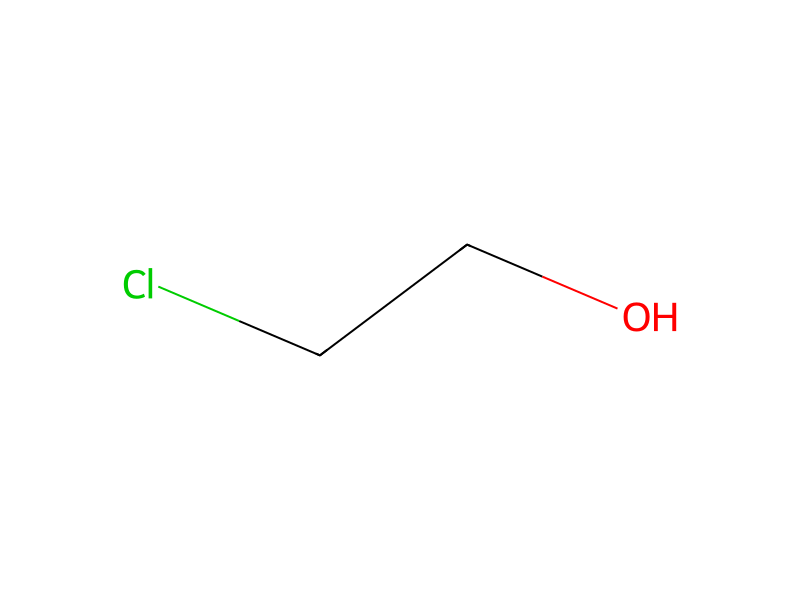
[OH:1][CH:2]1[C:10]2[C:5](=[CH:6][CH:7]=[CH:8][CH:9]=2)[C:4](=[O:11])[N:3]1[C:12]1[CH:17]=[CH:16][CH:15]=[CH:14][CH:13]=1.[CH2:18](O)[CH2:19][Cl:20].O>C1(C)C=CC=CC=1.C(OC(C)C)(C)C.C1(C)C=CC(S(O)(=O)=O)=CC=1>[Cl:20][CH2:19][CH2:18][O:11][CH:4]1[C:5]2[C:10](=[CH:9][CH:8]=[CH:7][CH:6]=2)[C:2](=[O:1])[N:3]1[C:12]1[CH:17]=[CH:16][CH:15]=[CH:14][CH:13]=13-(2-Chloroethoxy)-2-phenyl-isoindolin-1-one can be obtained by refluxing a solution of 3-hydroxy-2-phenyl-isoindolin-1-one (22.5 g.) and glycol monochlorohydrin (7.7 g.) in anhydrous toluene (200 cc.) in the presence of p-toluenesulphonic acid (0.5 g.) in a Dean-Stark apparatus. Heating is continued until all the water formed has been entrained azeotropically. The cooled reaction mixture is then washed with 2N sodium hydroxide solution (50 cc.) and then with water (2 × 50 cc.). The organic solution obtained is dried over sodium sulphate and concentrated to dryness under reduced pressure. The residue obtained is taken up in diisopropyl ether (50 cc.) and the insoluble product is filtered off and washed with diisopropyl ether (6 cc.). After drying, 3-(2-chloroethoxy)-2-phenyl-isoindolin-1-one (20.1 g.), which melts at 71°C., is obtained.
Loading…