HomeMCPWorkbenchSkills
HomeWorkbenchNotificationsMe
llms.txt · MCP GuidePrivacy Policy · Terms of Service · Supportv1.8.3
  1. Home
  2. /Reaction

Triethylamine → Diisopropyl Ether

HRID 1415957
Print

Reaction equation

HRID 1415957 reaction equation
C(OC=[C:5]([C:11](=[O:21])[C:12]1C=C(F)C(Cl)=[N:14][C:13]=1Cl)C(OCC)=O)C.Cl[C:23]1[N:36]=[C:35]([Cl:37])[C:34]([F:38])=[CH:33][C:24]=1[C:25]([CH2:27][C:28]([O:30][CH2:31][CH3:32])=[O:29])=[O:26].CS(O)(=O)=O.[CH2:44]([O:46][C:47]([NH:49][C:50]1[CH:55]=[CH:54][C:53]([F:56])=[C:52](N)[C:51]=1[F:58])=[O:48])[CH3:45].C(N([CH2:64][CH3:65])CC)C>CO>[CH:11]([O:21][CH:64]([CH3:65])[CH3:23])([CH3:12])[CH3:5].[Cl:37][C:35]1[N:36]=[C:23]2[C:24]([C:25](=[O:26])[C:27]([C:28]([O:30][CH2:31][CH3:32])=[O:29])=[CH:13][N:14]2[C:54]2[C:53]([F:56])=[CH:52][C:51]([F:58])=[C:50]([NH:49][C:47]([O:46][CH2:44][CH3:45])=[O:48])[CH:55]=2)=[CH:33][C:34]=1[F:38]

ParticipantsProcedureWorkupSources & evidenceReaction notes

Participants

7

Reactant 4

HCID 8471TriethylamineHCID 2733708Ethyl 2,6-dichloro-5-fluoro-beta-oxo-3-pyridinepropionateHCID 19604616N-ethoxycarbonyl-2,4-difluoro-m-phenylenediamine methansulfonateHCID 54342804Ethyl 2-(2,6-dichloro-5-fluoronicotinoyl)-3-ethoxyacrylate

Product 2

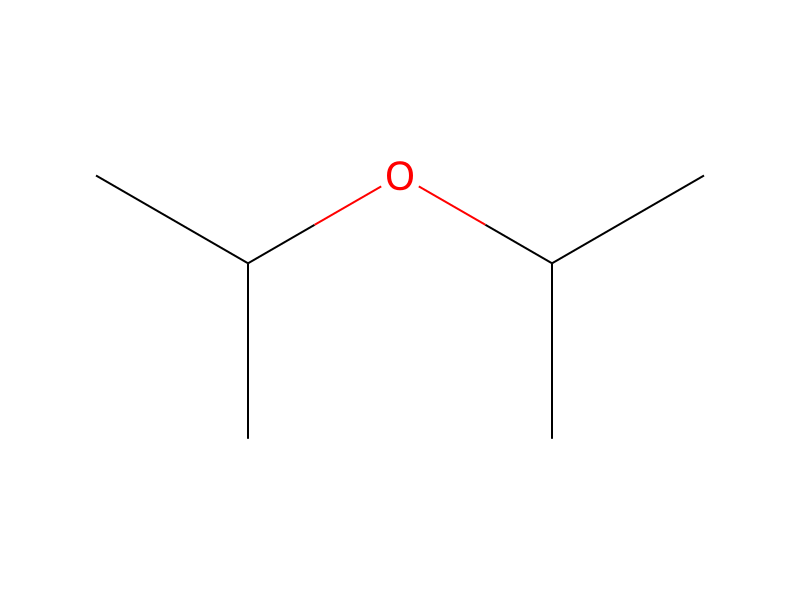
HCID 7914Diisopropyl Ether
HCID 54403397
Ethyl 7-chloro-1-(3-ethoxycarbonylamino-4,6-difluorophenyl)-6-fluoro-4-oxo-1,4-dihydro-1,8-naphthyridine-3-carboxylate

Reagents, catalysts & solvents 1

HCID 887MethanolSolvent2×

Procedure

Ethyl 3-ethoxy-2-(2',6'-dichloro-5'-fluoronicotinoyl)-acrylate prepared from 1.25 g of ethyl 2,6-dichloro-5-fluoronicotinoylacetate by a conventional process was dissolved in 10 ml of methanol. To the methanol solution, 1.30 g of N-ethoxycarbonyl-2,4-difluoro-m-phenylenediamine methansulfonate of Reference Example 8 was added together with 500 mg of triethylamine. The reaction solution was concentrated in vacua. To the residue were added 50 ml of chloroform and 50 ml of distilled water. After shaking, the mixture was separated into layers. The organic layer was dried over anhydrous magnesium sulfate and concentrated in vacua. To the residue were added 2.1 g of anhydrous potassium carbonate and 4 ml of N,N-dimethylformamide. The solution was heated and stirred at 90° C. for 15 minutes. The reaction solution was allowed to cool down and 50 ml of chloroform and 300 ml of distilled water were added, followed by separation. The chloroform layer was washed twice with 300 ml of distilled water, dried over anhydrous magnesium sulfate, and concentrated in vacua. The precipitate was dispersed in ethanol, collected by filtration and washed with ethanol and then diisopropyl ether to give 647 mg of the title compound.

Workup

  1. concentrationThe reaction solution was concentrated in vacua
  2. additionTo the residue were added 50 ml of chloroform and 50 ml of distilled water
  3. customthe mixture was separated into layers
  4. dry with materialThe organic layer was dried over anhydrous magnesium sulfate
  5. concentrationconcentrated in vacua
  6. additionTo the residue were added 2.1 g of anhydrous potassium carbonate and 4 ml of N,N-dimethylformamide
  7. temperatureThe solution was heated
  8. stirringstirred at 90° C. for 15 minutes
  9. temperatureto cool down
  10. addition50 ml of chloroform and 300 ml of distilled water were added
  11. customfollowed by separation
  12. washThe chloroform layer was washed twice with 300 ml of distilled water
  13. dry with materialdried over anhydrous magnesium sulfate
  14. concentrationconcentrated in vacua
  15. additionThe precipitate was dispersed in ethanol
  16. filtrationcollected by filtration
  17. washwashed with ethanol

Sources & evidence

ORD record
ord-57360f7c6fbf48b08dd1d741a7efcf65
Source dataset
uspto-grants-1999_06
DOI
10.6084/m9.figshare.5104873.v1
Patent number
US05910498

Reaction notes

On this pageParticipantsProcedureWorkupSources & evidenceReaction notes