Reaction equation

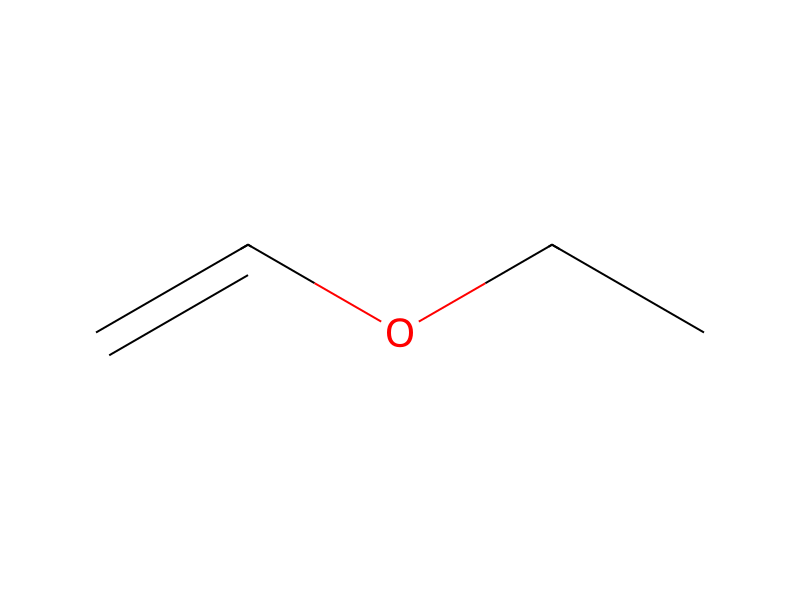
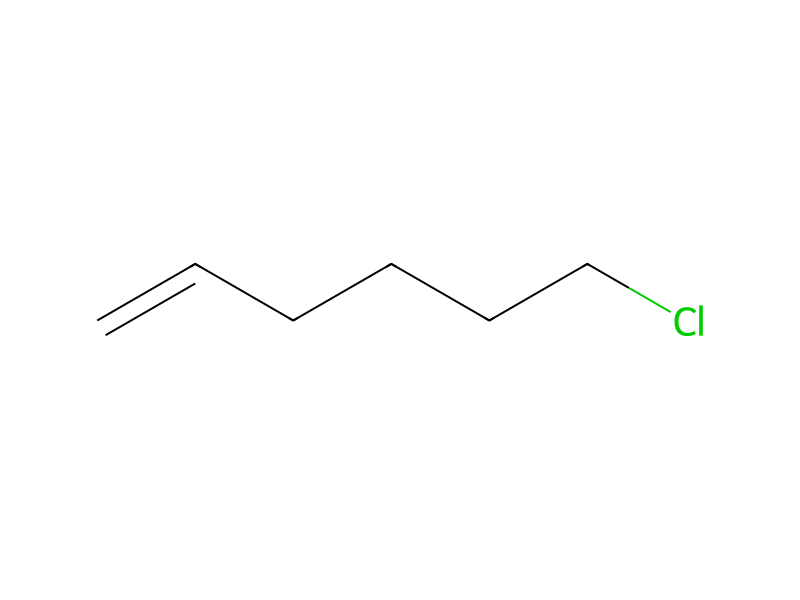
[Cl:1][CH2:2][CH2:3][CH2:4][CH2:5][CH:6]=[CH2:7].[CH2:8]=[CH:9][CH2:10][CH2:11]CC.ClC(Cl)C1C=CC=CC=1.C(OCC)=C.C(OCCCCC=CCCCC)(=O)C>>[Cl:1][CH2:2][CH2:3][CH2:4][CH2:5][CH:6]=[CH:7][CH2:8][CH2:9][CH2:10][CH3:11]Participants




Procedure
1-Chloro-5-decene was synthesized as follows: 200.1 g (1.61 mol 95% pure) of 1-chloro-5-hexene, 282 g (416 mL, 3.35 mol) of 1-hexene and 2.0 mL of α,α-dichlorotoluene (metal hydride inhibitor) were added to a dry 1-L 2-necked round-bottomed flask containing a reflux condenser and a stir bar. This mixture was sparged sub-surface with Argon. After 10 minutes 5.5 g (6.67 mol) of the metathesis catalyst of Example 1 was added. The mixture was placed in a 62° C. oil bath and stirred. Samples were taken periodically and analyzed by gas chromatography (GC) to determine the extent of conversion. After 3 hours, the reaction stopped and the catalyst was inactivated by the addition of 3 mL of ethyl vinyl ether. The catalyst was removed by filtering the mixture through 200 g of silica gel. The silica gel was rinsed with 500 mL of hexane and combined with the post-filtered reaction solution. 1-chloro-5-decene was purified by vacuum distillation to yield 105.9 g. This was converted to 5-decenyl acetate as follows.
Workup
- additioncontaining a reflux condenser and a stir bar
- customThis mixture was sparged sub-surface with Argon
- customwas placed in a 62° C.
- customThe catalyst was removed
- filtrationby filtering the mixture through 200 g of silica gel
- washThe silica gel was rinsed with 500 mL of hexane
- customcombined with the post-filtered reaction solution
- distillation1-chloro-5-decene was purified by vacuum distillation
- customto yield 105.9 g
Sources & evidence
- ORD record
- ord-ad7996a2fa9440df854d64fb38c85831
- Source dataset
- uspto-grants-1999_06
- Patent number
- US05916983
Linked notes
Loading…