HomeMCPWorkbenchSkills
HomeWorkbenchNotificationsMe
llms.txt · MCP GuidePrivacy Policy · Terms of Service · Supportv1.8.3
  1. Home
  2. /Reaction

Isobutylamine → 2,3-Dihydro-N-benzyl-1H-inden-1-amine

HRID 1421124
Print

Reaction equation

HRID 1421124 reaction equation
C[SiH](O)C.C[Si](C)(C)C.C[Si](O)(C)C.[CH2:15]([N:22]=[C:23]1[C:31]2[C:26](=[CH:27][CH:28]=[CH:29][CH:30]=2)[CH2:25][CH2:24]1)[C:16]1[CH:21]=[CH:20][CH:19]=[CH:18][CH:17]=1.C(N)C(C)C>C1([SiH3])C=CC=CC=1.N1CCCCC1.CO.C1COCC1>[CH2:15]([NH:22][CH:23]1[C:31]2[C:26](=[CH:27][CH:28]=[CH:29][CH:30]=2)[CH2:25][CH2:24]1)[C:16]1[CH:17]=[CH:18][CH:19]=[CH:20][CH:21]=1
ParticipantsProcedureWorkupSources & evidenceReaction notes

Participants

8

Reactant 3

HCID 6558IsobutylamineHCID 11085364N-Benzyl-1-indanimineHCID 16211393Methyl hydrogen polysiloxane

Product 1

HCID 101307242,3-Dihydro-N-benzyl-1H-inden-1-amineYield 101.3%

Reagents, catalysts & solvents 4

HCID 887MethanolCatalyst
HCID 8082
Piperidine
Catalyst
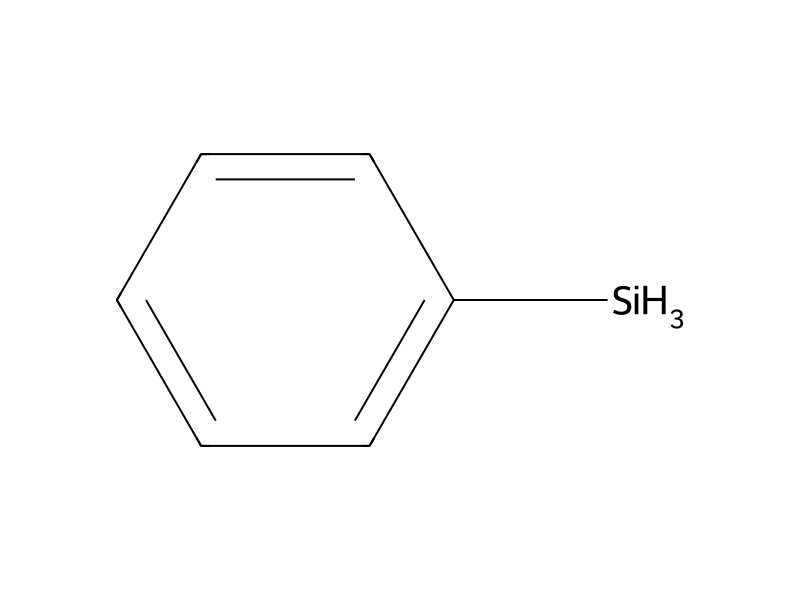
HCID 12752PhenylsilaneCatalyst
HCID 8028TetrahydrofuranSolvent2×

Procedure

Typical experimental procedure: A dry resealable Schlenk flask under argon was charged with (S,S-(EBTHI) TiF2 (9 mg, 0.025 mmol) and 1 mL of dry THF. The resulting yellow solution was heated to 60 C. and PhSiH3 (12 μL, 0.1 mmol), piperidine (9 μL, 0.1 mmol) and methanol (4 μL, 0.1 mmol) were added via syringe. The mixture was stirred at 60 C. for 15-20 min, resulting in a color change from yellow to green. At this point, THF (1 mL) and PMHS (1.65 mL, 27 mmol) were added via syringe. The sealed Schlenk flask was then removed from the oil bath, cooled to room temperature, and brought into an argon filled glovebox. N-Benzyl-1-indanimine (0.64 g, 2.7 mmol) was added, and the reaction mixture was heated to 65 C. and the color of the reaction mixture changed to brown. To this solution, isobutylamine (0.6 mL, 6 mmol) was added during a period of 2.5 h (0.25 mL/h flow rate) using a syringe pump. When the amine addition was finished, the color of the reaction mixture had changed from brown to green, and analysis by GC showed complete consumption of the starting material. The reaction mixture was cooled to room temperature, removed from the glovebox, diluted with Et2O (30 mL) and stirred with 1 M HCI (15 mL) for 0.5 h (caution: vigorous bubbling). The aqueous layer was separated, made basic with 3 M NaOH and extracted with ether. The combined ether layers were dried (MgSO4) and concentrated in vacuo to afford 611 mg of (+)-N-benzylindan-1-amine (95% yield, 92% ee). Note: The amine promoter could be added portionwise, by syringe, in the case of more reactive substrates or when using a higher catalyst loading. For reactions using b 1 mol % catalyst, amine addition was performed in a hood under argon in a septum-capped Schlenk flask.

Workup

  1. temperatureThe resulting yellow solution was heated to 60 C
  2. customresulting in a color change from yellow to green
  3. customThe sealed Schlenk flask was then removed from the oil bath
  4. custombrought into an argon filled glovebox
  5. temperaturethe reaction mixture was heated to 65 C
  6. customconsumption of the starting material
  7. temperatureThe reaction mixture was cooled to room temperature
  8. customremoved from the glovebox
  9. additiondiluted with Et2O (30 mL)
  10. stirringstirred with 1 M HCI (15 mL) for 0.5 h
  11. custom(caution: vigorous bubbling)
  12. customThe aqueous layer was separated
  13. extractionextracted with ether
  14. dry with materialThe combined ether layers were dried (MgSO4)
  15. concentrationconcentrated in vacuo

Sources & evidence

ORD record
ord-7e51db4b922845b9ab38abaf3df5221b
Source dataset
uspto-grants-2000_06
DOI
10.6084/m9.figshare.5104873.v1
Patent number
US06072085

Reaction notes

On this pageParticipantsProcedureWorkupSources & evidenceReaction notes