HomeMCPWorkbenchSkills
HomeWorkbenchNotificationsMe
llms.txt · MCP GuidePrivacy Policy · Terms of Service · Supportv1.8.3
  1. Home
  2. /Reaction

Hydroquinone → Formaldehyde

HRID 1421559
Print

Reaction equation

HRID 1421559 reaction equation
[C:1]1(C=CC=C(O)C=1)[OH:2].[C:9]1([CH:16]=[CH:15][C:13](O)=[CH:12][CH:11]=1)[OH:10].OC1C=CC(C(C2C=CC(O)=CC=2)(C)C)=CC=1.BrC1C=C(C(C2C=C(Br)C(O)=C(Br)C=2)(C)C)C=C(Br)C=1O.C1C(O)=CC=C(S(C2C=CC(O)=CC=2)(=O)=O)C=1>>[CH2:1]=[O:2].[C:9]1([OH:10])[CH:16]=[CH:15][CH:13]=[CH:12][CH:11]=1

ParticipantsProcedureSources & evidenceReaction notes

Participants

7

Reactant 5

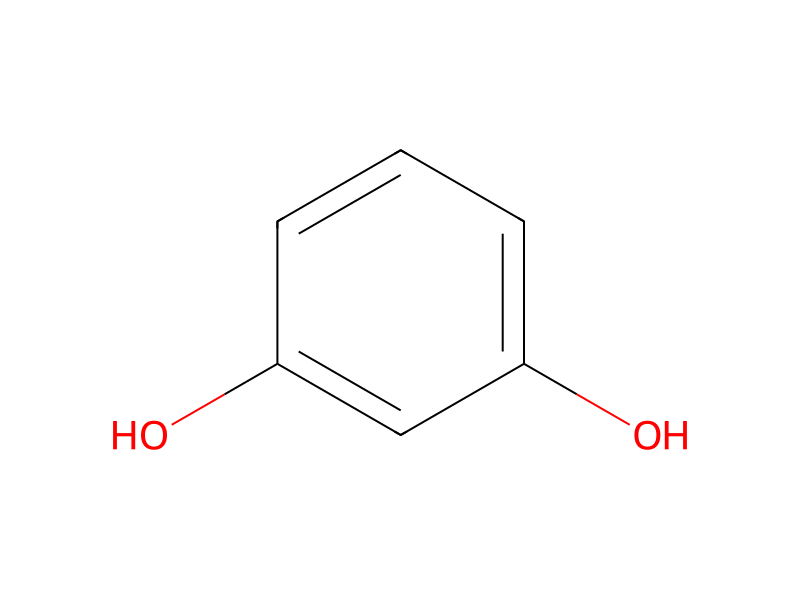
HCID 785HydroquinoneHCID 5054ResorcinolHCID 6618Tetrabromobisphenol AHCID 6623Bisphenol AHCID 6626Bisphenol S

Product 2

HCID 712FormaldehydeHCID 996Phenol

Procedure

The epoxide compounds may also be derived from mononuclear phenols, for example from resorcinol or hydroquinone; or they are based on polynuclear phenols, for example on bis(4-hydroxyphenyl)methane, 2,2-bis(4-hydroxyphenyl)propane, 2,2-bis(3,5dibromo-4-hydroxyphenyl)propane or 4,4'-dihydroxydiphenylsulfone, or on condensates of phenols with formaldehyde, such as phenol novolaks, which condensates are obtained under acidic conditions.

Sources & evidence

ORD record
ord-dccf3477efc7462983dfe938fe054953
Source dataset
uspto-grants-2000_06
DOI
10.6084/m9.figshare.5104873.v1
Patent number
US06077891

Reaction notes

On this pageParticipantsProcedureSources & evidenceReaction notes
