HomeMCPWorkbenchSkills
HomeWorkbenchNotificationsMe
llms.txt · MCP GuidePrivacy Policy · Terms of Service · Supportv1.8.3
  1. Home
  2. /Reaction

Trifluoromethanesulfonic anhydride → 5-[5-(5-chloro-2-oxo-2H-[1,2']bipyridinyl-5'-ylmethyl)-imidazol-1-ylmethyl]-furan-2-carbonitrile

HRID 1421711
Print

Reaction equation

HRID 1421711 reaction equation
O[CH2:2][C:3]1[O:7][C:6]([C:8]#[N:9])=[CH:5][CH:4]=1.[Cl:10][C:11]1[CH:12]=[CH:13][C:14](=[O:48])[N:15]([C:17]2[CH:22]=[CH:21][C:20]([CH2:23][C:24]3[N:25]=[CH:26][N:27](C(C4C=CC=CC=4)(C4C=CC=CC=4)C4C=CC=CC=4)[CH:28]=3)=[CH:19][N:18]=2)[CH:16]=1.C(N(C(C)C)CC)(C)C.FC(F)(F)S(OS(C(F)(F)F)(=O)=O)(=O)=O>ClCCl>[Cl:10][C:11]1[CH:12]=[CH:13][C:14](=[O:48])[N:15]([C:17]2[CH:22]=[CH:21][C:20]([CH2:23][C:24]3[N:25]([CH2:2][C:3]4[O:7][C:6]([C:8]#[N:9])=[CH:5][CH:4]=4)[CH:26]=[N:27][CH:28]=3)=[CH:19][N:18]=2)[CH:16]=1
ParticipantsConditionsProcedureWorkupSources & evidenceReaction notes

Participants

6

Reactant 4

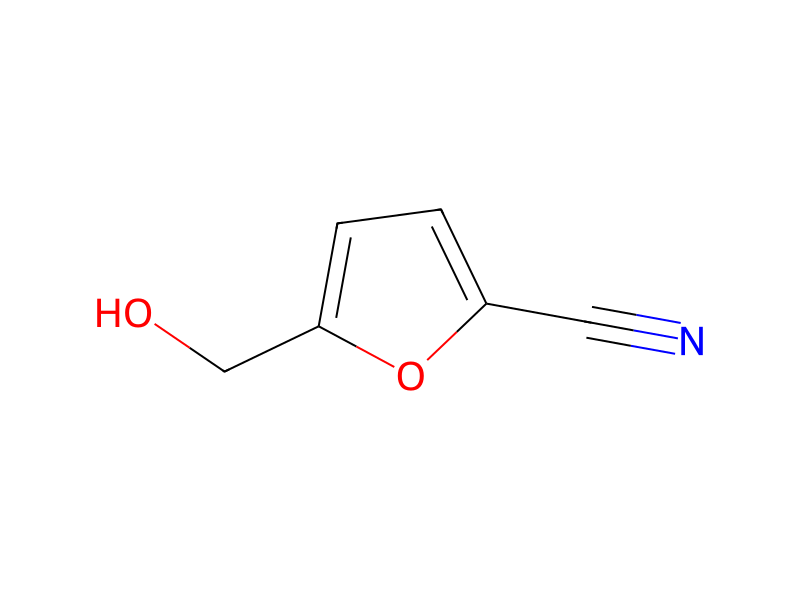
HCID 67749Trifluoromethanesulfonic anhydrideHCID 81531DiisopropylethylamineHCID 30214065-(Hydroxymethyl)furan-2-carbonitrileHCID 702869365-chloro-5'-(1-trityl-1H-imidazol-4-ylmethyl)-[1,2']bipyridinyl-2-one

Product 1

HCID 187797255-[5-(5-chloro-2-oxo-2H-[1,2']bipyridinyl-5'-ylmethyl)-imidazol-1-ylmethyl]-furan-2-carbonitrile

Reagents, catalysts & solvents 1

HCID 6344DichloromethaneSolvent

Conditions

Temperature
-78 °C

Procedure

To a solution of the alcohol from step 2 (0.017 g, 0.137 mmol), 5-chloro-5'-(1-triphenylmethyl-1H-imidazol-4-ylmethyl)-[1,2']bipyridinyl-2-one from Example 23, Step 5 (0.0758 g, 0.143 mmol) and diisopropylethylamine (0.047 mL, 1.49 mmol) in dichloromethane (1.3 mL) at -78° C. was added trifluoromethanesulfonic anhydride (0.023 mL, 0.136 mmol) and the mixture stirred at -78° C. for 1 hour. The mixture was allowed to warm to 0° C. and stirred for 2 hours. The solvent was evaporated in vacuo. The residue was dissolved in methanol (1 mL), heated at reflux for 2 hour, and the solvent evaporated in vacuo. The residue was partitioned between CH2Cl2 and sat. aq. NaHCO3 solution. The organic layer was dried, (Na2SO4) and the solvent evaporated in vacuo. The residue was chromatographed (Silica gel, 1:99 to 3:97 MeOH:CH2Cl2) to afford the title compound as a white solid.

Workup

  1. temperatureto warm to 0° C.
  2. stirringstirred for 2 hours
  3. customThe solvent was evaporated in vacuo
  4. dissolutionThe residue was dissolved in methanol (1 mL)
  5. temperatureheated
  6. temperatureat reflux for 2 hour
  7. customthe solvent evaporated in vacuo
  8. customThe residue was partitioned between CH2Cl2 and sat. aq. NaHCO3 solution
  9. customThe organic layer was dried
  10. custom(Na2SO4) and the solvent evaporated in vacuo
  11. customThe residue was chromatographed (Silica gel, 1:99 to 3:97 MeOH:CH2Cl2)

Sources & evidence

ORD record
ord-96b57237b0bc484cbda69d35c7b80716
Source dataset
uspto-grants-2000_06
DOI
10.6084/m9.figshare.5104873.v1
Patent number
US06077853

Reaction notes

On this pageParticipantsConditionsProcedureWorkupSources & evidenceReaction notes