HomeMCPWorkbenchSkills
HomeWorkbenchNotificationsMe
llms.txt · MCP GuidePrivacy Policy · Terms of Service · Supportv1.8.3
  1. Home
  2. /Reaction

Bromide ion → 4-(1-(4-(trifluoromethoxy)phenyl)-1H-1,2,4-triazol-3-yl)aniline

HRID 1424730
Print

Reaction equation

HRID 1424730 reaction equation
[F:1][C:2]([F:25])([F:24])[O:3][C:4]1[CH:9]=[CH:8][C:7]([N:10]2[CH:14]=[N:13][C:12]([C:15]3[CH:20]=[CH:19][C:18]([N+:21]([O-])=O)=[CH:17][CH:16]=3)=[N:11]2)=[CH:6][CH:5]=1.C1C(=O)N(Br)C(=O)C1.CSC.[N+](C1C=CC(C=NNC2C=CC(OC(F)(F)F)=CC=2)=CC=1)([O-])=O.[Br-].N1C=NN=N1.C(N(CC)CC)C>C(Cl)Cl.CCO>[F:25][C:2]([F:1])([F:24])[O:3][C:4]1[CH:5]=[CH:6][C:7]([N:10]2[CH:14]=[N:13][C:12]([C:15]3[CH:20]=[CH:19][C:18]([NH2:21])=[CH:17][CH:16]=3)=[N:11]2)=[CH:8][CH:9]=1
ParticipantsConditionsProcedureWorkupSources & evidenceReaction notes

Participants

10

Reactant 7

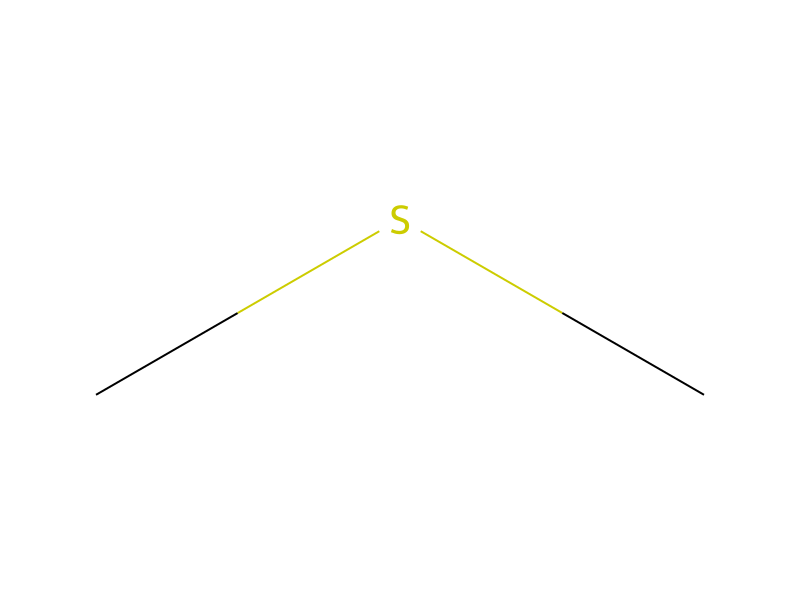
HCID 259Bromide ion2×HCID 1068Dimethyl SulfideHCID 8471TriethylamineHCID 67184N-bromobutanimideHCID 669688091-(4-Trifluoromethoxyphenyl)-3-(4-nitrophenyl)-1H-[1,2,4]triazoleHCID 67519187N-(4-nitrobenzylidene)-N'-(4-trifluoromethoxyphenyl)-hydrazine
HCID 178418441
HCID 178418441, compound

Product 1

HCID 578244904-(1-(4-(trifluoromethoxy)phenyl)-1H-1,2,4-triazol-3-yl)aniline

Reagents, catalysts & solvents 2

HCID 702EthanolSolventHCID 6344DichloromethaneSolvent3×

Conditions

Temperature
-20 °C

Procedure

1-(4-Trifluoromethoxyphenyl)-3-(4-nitrophenyl)-1H-[1,2,4]triazole. A solution of NBS (0.70 g, 3.9 mmol) in CH2Cl2 (25 mL) was stirred under nitrogen at 0° C. while dimethyl sulfide (0.40 g, 6.5 mmol) was added via syringe. The solution, which forms a white solid, was then cooled to −20° C., and N-(4-nitrobenzylidene)-N′-(4-trifluoromethoxyphenyl)-hydrazine (0.70 g, 2.15 mmol) in CH2Cl2 (10 mL) was added. The solution was allowed to warm to ambient temperature and stirred an additional 2 h. The resulting orange solution was then diluted with CH2Cl2 (25 mL) and washed with water and brine before drying and concentrating. The resulting orange solid hydrazonyl bromide (0.9 g) was then treated directly with tetrazole (154 mg, 2.2 mmol) and triethylamine (280 μL, 0.23 mmol) in absolute EtOH (5 mL). The resulting orange-brown solution was heated at reflux for 2 h. TLC showed that the initial bromide was first converted into two yellow intermediates, which were replaced by a single, colorless spot. The orange solution was then concentrated and purified by chromatography (2:1:2 hexanes/EtOAc/CH2Cl2), yielding the title compound (0.30 g) as a light yellow solid: mp 147° C.; 1H NMR (300 MHz, CDCl3) 8.68 (s, 1H), 8.40 (d, J=5 Hz, 2H), 8.35 (d, J=5 Hz, 2H), 7.85 (d, J=8 Hz, 2H), 7.42 (d, J=8 Hz, 2H); EIMS m/z 350 (M+, 100), 299 (57).

Workup

  1. additionwas added via syringe
  2. temperatureto warm to ambient temperature
  3. washwashed with water and brine
  4. custombefore drying
  5. concentrationconcentrating
  6. temperatureThe resulting orange-brown solution was heated
  7. temperatureat reflux for 2 h
  8. concentrationThe orange solution was then concentrated
  9. custompurified by chromatography (2:1:2 hexanes/EtOAc/CH2Cl2)

Sources & evidence

ORD record
ord-7182429a89814b36ab07543f09e32bab
Source dataset
uspto-grants-2015_01
DOI
10.6084/m9.figshare.5104873.v1
Patent number
US08927729B2

Reaction notes

On this pageParticipantsConditionsProcedureWorkupSources & evidenceReaction notes