HomeMCPSkillsWorkbenchOpenChem
HomeWorkbenchNotificationsMe
llms.txt · skill.md · MCP GuidePrivacy Policy · Terms of Service · Supportv1.8.5
  1. Home
  2. /Reaction

Acetic Acid → 4-{[4-(4-Chloropyridin-2-yl)-4-fluoropiperidin-1-yl]methyl}-8-fluoro-N-[(1S,2S)-2-hydroxycyclohexyl]quinoline-2-carboxamide

HRID 1430080
Print

Reaction equation

[F:1][C:2]1[CH:3]=[CH:4][CH:5]=[C:6]2[C:11]=1[N:10]=[C:9]([C:12]([NH:14][C@H:15]1[CH2:20][CH2:19][CH2:18][CH2:17][C@@H:16]1[OH:21])=[O:13])[CH:8]=[C:7]2[CH:22]=O.Cl.Cl.[Cl:26][C:27]1[CH:32]=[CH:31][N:30]=[C:29]([C:33]2([F:39])[CH2:38][CH2:37][NH:36][CH2:35][CH2:34]2)[CH:28]=1.C(O)(=O)C.C([BH3-])#N>ClCCCl.C(N(CC)CC)C.C(Cl)Cl>[Cl:26][C:27]1[CH:32]=[CH:31][N:30]=[C:29]([C:33]2([F:39])[CH2:34][CH2:35][N:36]([CH2:22][C:7]3[C:6]4[C:11](=[C:2]([F:1])[CH:3]=[CH:4][CH:5]=4)[N:10]=[C:9]([C:12]([NH:14][C@H:15]4[CH2:20][CH2:19][CH2:18][CH2:17][C@@H:16]4[OH:21])=[O:13])[CH:8]=3)[CH2:37][CH2:38]2)[CH:28]=1
ParticipantsProcedureWorkupSources & evidenceReaction notes

Participants

8

Reactant 4

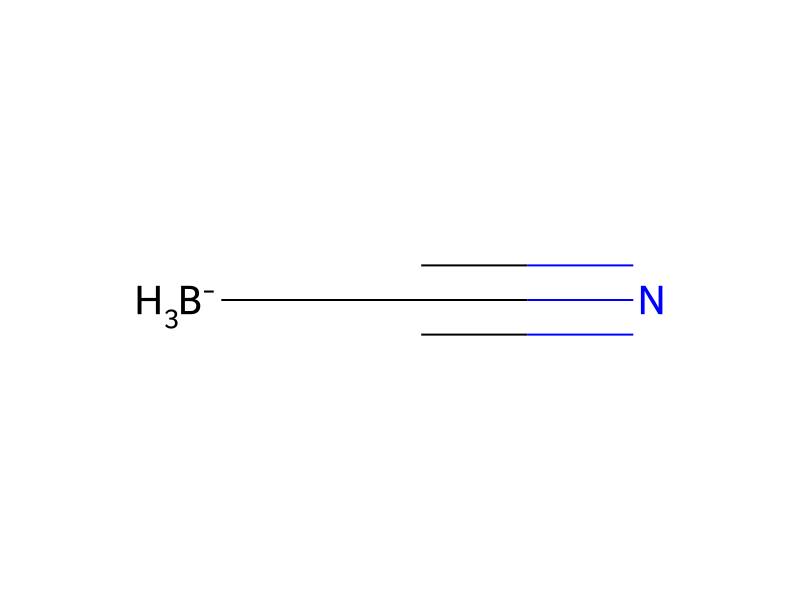
HCID 176Acetic AcidHCID 498716CyanoborohydrideHCID 867264694-Chloro-2-(4-fluoropiperidin-4-yl)pyridine dihydrochlorideHCID 867264718-fluoro-4-formyl-N-[(1S,2S)-2-hydroxycyclohexyl]quinoline-2-carboxamide

Product 1

HCID 710141264-{[4-(4-Chloropyridin-2-yl)-4-fluoropiperidin-1-yl]methyl}-8-fluoro-N-[(1S,2S)-2-hydroxycyclohexyl]quinoline-2-carboxamide

Reagents, catalysts & solvents 3

HCID 8471TriethylamineCatalystHCID 111,2-DichloroethaneSolventHCID 6344DichloromethaneSolvent

Procedure

To a solution of 8-fluoro-4-formyl-N-[(1S,2S)-2-hydroxycyclohexyl]quinoline-2-carboxamide (C9) (0.080 g, 0.25 mmol) in DCE (3 mL) was 4-chloro-2-(4-fluoropiperidin-4-yl)pyridine dihydrochloride (C5) (0.080 g, 0.28 mmol) and triethylamine (6 drops). After 5 min, acetic acid (0.043 mL, 0.76 mmol) and MP-cyanoborohydride were added. The mixture was irradiated in a microwave reactor at 100° C. for 20 min, then diluted with CH2Cl2 and was washed with brine. The organic solution was dried over sodium sulfate, filtered, and concentrated in vacuo. The resultant residue was purified via silica gel chromatography eluting with 0-5% methanol in dichloromethane to provide the title compound (Example C) as a white solid that gave a proton NMR spectra consistent with theory and a mass ion (ES+) of 515.0 for M+H+. 1H NMR (400 MHz, CDCl3) δ 8.44 (d, J=5.2 Hz, 1H), 8.38 (s, 1H), 8.29 (d, J=7.8 Hz, 1H), 8.17 (d, J=8.5 Hz, 1H), 7.60-7.55 (m, 2H), 7.47-7.42 (m, 1H), 7.22-7.20 (m, 1H), 4.03 (s, 2H), 3.94-3.86 (m, 1H), 3.63-3.56 (m, 1H), 3.42 (br s, 1H), 2.86-2.83 (m, 2H), 2.62-2.56 (m, 2H), 2.47-2.30 (m, 2H), 2.17-2.11 (m, 2H), 1.89-1.78 (m, 4H), 1.56-1.31 (m, 4H).

Workup

  1. customThe mixture was irradiated in a microwave reactor at 100° C. for 20 min
  2. washwas washed with brine
  3. dry with materialThe organic solution was dried over sodium sulfate
  4. filtrationfiltered
  5. concentrationconcentrated in vacuo
  6. customThe resultant residue was purified via silica gel chromatography
  7. washeluting with 0-5% methanol in dichloromethane

Sources & evidence

ORD record
ord-2b03cb4ca50e48338d4ec91d3797ccbd
Source dataset
uspto-grants-2015_01
DOI
10.6084/m9.figshare.5104873.v1
Patent number
US08940765B2

Reaction notes

On this pageParticipantsProcedureWorkupSources & evidenceReaction notes