Reaction equation
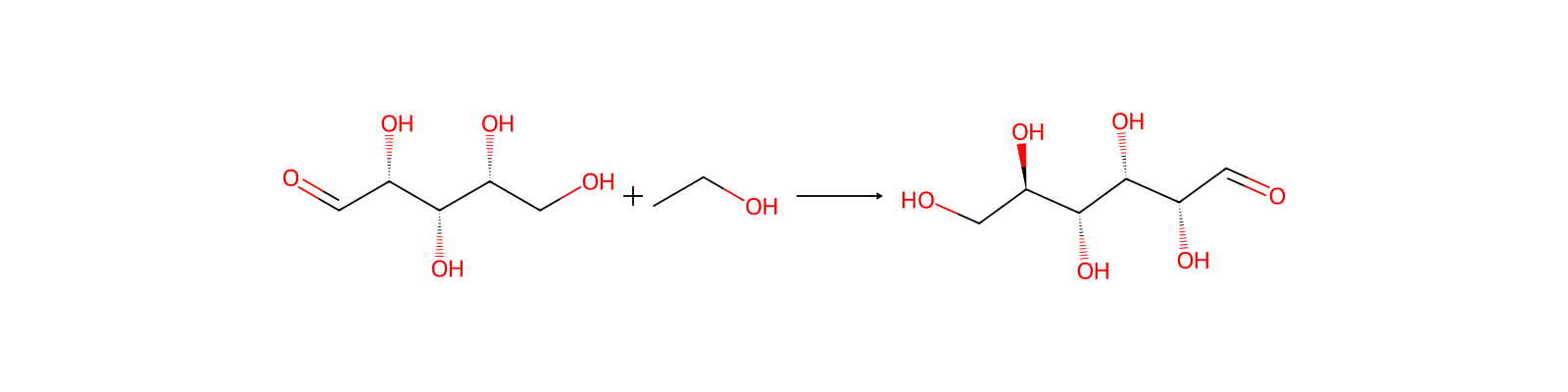
[O:1]=[CH:2][C@@H:3]([C@H:5]([C@@H:7]([CH2:9][OH:10])[OH:8])[OH:6])[OH:4].[CH2:11]([OH:13])C>>[O:1]=[CH:2][C@@H:3]([C@H:5]([C@@H:7]([C@@H:9]([CH2:11][OH:13])[OH:10])[OH:8])[OH:6])[OH:4]Participants

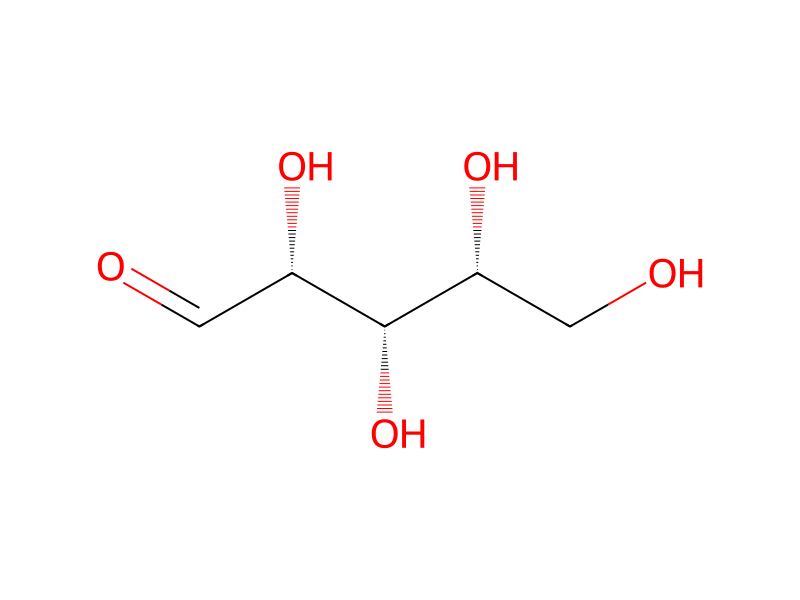

Procedure
The results presented in FIG. 2 show that in contrast to the control strain containing the shuttle vector alone (CP4[pZB 186]), the recombinant containing the added xylose isomerase, xylulokinase, transaldolase and transketolase genes demonstrated growth and ethanol production from xylose as a carbon source. The recombinant strain produces ethanol from glucose as efficiently as the control strain at 94% of theoretical yield. The recombinant strain additionally produces ethanol from xylose at 84% of theoretical yield in 79 hours. Furthermore, in the combined presence of glucose and xylose, the recombinant strain ferments both sugars simultaneously to ethanol at 88% of theoretical yield within 48 hours, thus providing the foundation for advanced process designs with cofermentation of mixed-sugar feedstocks.
Workup
- additioncontaining the shuttle vector alone (CP4[pZB 186]), the recombinant
Sources & evidence
- ORD record
- ord-b36cf4c3fce444e59afcc58bc7669a0f
- Source dataset
- uspto-grants-1998_03
- Patent number
- US05726053
Linked notes
Loading…