Pyrrole → 2,2'-(2,2,3,3,4,4,4-Heptafluorobutane-1,1-diyl)di(1H-pyrrole)
Reaction equation

[NH:1]1[CH:5]=[CH:4][CH:3]=[CH:2]1.[F:6][C:7]([F:17])([F:16])[C:8]([F:15])([F:14])[C:9]([F:13])([F:12])[CH:10]=O>O1CCCC1>[NH:1]1[CH:5]=[CH:4][CH:3]=[C:2]1[CH:10]([C:2]1[NH:1][CH:5]=[CH:4][CH:3]=1)[C:9]([F:13])([F:12])[C:8]([F:15])([F:14])[C:7]([F:17])([F:16])[F:6]Participants
4
Reactant 2
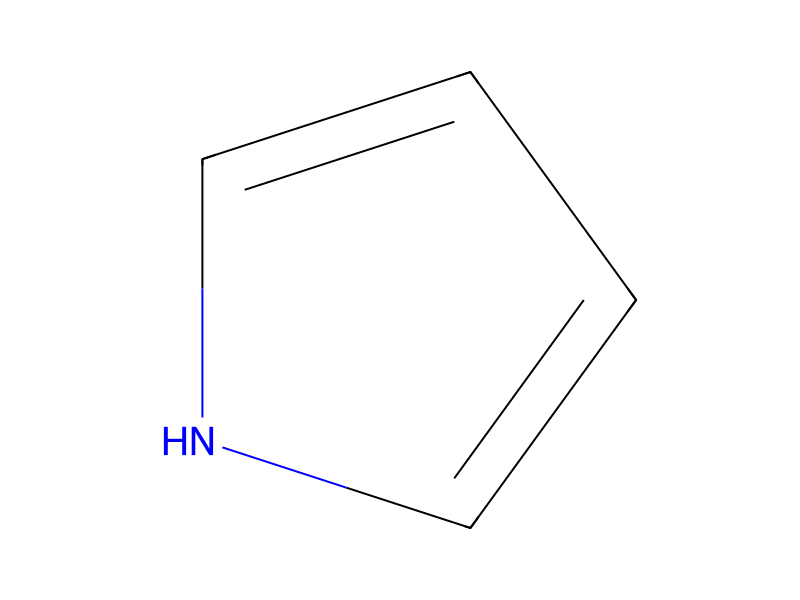

Product 1

Reagents, catalysts & solvents 1

Procedure
Pyrrole (2; 50mmol) and heptafluorobutyraldehyde (7; R=CF3CF2, as the hydrate, 25 mmol) were condensed in tetrahydrofuran in the presence of acid catalyst as described above to give bis-(pyrrol-2-yl) heptafluoroprop-1-ylmethane (8; R=CF3CF2) in >50% isolated yield. GCMS m/z; 314 (M+, 22%), 145 (100%); 1H NMR (δ, CDCl3 at 7.24); 4.92 (t, 1H), 6.22 (d, 4H), 6.75 (s, 2H), 8.07 (bs, 2H).
Sources & evidence
- ORD record
- ord-5275e5514243454881be6199b338c7df
- Source dataset
- uspto-grants-1996_03
- Patent number
- US05502211
Reaction notes
Loading…