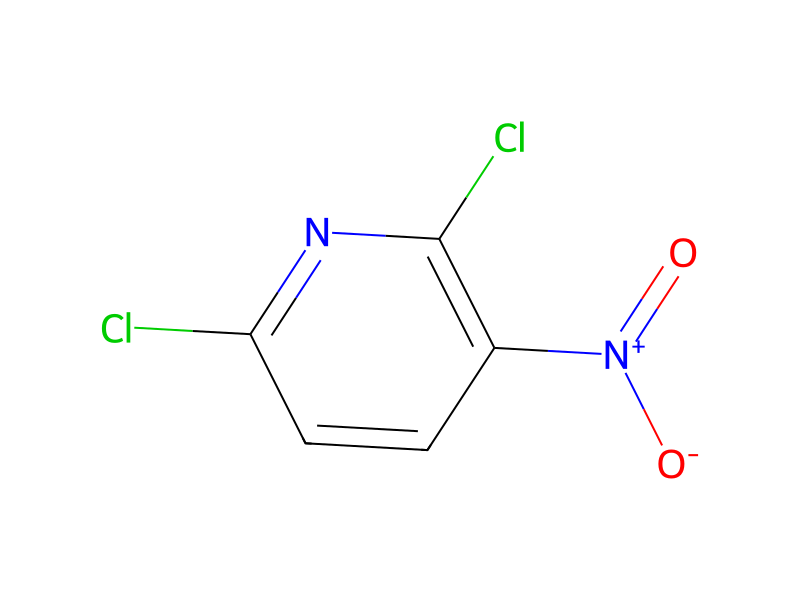
Cl[C:2]1[C:7]([N+:8]([O-:10])=[O:9])=[CH:6][CH:5]=[C:4]([Cl:11])[N:3]=1.C(=O)([O-])[O-].[Na+].[Na+].CN(C)C=O.[CH2:23]1[C:32]2[C:27](=[CH:28][CH:29]=[CH:30][CH:31]=2)[CH2:26][CH2:25][NH:24]1>O>[Cl:11][C:4]1[N:3]=[C:2]([N:24]2[CH2:25][CH2:26][C:27]3[C:32](=[CH:31][CH:30]=[CH:29][CH:28]=3)[CH2:23]2)[C:7]([N+:8]([O-:10])=[O:9])=[CH:6][CH:5]=12,6-Dichloro-3-nitropyridine (10 g, 51.8 mmol) and sodium carbonate (8.8 g, 82.9 mmol) were added to anhydrous N,N-dimethylformamide (250 ml). 1,2,3,4-tetrahydroisoquinoline (7.14 ml, 82.9 mmol) was added at 0° C. to the reaction mixture, which was then stirred for 2 hours at 0° C. Water was added to the reaction mixture, which was then extracted with ethyl acetate. The organic layer was dried on anhydrous magnesium sulfate and then concentrated under reduced pressure. The resulting residue was purified with silica gel column chromatography (ethyl acetate/n-hexane=1/5, v/v) to give 10 g of the titled compound as yellow solid. (Yield: 81%).