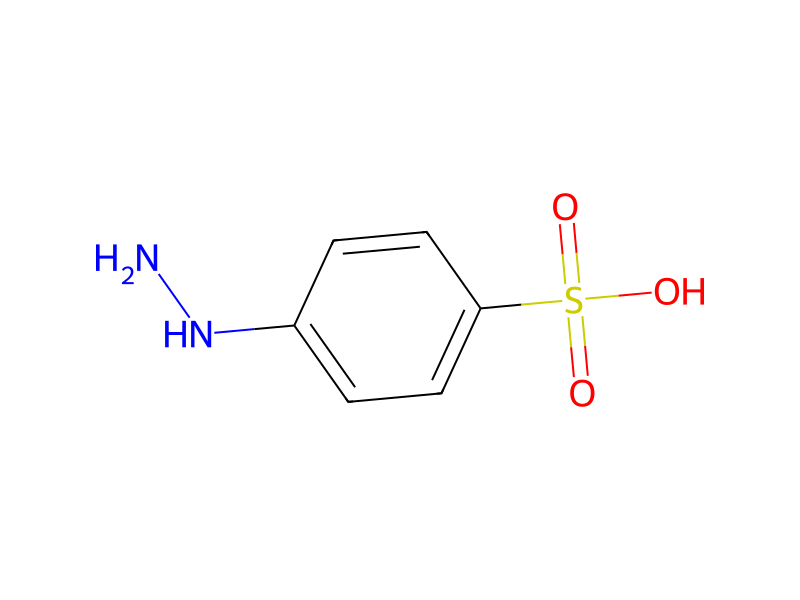
[C:1](#[N:3])[CH3:2].[C:4](OOC(CC)(N)C)(=[O:7])[CH:5]=C.[CH3:15][N:16]=[C:17]=[O:18].[S:19]([C:23]1[CH:28]=[CH:27][C:26]([NH:29][NH2:30])=[CH:25][CH:24]=1)([OH:22])(=[O:21])=[O:20]>C(O)(=O)C.C(N(CC)CC)C.CO>[CH2:1]([N:3]([CH2:23][CH3:24])[CH2:4][CH3:5])[CH3:2].[CH3:15][NH:16][C:17](=[O:18])[NH:3][C:1]1[NH:30][N:29]([C:26]2[CH:25]=[CH:24][C:23]([S:19]([OH:22])(=[O:20])=[O:21])=[CH:28][CH:27]=2)[C:4](=[O:7])[CH:2]=1Into 30 ml of acetonitrile was dissolved 15.9 g of ethylβ-amino-β-ethoxy acrylate, and 6 g of methyl isocyanate was added thereto. The resulting mixture was allowed to stand at room temperature for 2 days. Into a mixed solution of 50 ml of methanol, 50 ml of triethylamine and 50 ml of glacial acetic acid there was dissolved 18.8 g of p-sulfophenyl hydrazine, into which was then slowly dropped the above solution in which the esterification reaction had been completed. The solution so obtained was allowed to stand at room temperature for 4 days, whereupon crystals precipitated. These crystals were combined and washed with acetonitrile and then recrystallized from ethanol; thus, 31 g of pale yellow plate-like crystals of the objective compound of a melting point of 248° to 250° C. was obtained.