HomeMCPWorkbenchSkills
HomeWorkbenchNotificationsMe
llms.txt · MCP GuidePrivacy Policy · Terms of Service · Supportv1.8.0
  1. Home
  2. /Reaction

Sodium Iodide → (+/-)-4-((alphaR*)-alpha-((2S*,5R*)-4-(Cyanomethyl)-2,5-dimethyl-1-piperazinyl)-3-hydroxybenzyl)-N,N-diethylbenzamide

HRID 1460124
Notes
Print preview

Reaction equation

HRID 1460124 reaction equation
[CH3:1][C@H:2]1[CH2:7][NH:6][C@H:5]([CH3:8])[CH2:4][N:3]1[C@H:9]([C:17]1[CH:29]=[CH:28][C:20]([C:21]([N:23]([CH2:26][CH3:27])[CH2:24][CH3:25])=[O:22])=[CH:19][CH:18]=1)[C:10]1[CH:15]=[CH:14][CH:13]=[C:12]([OH:16])[CH:11]=1.[Si](O[Si](C(C)(C)C)(C)C)(C(C)(C)C)(C)C.Cl[CH2:46][C:47]#[N:48].C(=O)([O-])[O-].[Na+].[Na+].[I-].[Na+]>O1CCCC1>[C:47]([CH2:46][N:6]1[C@H:5]([CH3:8])[CH2:4][N:3]([C@H:9]([C:17]2[CH:18]=[CH:19][C:20]([C:21]([N:23]([CH2:26][CH3:27])[CH2:24][CH3:25])=[O:22])=[CH:28][CH:29]=2)[C:10]2[CH:15]=[CH:14][CH:13]=[C:12]([OH:16])[CH:11]=2)[C@@H:2]([CH3:1])[CH2:7]1)#[N:48]
ParticipantsProcedureWorkupSources & evidenceReaction notes

Participants

7

Reactant 5

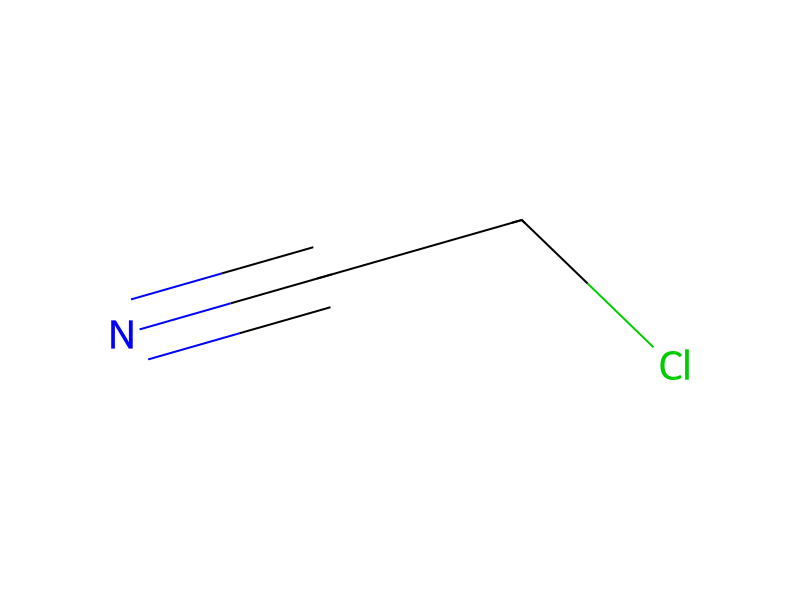
HCID 5238Sodium IodideHCID 7856ChloroacetonitrileHCID 10340Sodium CarbonateHCID 590018TBDMS etherHCID 153522344-[(R)-((2S,5R)-2,5-dimethylpiperazin-1-yl)(3-hydroxyphenyl)methyl]-N,N-diethylbenzamide

Product 1

HCID 57073064
(+/-)-4-((alphaR*)-alpha-((2S*,5R*)-4-(Cyanomethyl)-2,5-dimethyl-1-piperazinyl)-3-hydroxybenzyl)-N,N-diethylbenzamide

Reagents, catalysts & solvents 1

HCID 8028TetrahydrofuranSolvent

Procedure

(±)-4-((αR*)-α-((2S*,5R*)-2,5-Dimethyl-1-piperazinyl)-3-hydroxybenzyl)-N,N-diethylbenzamide, tert-butyldimethylsilyl ether (0.51 g, 1.0 mmol, Example 81, infra) was combined with 2-chloroacetonitrile (0.07 mL, 1.1 mmol, Eastman Kodak, Rochester, N.Y.) and sodium carbonate in anhydrous tetrahydrofuran. The reaction mixture was chilled in an ice bath and sodium iodide (0.16 g, 1.1 mmol) was added. The reaction was allowed to warm to room temperature and stirred overnight, The solvent was removed and the residue was redissolved in dichloromethane and washed with water. The solvent was evaporated and the residue was purified by chromatography on silica gel with ethanol (0-3%) in dichloromethane. The product was dissolved in 20 mL of acetonitrile and stirred for 3 hours with tetraethylammonium fluoride hydrate (0.18 g). The solvent was evaporated and the residue was purified by chromatography on silica gel with ethanol (0-3%) in dichloromethane. Crystallization of the product from acetonitrile gave 37 mg of solid, mp 190°-192° C. Calc for C26H34N4O4:C, 71.86; H, 7.88; N, 12.89. Found: C, 71.83; H, 7.94; N, 12.95. NMR (200 MHz, CDCl3): δ 0.93 (d, J=6 Hz, 3H); 1.15 (d, J=4.7 Hz, 3H); 1.0-1.2 (br m, 6H); 1.79 (t, J=11 Hz, 1H); 2.2-2.4 (m, 5H); 3.2-3.6 (br m, 4H); 3.36 & 3.76 (ABq, J=17.4 Hz, 2H); 5.15 (s, 1H); 6.55 (s, 1H); 6.57 (d, J=8.6 Hz, 1H); 6.73 (d, J=8 Hz, 1H); 7.13 (t, J=7.6 Hz, 1H); 7.28 & 7.42 (ABq, J=8.2 Hz, 4H).


Workup

  1. temperatureThe reaction mixture was chilled in an ice bath
  2. customThe solvent was removed
  3. dissolutionthe residue was redissolved in dichloromethane
  4. washwashed with water
  5. customThe solvent was evaporated
  6. customthe residue was purified by chromatography on silica gel with ethanol (0-3%) in dichloromethane
  7. dissolutionThe product was dissolved in 20 mL of acetonitrile
  8. stirringstirred for 3 hours with tetraethylammonium fluoride hydrate (0.18 g)
  9. customThe solvent was evaporated
  10. customthe residue was purified by chromatography on silica gel with ethanol (0-3%) in dichloromethane
  11. customCrystallization of the product from acetonitrile

Sources & evidence

ORD record
ord-3aac6d778a16403ba43b8012d8ee4b0c
Source dataset
uspto-grants-1998_12
DOI
10.6084/m9.figshare.5104873.v1
Patent number
US05854249

Reaction notes

Loading…

On this pageParticipantsProcedureWorkupSources & evidenceReaction notes