HomeMCPSkillsWorkbenchOpenChem
HomeWorkbenchNotificationsMe
llms.txt · skill.md · MCP GuidePrivacy Policy · Terms of Service · Supportv1.8.5
  1. Home
  2. /Reaction

Hydrochloric Acid → Ethyl 1-hydroxy-3,3,5-trimethylcyclohexaneacetate

HRID 1461950
Print

Reaction equation

[Mg].[CH3:2][CH:3]1[CH2:9][C:8]([CH3:11])([CH3:10])[CH2:7][C:5](=[O:6])[CH2:4]1.Cl[CH2:13][C:14]([O:16][CH2:17][CH3:18])=[O:15].II.Cl>CCOCC.C1C=CC=CC=1>[OH:6][C:5]1([CH2:13][C:14]([O:16][CH2:17][CH3:18])=[O:15])[CH2:4][CH:3]([CH3:2])[CH2:9][C:8]([CH3:11])([CH3:10])[CH2:7]1
ParticipantsProcedureWorkupSources & evidenceReaction notes

Participants

8

Reactant 5

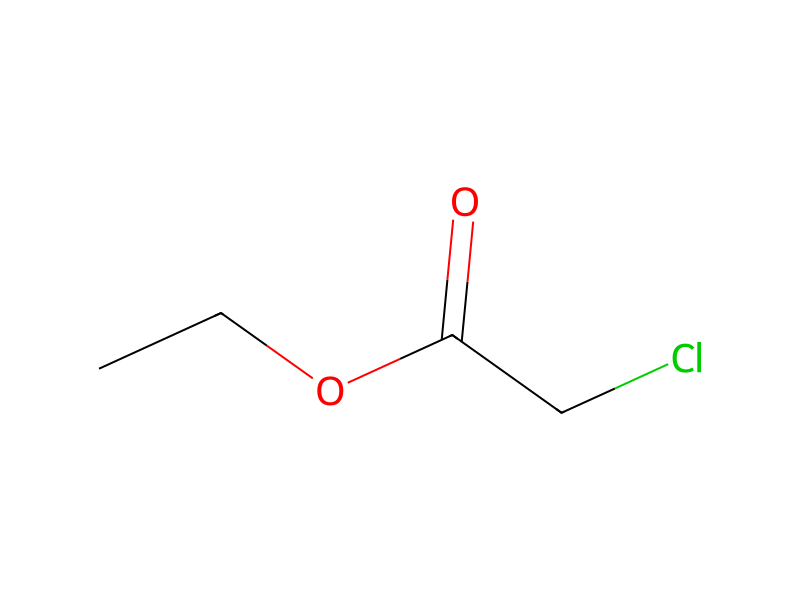
HCID 313Hydrochloric AcidHCID 807IodineHCID 7751Ethyl chloroacetateHCID 133983,3,5-TrimethylcyclohexanoneHCID 5462224Magnesium

Product 1

HCID 44148684Ethyl 1-hydroxy-3,3,5-trimethylcyclohexaneacetate

Reagents, catalysts & solvents 2

HCID 241BenzeneSolvent2×
HCID 3283Diethyl EtherSolvent2×

Procedure

300 ml of absolute ether, 150 ml of dry benzene and 170 g of magnesium shavings are added to a 6 liter flask which is fitted with a stirrer, thermometer, dropping funnel and reflux condenser. Now, there is introduced dropwise a mixture of 1.100 kg of dihydroisophorone and 960 g of ethyl chloroacetate dissolved in 1.200 l of ether and 600 ml of benzene. (If the reaction does not begin during the addition of the first 200 ml and warming at slight reflux does not begin spontaneously, then a few small crystals of iodine are added). The beginning of the reaction is recognizable by turbidity and heat-evolution. The addition of the reagents is continued in such a manner that the mixture boils only moderately, the addition being completed within 11/4 hours. Thereafter, the mixture is held at reflux temperature for a further 31/2 hours and, after cooling, added to 2.5 kg of ice and 1.2 l of concentrated hydrochloric acid. The organic phase is separated and washed with water (containing 1% concentrated hydrochloric acid), with water and several times more with 10% sodium carbonate solution. After evaporating the solvent in vacuo, there remain behind 1.69 kg of crude product which are distilled. The main fraction (1.250 kg) is washed with 10% sodium carbonate solution and again distilled (100° C./3 mm Hg). There are thus obtained 1.046 kg of ethyl 1-hydroxy-3,3,5-trimethyl-cyclohexylacetate.


Workup

  1. customis fitted with a stirrer
  2. temperaturereflux condenser
  3. additionNow, there is introduced dropwise
  4. addition(If the reaction does not begin during the addition of the first 200 ml
  5. temperaturewarming
  6. temperatureat slight reflux
  7. temperatureheat-evolution
  8. additionThe addition of the reagents
  9. additionthe addition
  10. custom4 hours
  11. temperatureat reflux temperature for a further 31/2 hours
  12. temperatureafter cooling
  13. customThe organic phase is separated
  14. washwashed with water (containing 1% concentrated hydrochloric acid), with water and several times more with 10% sodium carbonate solution
  15. customAfter evaporating the solvent in vacuo, there
  16. distillationare distilled
  17. washThe main fraction (1.250 kg) is washed with 10% sodium carbonate solution
  18. distillationagain distilled (100° C./3 mm Hg)

Sources & evidence

ORD record
ord-57f81c037ef1462993ed77833c99cbd8
Source dataset
uspto-grants-1984_07
DOI
10.6084/m9.figshare.5104873.v1
Patent number
US04457862

Reaction notes

On this pageParticipantsProcedureWorkupSources & evidenceReaction notes