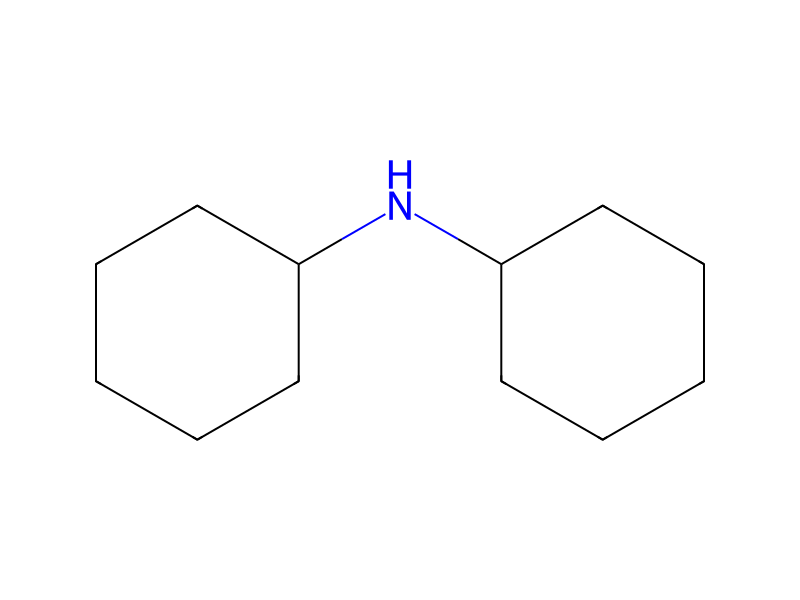
A mixture of (±)-1-(3-benzoylthio-1-oxopropyl)-1,2,3,4-tetrahydro-2-quinolinecarboxylic acid dicyclohexylamine salt (15 g) and concentrated ammonium hydroxide (280 ml) was heated on the steam bath for 45 minutes with rapid mechanical stirring. After this time, the cooled mixture was filtered through Celite and the filtrate evaporated under reduced pressure to a volume of 25 ml. Water (4 ml) was added and the benzamide was removed by filtration. The filtrate was treated with ether (100 ml) and acidified with 20% aqueous hydrochloric acid (8 ml) while cooling in an ice bath. The dicyclohexylamine hydrochloride was removed by filtration and the filtrate was extracted several times with ether. The combined extracts were dried over sodium sulfate and evaporated to dryness to give a viscous oil (11 g). This product was dissolved in acetone (40 ml) and treated with dicyclohexylamine (5.6 g). The crystalline, (±)-1,2,3,4-tetrahydro-1-(3-mercapto-1-oxopropyl)-2-quinolinecarboxylic acid dicyclohexylamine salt, could be recystallized from 20% acetonitrile in 2-propanol; yield 10 g, m.p. 165°-169°. This salt could be converted to the free acid by suspending the salt (6 g) in 2-propanol (40 ml) and this mixture was cooled to 5° and treated with a solution of dry hydrogen chloride in 2-propanol until pH 2. The resulting dicyclohexylamine hydrochloride was filtered and washed twice with 2-propanol. The combined filtrate and washings were concentrated under reduced pressure. The residue was triturated with carbon tetrachloride to give crystalline product, (±)-1,2,3,4-tetrahydro-1-(3-mercapto-1-oxopropyl)-2-quinolinecarboxylic acid; yield 0.7 g, m.p. 109°-111°.