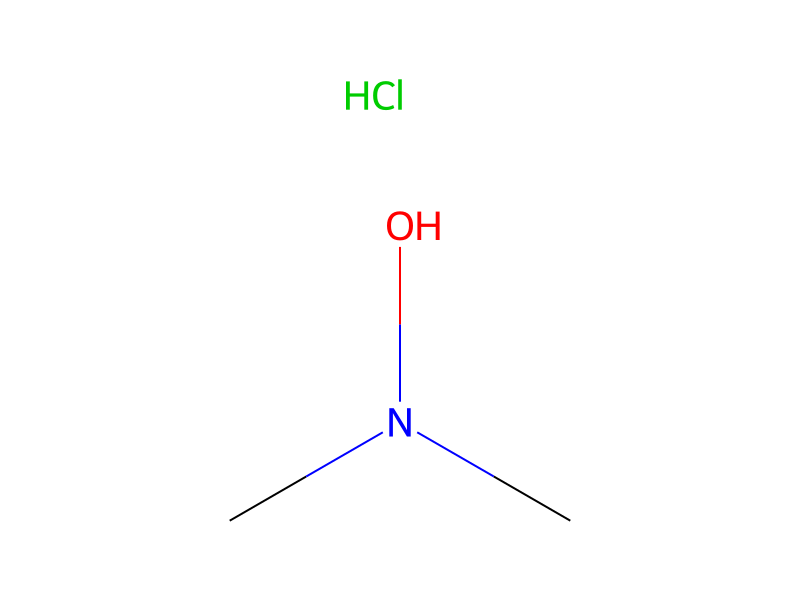
7.0 Grams of 3-hydroxypicolinic acid was dissolved in 10 ml of N,N-dimethylformamide, and the resulting solution was cooled to 0° to 5° C. 5.9 Grams of thionyl chloride was then added dropwise to the solution which was then stirred at 0° to 5° C. for further 30 minutes. Thereafter, 30 ml of chloroform was added to the solution which was then stirred at 0° to 5° C. for further 15 minutes. To the resulting mixed solution was added dropwise a dichloromethane solution of N,N-dimethylhydroxylamine prepared from 7.4 g of N,N-dimethylhydroxylamine hydrochloride and 7.6 g of triethylamine. After stirring at 0° to 5° C. for 30 minutes, 7.9 g of pyridine was added, and stirring was continued at 0° to 5° C. for further 1 hour. After stirring at room temperature for 8 hours, the reaction solution was poured into water, and insoluble matters were removed by filtration on celite. The organic layer was washed with water and dried over anhydrous magnesium sulfate. The solvent was removed under reduced pressure, and the residue obtained was subjected to chromatography to obtain 1.0 g of 3-hydroxy-2-(N,N-dimethylaminooxycarbonyl)pyridine.