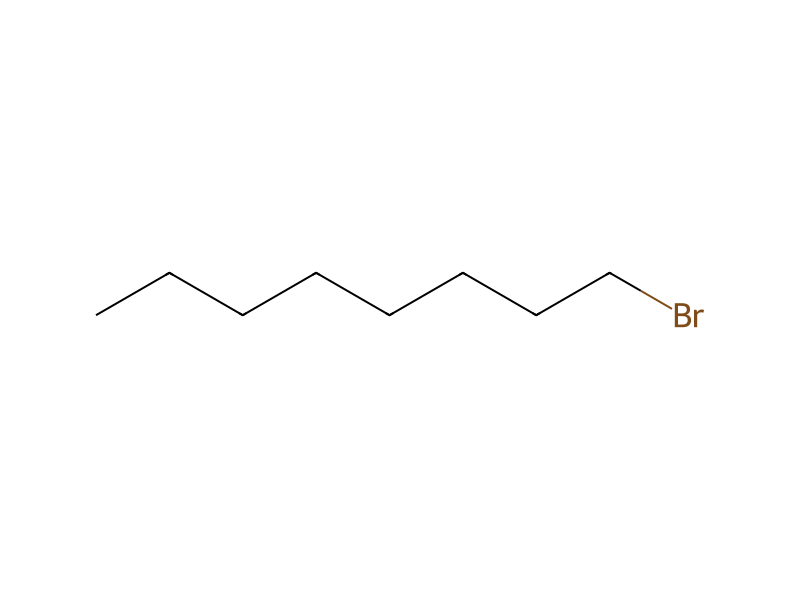
1-Bromooctane → 1-Hydroxy-3-octoxyxanthone
HRID 1464684
Reaction equation

[OH:1][C:2]1[C:15]2[C:14](=[O:16])[C:13]3[C:8](=[CH:9][CH:10]=[CH:11][CH:12]=3)[O:7][C:6]=2[CH:5]=[C:4]([OH:17])[CH:3]=1.C([O-])([O-])=O.[K+].[K+].Br[CH2:25][CH2:26][CH2:27][CH2:28][CH2:29][CH2:30][CH2:31][CH3:32]>C(C(C)=O)C>[OH:1][C:2]1[C:15]2[C:14](=[O:16])[C:13]3[C:8](=[CH:9][CH:10]=[CH:11][CH:12]=3)[O:7][C:6]=2[CH:5]=[C:4]([O:17][CH2:25][CH2:26][CH2:27][CH2:28][CH2:29][CH2:30][CH2:31][CH3:32])[CH:3]=1Participants
5
Reactant 3


Product 1

Reagents, catalysts & solvents 1

Procedure
22.8 g of 1,3-dihydroxyxanthone (prepared according to Grover, J. Chem. Soc. 1955, 3982) together with 15.2 g of K2CO3 and 21.2 g of 1-bromooctane are refluxed for 15 hours in 250 ml of methyl ethyl ketone. The salt is isolated by filtration from the cooled reaction mixture and the methyl ethyl ketone solution is concentrated by evaporation under vacuum. Recrystallisation of the residue from heptane gives 1-hydroxy-3-octoxyxanthone with a melting point of 98° C.