HomeMCPSkillsWorkbenchOpenChem
HomeWorkbenchNotificationsMe
llms.txt · skill.md · MCP GuidePrivacy Policy · Terms of Service · Supportv1.8.6
  1. Home
  2. /Reaction

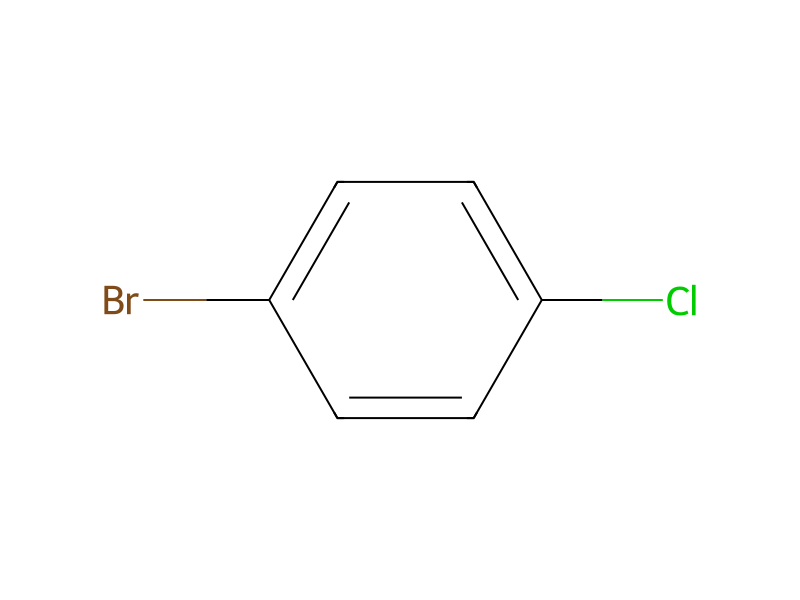
p-Bromochlorobenzene → Ethyl(4-chlorophenyl)(2,2-difluorocyclopentyl)acetate

HRID 1476080
Print

Reaction equation

C[Si](C)(C)[N-][Si](C)(C)C.[Li+].[F:11][C:12]1([F:23])[CH2:16][CH2:15][CH2:14][CH:13]1[CH2:17][C:18]([O:20][CH2:21][CH3:22])=[O:19].Br[C:25]1[CH:30]=[CH:29][C:28]([Cl:31])=[CH:27][CH:26]=1.C1(P(C2CCCCC2)C2C=CC=CC=2C2C=CC=CC=2N(C)C)CCCCC1>C1(C)C=CC=CC=1.C([O-])(=O)C.[Pd+2].C([O-])(=O)C.O>[Cl:31][C:28]1[CH:29]=[CH:30][C:25]([CH:17]([CH:13]2[CH2:14][CH2:15][CH2:16][C:12]2([F:23])[F:11])[C:18]([O:20][CH2:21][CH3:22])=[O:19])=[CH:26][CH:27]=1
ParticipantsConditionsProcedureWorkupSources & evidenceReaction notes

Participants

8

Reactant 4

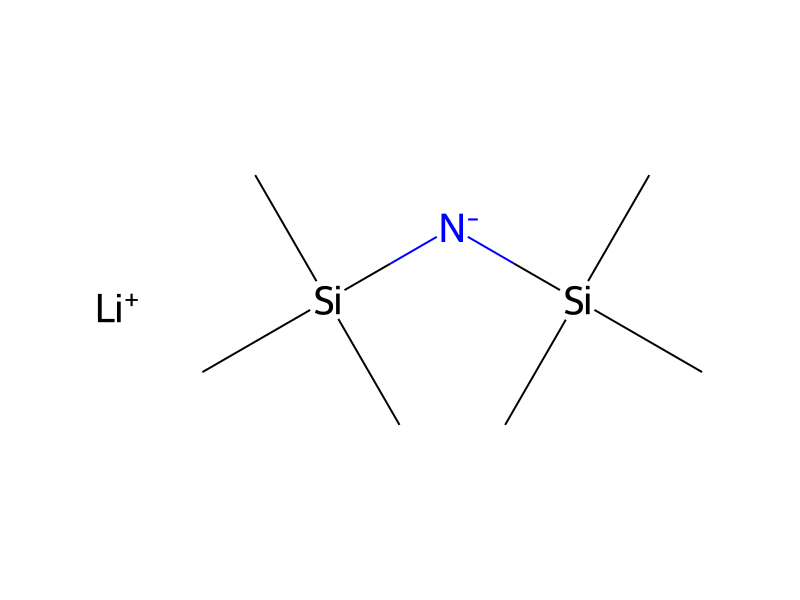
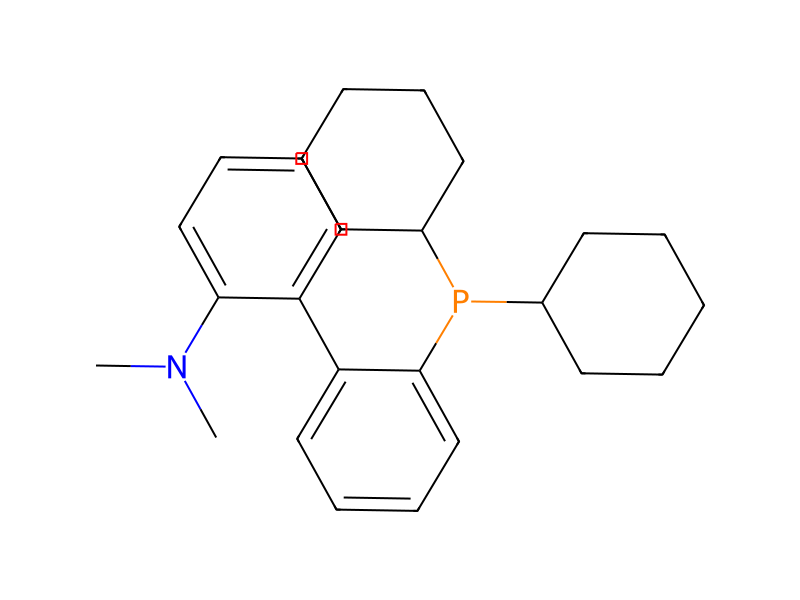
HCID 7806p-BromochlorobenzeneHCID 2733832Lithium hexamethyldisilazaneHCID 27342172-(Dicyclohexylphosphino)-2'-(dimethylamino)biphenylHCID 58288284Ethyl 2-(2,2-difluorocyclopentyl)acetate

Product 1

HCID 58288188Ethyl(4-chlorophenyl)(2,2-difluorocyclopentyl)acetateYield 59.1%

Reagents, catalysts & solvents

3
HCID 167845palladium(II) acetateCatalystHCID 962WaterSolventHCID 1140TolueneSolvent3×

Conditions

Temperature
-20 °C

Procedure

22.6 ml (22.6 mmol) of a 1 M solution of lithium hexamethyldisilazide in toluene were cooled to −20° C., and a solution of 2.90 g (15.09 mmol) of (+/−)-ethyl (2,2-difluorocyclopentyl)acetate in 20 ml of abs. toluene was added dropwise. The mixture was stirred at −20° C. for 10 min Cooling was removed, and a solution, prepared beforehand, of 3.75 g (19.61 mmol) of 4-bromo-chlorobenzene, 110 mg (0.49 mmol) of palladium(II) acetate and 374 mg (0.95 mmol) of 2′-dicyclohexylphosphino-2-(N,N-dimethylamino)biphenyl in 20 ml of abs. toluene was then added dropwise. The resulting reaction mixture was stirred initially at RT for 1 h, and then at 90° C. for 2 h. After cooling, the reaction mixture was added to water. The aqueous phase was extracted three times with ethyl acetate, and the combined organic phases were dried over magnesium sulphate and concentrated under reduced pressure. The residue gave, after chromatography on silica gel (mobile phase cyclohexane/ethyl acetate 50:1), 2.70 g of the title compound (59.1% of theory, diastereomer ratio about 1:4.3).

Workup

  1. temperatureCooling
  2. customwas removed
  3. customa solution, prepared beforehand
  4. customThe resulting reaction mixture
  5. stirringwas stirred initially at RT for 1 h
  6. waitat 90° C. for 2 h
  7. temperatureAfter cooling
  8. extractionThe aqueous phase was extracted three times with ethyl acetate
  9. dry with materialthe combined organic phases were dried over magnesium sulphate
  10. concentrationconcentrated under reduced pressure
  11. customThe residue gave

Sources & evidence

ORD record
ord-a18b84e27c474ded9d492ed57fe0de47
Source dataset
uspto-grants-2015_04
DOI
10.6084/m9.figshare.5104873.v1
Patent number
US09018414B2

Reaction notes

On this pageParticipantsConditionsProcedureWorkupSources & evidenceReaction notes