Benzylamine → 2-Benzylisoindoline
HRID 1486490
Reaction equation

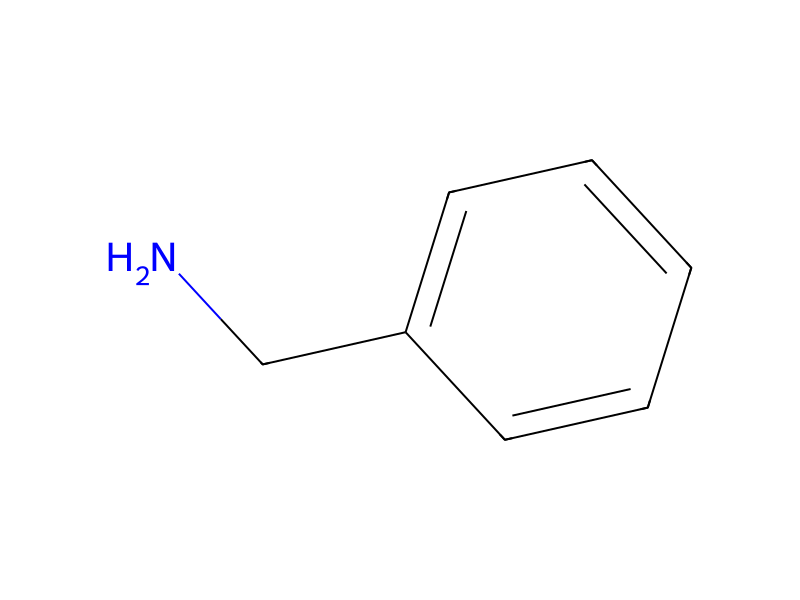
[CH2:1]([NH2:8])[C:2]1[CH:7]=[CH:6][CH:5]=[CH:4][CH:3]=1.O1[CH2:13][CH2:12][CH2:11][CH2:10]1>C(N(CC)CC)C>[CH2:1]([N:8]1[CH2:4][C:3]2[C:11](=[CH:12][CH:13]=[CH:1][CH:2]=2)[CH2:10]1)[C:2]1[CH:7]=[CH:6][CH:5]=[CH:4][CH:3]=1Participants
4
Reactant 2

Product 1

Reagents, catalysts & solvents 1

Procedure
In Scheme 3, the bis-bromomethyl benzoic acid ester (26) is reacted with benzylamine in a polar aprotic solvent such as tetrahydrofuran (THF) in the presence of a non-interfering base such as triethylamine to give the N-benzyl dihydroisoindole intermediate (27). The ester group in intermediate (27) is then reduced to the corresponding alcohol using lithium aluminium hydride in THF to give the hydroxymethyldihydroisoindole intermediate (28). Debenzylation of the hydroxymethyldihydroisoindole intermediate (28) is then carried out by hydrogenation over palladium on charcoal catalyst in an alcohol (e.g. ethanol) solvent at a mildly elevated temperature (e.g. up to about 50°) to give the intermediate (29). Intermediate (29) is then converted to intermediate (20) by reaction with a reagent suitable for introducing a benzyloxycarbonyl (“Z”) group onto the nitrogen atom of the dihydroisoindole ring. For example, the intermediate (29) can be reacted with benzyl chloroformate in a polar non-protic solvent such as THF in the presence of a non-interfering base such as triethylamine to give intermediate (20).