Reaction equation

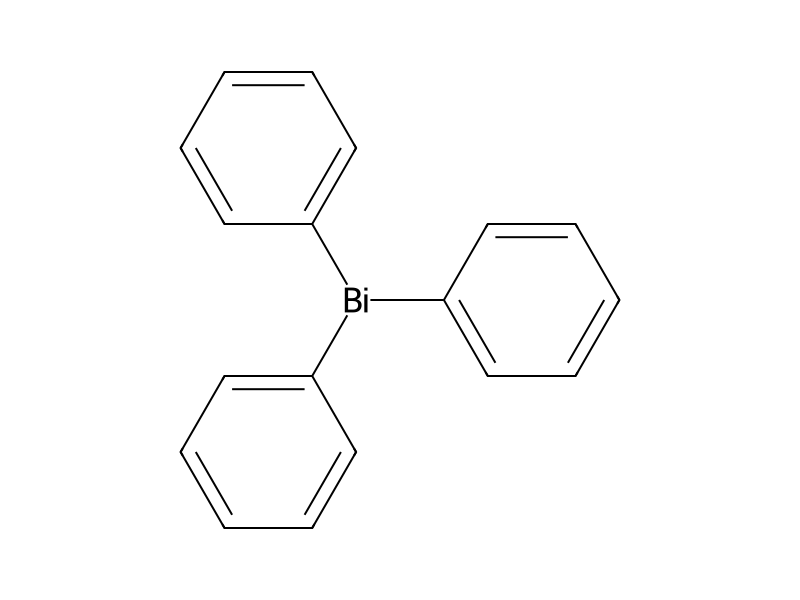
[C:1]1([Bi:7]([C:14]2[CH:19]=[CH:18][CH:17]=[CH:16][CH:15]=2)[C:8]2[CH:13]=[CH:12][CH:11]=[CH:10][CH:9]=2)[CH:6]=[CH:5][CH:4]=[CH:3][CH:2]=1.[C:20]([OH:25])(=[O:24])[C:21]([CH3:23])=[CH2:22].C(OO)(C)(C)C>C(OCC)C>[C:20]([O-:25])(=[O:24])[C:21]([CH3:23])=[CH2:22].[C:14]1([Bi+2:7]([C:1]2[CH:2]=[CH:3][CH:4]=[CH:5][CH:6]=2)[C:8]2[CH:13]=[CH:12][CH:11]=[CH:10][CH:9]=2)[CH:15]=[CH:16][CH:17]=[CH:18][CH:19]=1.[C:20]([O-:25])(=[O:24])[C:21]([CH3:23])=[CH2:22]Participants
5
Reactant 3


Product 1

Reagents, catalysts & solvents 1

Procedure
The general method as outlined by V. A. Dodonov, A. V. Gustichin and T. G. Brilkina (Zh. Obsch. Khim 55, 1(73) 1985) was followed for the preparation of this compound. The details of a typical preparation are: Triphenyl bismuthine (4.4 g, 0.01 mol.), methacrylic acid (1.97 g) (0.02 mol), tert-butyl hydroperoxide (1.39 g) were mixed with 20 ml of diethyl ether in a round bottom flask. The contents were stirred overnight (20 hr) at ambient temperature. The volatile matter was then removed in vacuo (0.1 mm Hg) for 5 hr to obtain a solid which was analyzed for its metal content.
Workup
- customBrilkina (Zh. Obsch. Khim 55, 1(73) 1985) was followed for the preparation of this compound
- customThe details of a typical preparation
- customThe volatile matter was then removed in vacuo (0.1 mm Hg) for 5 hr
- customto obtain a solid which
Sources & evidence
- ORD record
- ord-32d84826fcbb49c1928fcb3e2ecb49a8
- Source dataset
- uspto-grants-1991_06
- Patent number
- US05021398
Linked notes
Loading…