Reaction equation

Br[C:2]1[CH:7]=[CH:6][C:5](/[CH:8]=[CH:9]/[C:10]([O:12][CH3:13])=[O:11])=[CH:4][CH:3]=1.[F:14][C:15]([F:31])([F:30])[O:16][C:17]1[CH:22]=[CH:21][C:20](C2C=CC(O)=CC=2)=[CH:19][CH:18]=1.C([O-])([O-])=O.[K+].[K+].N#N>O1CCOCC1.C1C=CC(P(C2C=CC=CC=2)[C-]2C=CC=C2)=CC=1.C1C=CC(P(C2C=CC=CC=2)[C-]2C=CC=C2)=CC=1.Cl[Pd]Cl.[Fe+2]>[F:14][C:15]([F:30])([F:31])[O:16][C:17]1[CH:22]=[CH:21][C:20]([C:2]2[CH:7]=[CH:6][C:5](/[CH:8]=[CH:9]/[C:10]([O:12][CH3:13])=[O:11])=[CH:4][CH:3]=2)=[CH:19][CH:18]=1Participants
Reactant 4


Product 1

Reagents, catalysts & solvents 2


Procedure
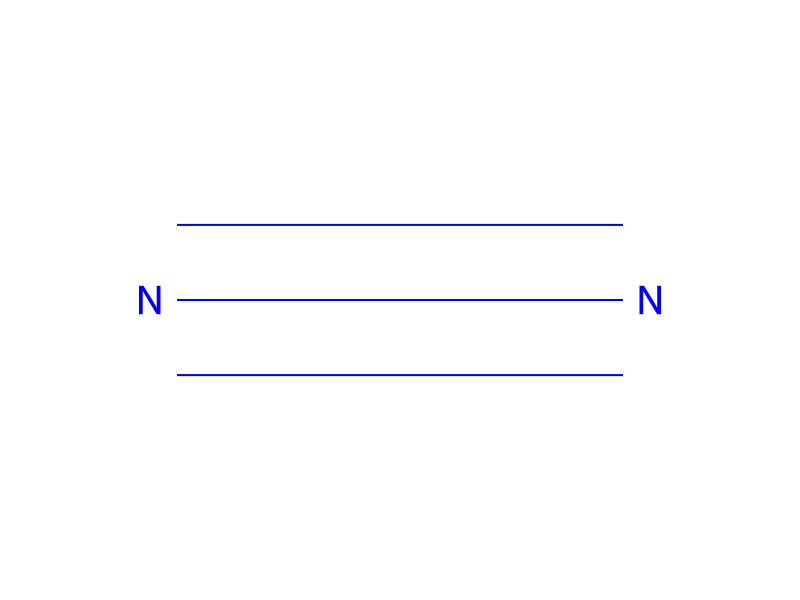
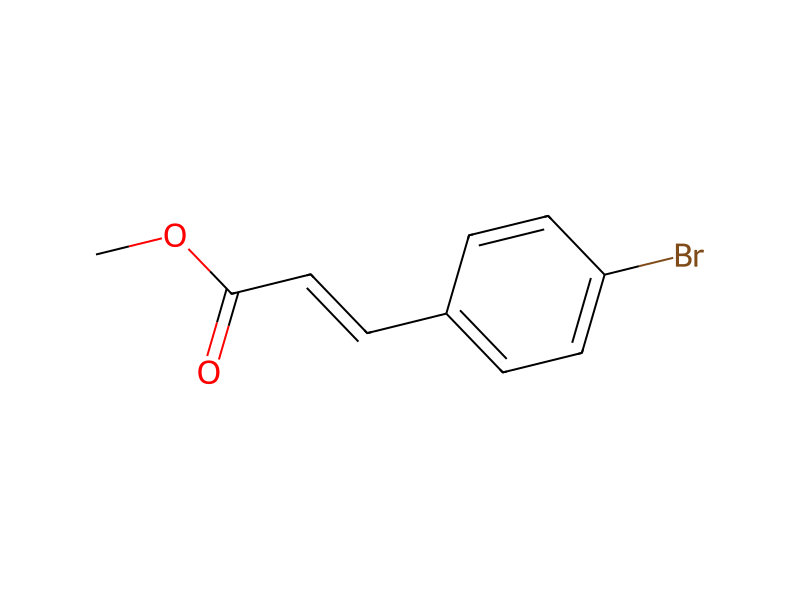
A solution of methyl (E)-3-(4-bromophenyl)-2-propenoate (99) (0.500 g, 2.07 mmol) and 4-(trifluoromethoxy)phenylboronic acid (44) (0.612 g, 2.97 mmol) in dioxane (40 mL) and aqueous K2CO3 (2M, 10 mL, 20 mmol) was purged with N2. Pd(dppf)Cl2 (0.050 g, 0.06 mmol) was added and the solution was refluxed under N2 for 1 h. The dioxane was removed and the residue was extracted with EtOAc, the organic fraction was dried and the solvent was removed. Column chromatography of the residue on silica gel using gradient elution (hexanes to CH2Cl2) gave methyl (2E)-3-[4′-(trifluoromethoxy)[1,1′-biphenyl]-4-yl]-2-propenoate (100) (0.567 g, 85%) as a white solid: mp 98-100° C.; 1H NMR (CDCl3) δ 7.73 (d, J=16.0 Hz, 1H), 7.56-7.63 (m, 6H), 7.30 (dd, J=8.8, 0.9 Hz, 2H), 6.48 (d, J=16.0 Hz, 1H), 3.82 (s, 3H). APCI MS m/z 323 [M+H]+.
Workup
- temperaturethe solution was refluxed under N2 for 1 h
- customThe dioxane was removed
- extractionthe residue was extracted with EtOAc
- customthe organic fraction was dried
- customthe solvent was removed
- washColumn chromatography of the residue on silica gel using gradient elution (hexanes to CH2Cl2)
Sources & evidence
- ORD record
- ord-af23c11d57c3404a979a89cdabf7813c
- Source dataset
- uspto-grants-2015_12
- Patent number
- US09198913B2
Linked notes
Loading…