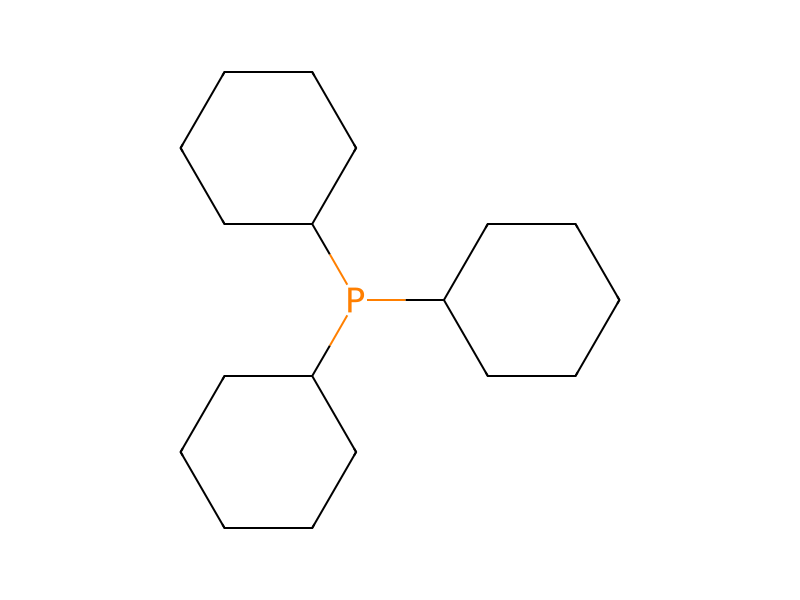
[Cl:1][C:2]1[C:7]([CH3:8])=[C:6](Cl)[N:5]=[CH:4][N:3]=1.[C:10]1(B(O)O)[CH:15]=[CH:14][CH:13]=[CH:12][CH:11]=1.C1(P(C2CCCCC2)C2CCCCC2)CCCCC1.C(=O)([O-])[O-].[Cs+].[Cs+]>C1C=CC(/C=C/C(/C=C/C2C=CC=CC=2)=O)=CC=1.C1C=CC(/C=C/C(/C=C/C2C=CC=CC=2)=O)=CC=1.C1C=CC(/C=C/C(/C=C/C2C=CC=CC=2)=O)=CC=1.[Pd].[Pd].O1CCOCC1>[Cl:1][C:2]1[C:7]([CH3:8])=[C:6]([C:10]2[CH:15]=[CH:14][CH:13]=[CH:12][CH:11]=2)[N:5]=[CH:4][N:3]=1Into a recovery flask equipped with a reflux pipe, 4.9 g of 4,6-dichloro-5-methylpyrimidine, 3.7 g of phenylboronic acid, 2.3 mL of PCy3, 20 g of cesium carbonate, 0.41 g of Pd2(dba)3, and 40 mL of dioxane were put, and the air in the flask was replaced by argon. This reaction container was heated by irradiation with microwaves (2.45 GHz, 300 W) for 100 minutes. The solvent of this solution was distilled off, and then the obtained residue was purified by flash column chromatography (silica gel) using a mixed solvent of dichloromethane and hexane as a developing solvent in a volume ratio of 7:3, to give 4-chloro-5-methyl-6-phenylpyrimidine (yellow oily substance, 37% in yield). Note that the irradiation with microwaves was performed using a microwave synthesis system (MicroSYNTH, manufactured by Milestone General K.K.). The synthesis scheme of Step 1 is shown by (a-3).