Reaction equation

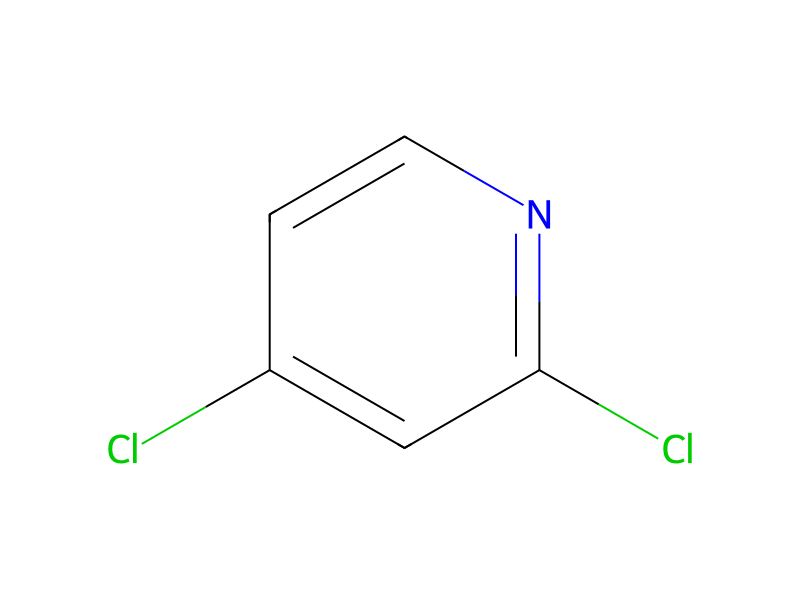
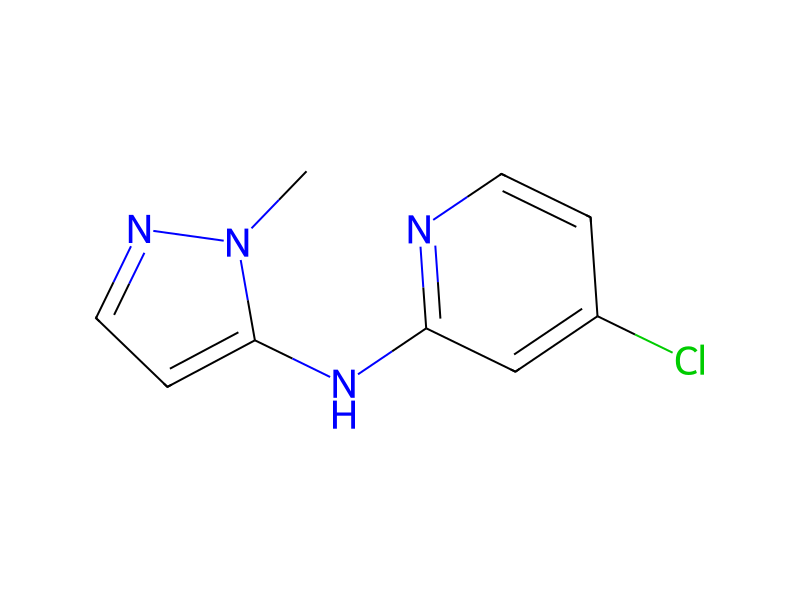
Clc1ccnc(Cl)c1.Cn1nccc1N>C1COCCO1.CC1(C)c2cccc(P(c3ccccc3)c3ccccc3)c2Oc2c(P(c3ccccc3)c3ccccc3)cccc21.O=C(/C=C/c1ccccc1)/C=C/c1ccccc1.O=C(/C=C/c1ccccc1)/C=C/c1ccccc1.O=C(/C=C/c1ccccc1)/C=C/c1ccccc1.O=C([O-])[O-].[Cs+].[Cs+].[Pd].[Pd]>Cn1nccc1Nc1cc(Cl)ccn1Participants
Reactant 2

Product 1
Reagents, catalysts & solvents 4




Conditions
- Temperature
- 200 °C
Procedure
2,4-dichloropyridine (100mg, 0.68 mmol), 1-methyl-1H-pyrazol-5-amine (72.2 mg, 0.74 mmol) and cesium carbonate (330 mg, 1.01 mmol), (9,9-dimethyl-9H-xanthene-4,5-diyl)bis(diphenylphosphine) (46.1 mg, 0.08 mmol) and TRIS(DIBENZYLIDENEACETONE)DIPALLADIUM(0) (25.06 mg, 0.03 mmol) were suspended in 1,4-dioxane (5 mL) and sealed into a microwave tube. The reaction was heated to 200°C for 1 hour in the microwave reactor and cooled to RT. The reaction mixture was evaporated to dryness and redissolved in DCM (20 mL), and washed with water (20 mL). The organic layer was filtered with phase separating paper and evaporated to afford crude product. The crude product was purified by flash silica chromatography, elution gradient 0 to 3% MeOH in DCM. Pure fractions were evaporated to dryness to afford 4-chloro-N-(1-methyl-1H-pyrazol-5-yl)pyridin-2-amine (14.00 mg, 9.93 %) as a yellow oil which solidified on standing.
Sources & evidence
- ORD record
- ord-1216a944f8b54fd3a989e124edb2145c
- Source dataset
- 750 AstraZeneca ELN dataset
- Original link
- View source
Linked notes
Loading…