HomeMCPSkillsWorkbenchOpenChem
HomeWorkbenchNotificationsMe
llms.txt · skill.md · MCP GuidePrivacy Policy · Terms of Service · Supportv1.8.4
  1. Home
  2. /Reaction

Cesium carbonate → Ethyl 2-(4-((2-(3-chlorophenyl)-6-cyclopropylpyridin-4-yl)amino)phenyl)acetate

HRID 1508808
Print

Reaction equation

Cl[C:2]1[CH:7]=[C:6]([CH:8]2[CH2:10][CH2:9]2)[N:5]=[C:4]([C:11]2[CH:16]=[CH:15][CH:14]=[C:13]([Cl:17])[CH:12]=2)[CH:3]=1.[CH2:18]([O:20][C:21](=[O:30])[CH2:22][C:23]1[CH:28]=[CH:27][C:26]([NH2:29])=[CH:25][CH:24]=1)[CH3:19].C1C=CC(P(C2C(C3C(P(C4C=CC=CC=4)C4C=CC=CC=4)=CC=C4C=3C=CC=C4)=C3C(C=CC=C3)=CC=2)C2C=CC=CC=2)=CC=1.C(=O)([O-])[O-].[Cs+].[Cs+]>O1CCOCC1.C(OCC)(=O)C.O.C([O-])(=O)C.[Pd+2].C([O-])(=O)C>[Cl:17][C:13]1[CH:12]=[C:11]([C:4]2[CH:3]=[C:2]([NH:29][C:26]3[CH:25]=[CH:24][C:23]([CH2:22][C:21]([O:20][CH2:18][CH3:19])=[O:30])=[CH:28][CH:27]=3)[CH:7]=[C:6]([CH:8]3[CH2:10][CH2:9]3)[N:5]=2)[CH:16]=[CH:15][CH:14]=1

ParticipantsConditionsProcedureWorkupSources & evidenceReaction notes

Participants

9

Reactant 4

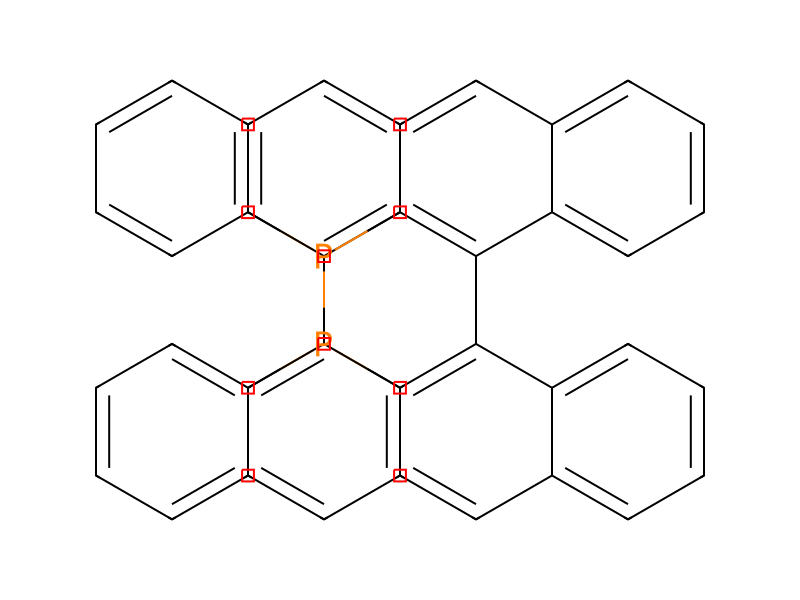
HCID 10796Cesium carbonateHCID 225219p-Aminophenylacetic acid ethyl esterHCID 634876Binap, (A+-)-HCID 901124124-Chloro-2-(3-chlorophenyl)-6-cyclopropylpyridine

Product 1

HCID 90112160Ethyl 2-(4-((2-(3-chlorophenyl)-6-cyclopropylpyridin-4-yl)amino)phenyl)acetateYield 33%

Reagents, catalysts & solvents 4

HCID 167845palladium(II) acetateCatalystHCID 962WaterSolventHCID 8857Ethyl AcetateSolventHCID 312751,4-DioxaneSolvent

Conditions

Temperature
120 °C

Procedure

A 10-mL microwave vial was charged with 4-chloro-2-(3-chlorophenyl)-6-cyclopropylpyridine (0.300 g, 1.14 mmol), 4-aminophenyl acetic acid ethyl ester (0.203 g, 1.14 mmol), palladium acetate (0.013 g, 0.057 mmol), rac-BINAP (0.053 g, 0.085 mmol) and cesium carbonate (0.925 g, 2.84 mmol) in dioxane (6 mL) under argon. The reaction mixture was heated to 120° C. under microwave irradiation for 2 h. After this time, the reaction mixture was cooled, diluted with ethyl acetate (25 mL) and water (25 mL). The aqueous layer was extracted with ethyl acetate (25 mL). The combined extract was washed with saturated sodium chloride (2×5 mL), dried over anhydrous sodium sulfate, filtered, and the filtrate was concentrated under reduced pressure. The residue was purified by chromatography on silica using hexanes/ethyl acetate (10:0 to 0:10) to afford the title compound (0.152 g, 33%) as a colorless oil: MW=406.90. 1H NMR (CDCl3, 500 MHz) δ 7.94-7.92 (m, 1H), 7.80-7.76 (m, 1H), 7.34-7.31 (m, 2H), 7.31-7.27 (m, 2H), 7.18-7.15 (m, 2H), 6.66 (d, J=2.5 Hz, 1H), 5.96 (s, 1H), 4.18 (q, J=7.5 Hz, 2H), 3.61 (s, 2H), 1.99-1.92 (m, 1H), 1.28 (t, J=7.0 Hz, 3H), 1.13-1.08 (m, 2H), 0.96-0.91 (m, 2H); ESI MS m/z 407

Workup

  1. temperatureAfter this time, the reaction mixture was cooled
  2. extractionThe aqueous layer was extracted with ethyl acetate (25 mL)
  3. extractionThe combined extract
  4. washwas washed with saturated sodium chloride (2×5 mL)
  5. dry with materialdried over anhydrous sodium sulfate
  6. filtrationfiltered
  7. concentrationthe filtrate was concentrated under reduced pressure
  8. customThe residue was purified by chromatography on silica

Sources & evidence

ORD record
ord-8bd9c1df2eba46b09d131809a5a0f903
Source dataset
uspto-grants-2015_12
DOI
10.6084/m9.figshare.5104873.v1
Patent number
US09221843B2

Reaction notes

On this pageParticipantsConditionsProcedureWorkupSources & evidenceReaction notes