Water → 5-Bromo-3-(2,6-dimethylpyridin-3-yloxy)picolinonitrile
Reaction equation

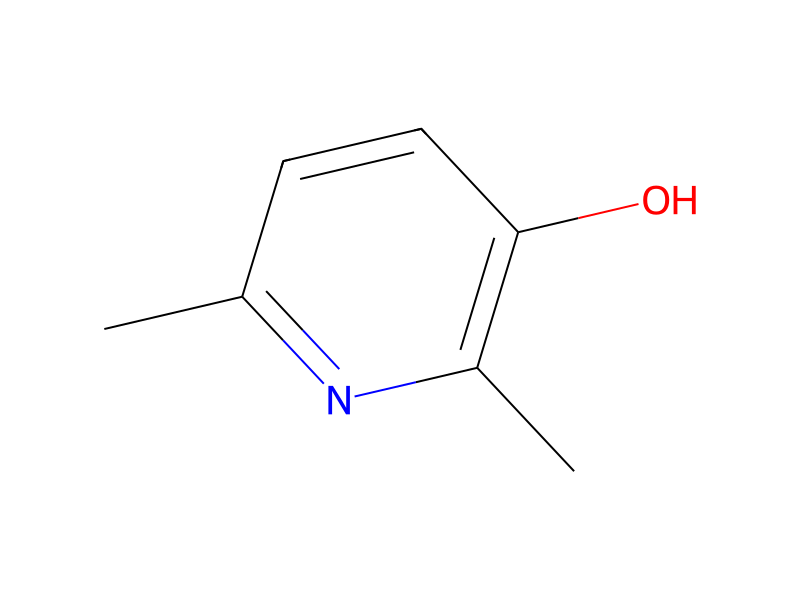
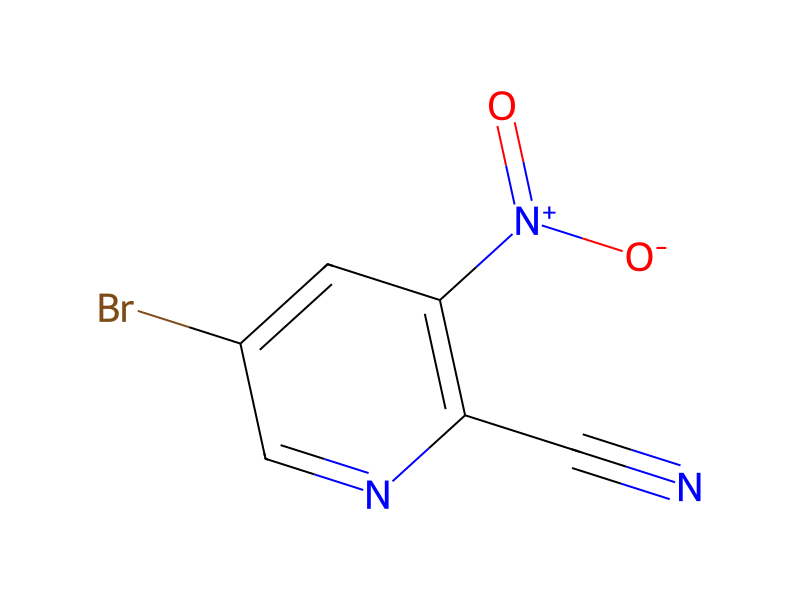
[CH3:1][C:2]1[C:7]([OH:8])=[CH:6][CH:5]=[C:4]([CH3:9])[N:3]=1.[H-].[Na+].[Br:12][C:13]1[CH:14]=[C:15]([N+]([O-])=O)[C:16]([C:19]#[N:20])=[N:17][CH:18]=1.O>CN(C=O)C>[Br:12][C:13]1[CH:14]=[C:15]([O:8][C:7]2[C:2]([CH3:1])=[N:3][C:4]([CH3:9])=[CH:5][CH:6]=2)[C:16]([C:19]#[N:20])=[N:17][CH:18]=1Participants
6




Procedure
To a 0° C. solution of 2,6-dimethylpyridin-3-ol (10 g, 81.2 mmol) in DMF (50 ml) was added sodium hydride (60% dispersion in oil, 3.4 g, 85 mmol). After 15 minutes, 5-bromo-3-nitropicolinonitrile (18.5 g, 81 mmol) was added and the mixture was allowed to warm slowly to ambient temperature. The reaction mixture was slowly added to 500 mL of rapidly stirring water. A light red solid formed and then the material formed a gum. The gum was extracted into ethyl acetate, and the organics washed with brine, dried over MgSO4 and concentrated in vacuo to afford 5-bromo-3-(2,6-dimethylpyridin-3-yloxy)picolinonitrile (25 g, 82 mmol, 101% yield).
Workup
- customA light red solid formed
- customthe material formed a gum
- extractionThe gum was extracted into ethyl acetate
- washthe organics washed with brine
- dry with materialdried over MgSO4
- concentrationconcentrated in vacuo
Sources & evidence
- ORD record
- ord-df9d5f886d404ab9804c313940d032ff
- Source dataset
- uspto-grants-2012_07
- Patent number
- US08212045B2
Reaction notes
Loading…