HomeMCPWorkbenchSkills
HomeWorkbenchNotificationsMe
llms.txt · MCP GuidePrivacy Policy · Terms of Service · Supportv1.8.0
  1. Home
  2. /Reaction

Cerium(III) chloride → 5-Bromo-2-chlorophenyl 6-ethyl-3-pyridyl ketone

HRID 1514607
Notes
Print preview

Reaction equation

HRID 1514607 reaction equation
Br[C:2]1[N:7]=[CH:6][C:5]([C:8]([C:10]2[CH:15]=[C:14]([Br:16])[CH:13]=[CH:12][C:11]=2[Cl:17])=[O:9])=[CH:4][CH:3]=1.[CH2:18]([Al](CC)CC)[CH3:19].[Cl-].[Ce+3].[Cl-].[Cl-].C(=O)([O-])O.[Na+]>O1CCCC1.CO.C1C=CC([P]([Pd]([P](C2C=CC=CC=2)(C2C=CC=CC=2)C2C=CC=CC=2)([P](C2C=CC=CC=2)(C2C=CC=CC=2)C2C=CC=CC=2)[P](C2C=CC=CC=2)(C2C=CC=CC=2)C2C=CC=CC=2)(C2C=CC=CC=2)C2C=CC=CC=2)=CC=1>[CH2:18]([C:2]1[N:7]=[CH:6][C:5]([C:8]([C:10]2[CH:15]=[C:14]([Br:16])[CH:13]=[CH:12][C:11]=2[Cl:17])=[O:9])=[CH:4][CH:3]=1)[CH3:19]
ParticipantsConditionsProcedureWorkupSources & evidenceReaction notes

Participants

8

Reactant 4

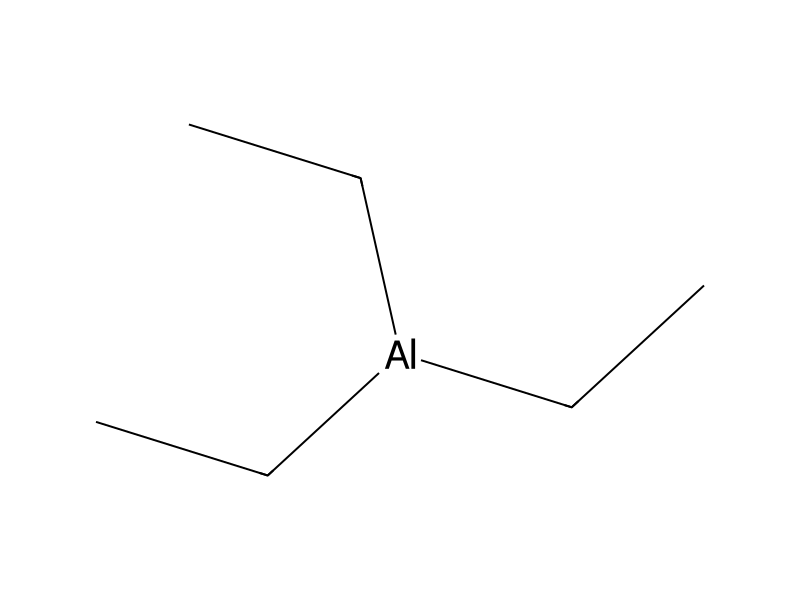
HCID 24636Cerium(III) chlorideHCID 516892Sodium BicarbonateHCID 16682930TriethylaluminumHCID 469303355-Bromo-2-chlorophenyl 6-bromo-3-pyridyl ketone

Product 1

HCID 469305245-Bromo-2-chlorophenyl 6-ethyl-3-pyridyl ketone

Reagents, catalysts & solvents 3

HCID 178418397
HCID 178418397, compound
Catalyst
HCID 887MethanolSolvent
HCID 8028TetrahydrofuranSolvent

Conditions

Temperature
30 °C

Procedure

5-Bromo-2-chlorophenyl 6-bromo-3-pyridyl ketone (3.2 g) from Reference Example 135-(2) was dissolved in tetrahydrofuran (80 ml), and added thereto were triethylaluminium (1.0 M hexane solution, 9.9 ml), tetrakis(triphenylphosphine)palladium(0) (570 mg) and cerium(III) chloride (7.3 g), and the mixture was stirred at 30° C. for 1.5 hours. The reaction mixture was diluted with methanol, and the reaction solution was basified with a saturated aqueous sodium hydrogen carbonate solution. The insoluble materials were filtered off and, the filtrate was extracted with ethyl acetate and dried over magnesium sulfate. The solvent was evaporated under reduced pressure, and the residue was purified by silica gel column chromatography (hexane:ethyl acetate=99:1-85:15) to give 5-bromo-2-chlorophenyl 6-ethyl-3-pyridyl ketone (1.98 g) as a colorless solid. APCI-Mass m/Z 324/326 (M+H). (2) The above 5-bromo-2-chlorophenyl 6-ethyl-3-pyridyl ketone was treated in a manner similar to Reference Example 14-(1) to give the desired 5-bromo-2-chloro-1-(6-ethyl-3-pyridylmethyl)benzene as a colorless oil. APCI-Mass m/Z 310/312 (M+H).

Workup

  1. additionadded
  2. filtrationThe insoluble materials were filtered off
  3. extractionthe filtrate was extracted with ethyl acetate
  4. dry with materialdried over magnesium sulfate
  5. customThe solvent was evaporated under reduced pressure
  6. customthe residue was purified by silica gel column chromatography (hexane:ethyl acetate=99:1-85:15)

Sources & evidence

ORD record
ord-7e115e6e564847a6abd930af60eb2756
Source dataset
uspto-grants-2012_07
DOI
10.6084/m9.figshare.5104873.v1
Patent number
US08222219B2

Reaction notes

Loading…

On this pageParticipantsConditionsProcedureWorkupSources & evidenceReaction notes