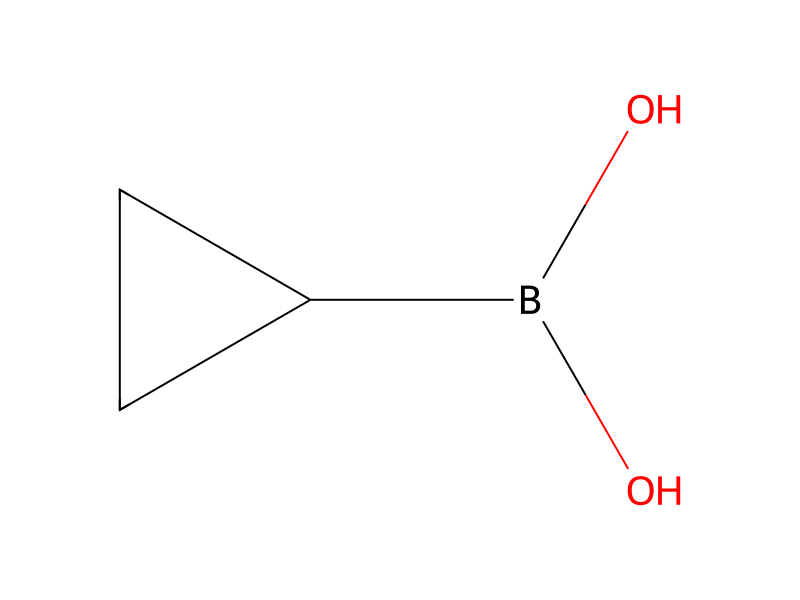
[CH2:1]([O:3][C:4]([C:6]1[C:7]([CH3:18])=[N:8][N:9]([C:11]2[C:16](Br)=[CH:15][CH:14]=[CH:13][N:12]=2)[CH:10]=1)=[O:5])[CH3:2].P([O-])([O-])([O-])=O.[K+].[K+].[K+].[CH:27]1(B(O)O)[CH2:29][CH2:28]1>C([O-])(=O)C.[Pd+2].C([O-])(=O)C.C1(C)C=CC=CC=1.O>[CH2:1]([O:3][C:4]([C:6]1[C:7]([CH3:18])=[N:8][N:9]([C:11]2[C:16]([CH:27]3[CH2:29][CH2:28]3)=[CH:15][CH:14]=[CH:13][N:12]=2)[CH:10]=1)=[O:5])[CH3:2]A mixture of 1-(3-bromo-pyridin-2-yl)-3-methyl-pyrazole-4-carboxylic acid ethyl ester (1.5 g, 5.5 mmol), potassium phosphate (4.0 g, 19.2 mmol), cyclopropyl boronic acid (0.7 g, 8.2 mmol) and toluene/water (2:1, 15 mL) is degassed with nitrogen and tricylohexylphosphene (0.153 g, 0.54 mmol) and palladium acetate (0.061 g, 0.27 mmol) are added. The mixture is degassed again with nitrogen and the reaction vessel is sealed and heated at 100° C. for 16 h. The reaction mixture is concentrated, diluted with water and extracted with ethyl acetate. The organic layer is dried over sodium sulfate, filtered and concentrated under reduced pressure. The crude mixture is purified by chromatography on silica gel eluting with hexane/ethyl acetate (85:15) to yield 1.6 g (93%) of 1-(3-cyclopropyl-pyridin-2-yl)-3-methyl-pyrazole-4-carboxylic acid ethyl ester. MS (m/z): 272 (M+1).