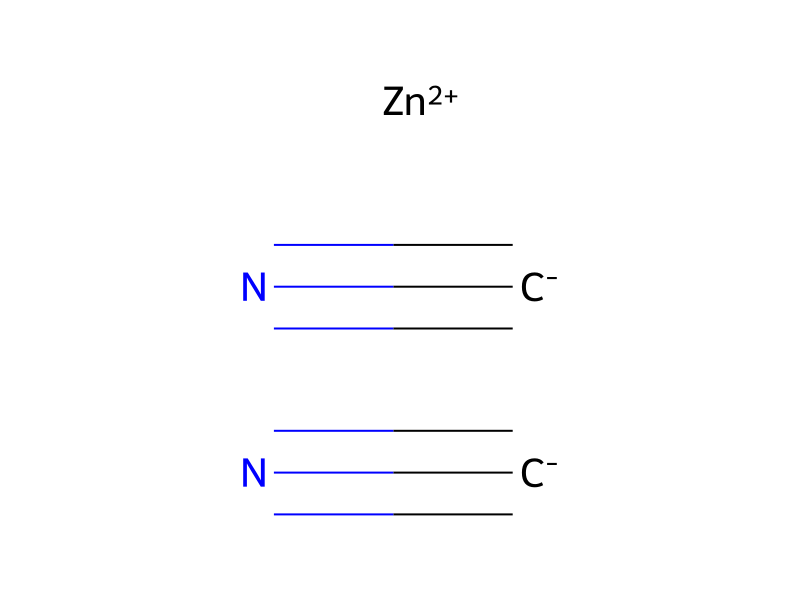
Br[C:2]1[CH:3]=[C:4]2[C:8](=[CH:9][CH:10]=1)[CH2:7][CH:6]([N:11]1[CH2:16][CH2:15][N:14]([C:17]([O:19][C:20]([CH3:23])([CH3:22])[CH3:21])=[O:18])[CH2:13][CH2:12]1)[CH2:5]2.ClCCl.[CH3:27][N:28]1CCCC1=O>[C-]#N.[Zn+2].[C-]#N.C1(P(C2C=CC=CC=2)C2C=CC=CC=2)C=CC=CC=1.[Pd]>[C:27]([C:2]1[CH:3]=[C:4]2[C:8](=[CH:9][CH:10]=1)[CH2:7][CH:6]([N:11]1[CH2:16][CH2:15][N:14]([C:17]([O:19][C:20]([CH3:21])([CH3:22])[CH3:23])=[O:18])[CH2:13][CH2:12]1)[CH2:5]2)#[N:28]To a 5 mL microwave vial was charged with tert-butyl 4-(5-bromo-2,3-dihydro-1H-inden-2-yl)piperazine-1-carboxylate (370 mg, 0.97 mmol), zinc cyanide (114 mg, 0.97 mmol) and palladium triphenylphosphane (1:4) (56 mg, 0.049 mmol). Above mixture was dissolved in N-methyl-2-pyrrolidinone (1 mL). The reaction vial was degassed, filled with N2 and heated in microwave reactor at 85° C. for 2 hr, then at 100° C. for 20 min. To above reaction was added dichloromethane (5 mL), washed with small amount of water. The organic phase was dried over MgSO4, filtered and concentrated. The product was obtained as white solid after purification by flash column chromatography. LC-MS (IE, m/z): 328.3 [M+1]+. 1H NMR (500 MHz, CDCl3, δ in ppm): 7.47 (s, 1H), 7.45 (d, J=8.0 Hz, 1H), 7.28 (d, J=8.0 Hz, 1H), 2.4-3.6 (m, 13H), 1.5 (s, 9H).