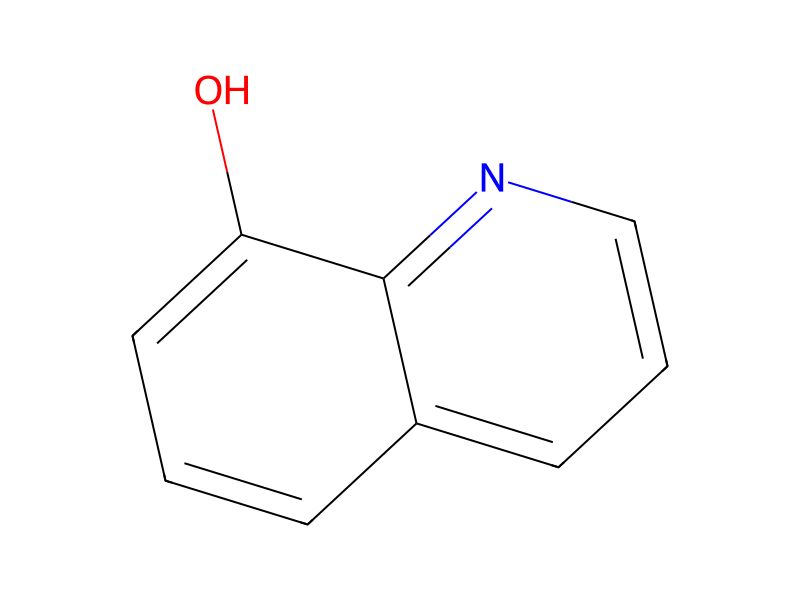
An oven-dried and nitrogen-cooled vial was charged with 4-trifluoromethyl pyrazole (77.0 mg, 0.56 mmol), quinolin-8-ol (10 mg, 0.07 mmol), copper(I) iodide (14 mg, 0.073 mmol), and potassium carbonate (140 mg, 1.0 mmol). A solution of methyl 4-(1-(4-bromophenyl)-4-methylpent-1-en-2-yl)benzoate (182.7 mg, 0.489 mmol) in dimethylsulfoxide (2.5 mL) was then added. The vial was capped and evacuated and back-filled with nitrogen four times. The reaction was then heated to 90° C. for 18 hours. The reaction was cooled to room temperature and partitioned between saturated ammonium chloride and ethyl acetate. The aqueous layer was extracted again with ethyl acetate, and the combined organics were dried over magnesium sulfate, filtered, and concentrated. Column chromatography (0-10% ethyl acetate in heptane) provided methyl 4-(4-methyl-1-(4-(4-(trifluoromethyl)-1H-pyrazol-1-yl)phenyl)pent-1-en-2-yl)benzoate (19.8 mg, 9.5%) as an approximate 1:1 mixture of E/Z isomers. 1H NMR (400 MHz, CDCl3, δ): 8.20 (s, 1H), 8.06 (s, 1H), 8.05-8.01 (m, 2H), 7.98-7.93 (m, 2H), 7.91 (s, 1H), 7.83 (s, 1H), 7.71-7.66 (m, 2H), 7.53-7.49 (m, 2H), 7.46-7.42 (m, 2H), 7.41-7.36 (m, 2H), 7.24-7.20 (m, 2H), 7.01-6.96 (m, 2H), 6.78 (s, 1H), 6.49 (s, 1H), 3.92 (s, 3H), 3.90 (s, 3H), 2.62 (d, J=7.2 Hz, 2H), 2.41 (dd, J=7.2, 1.0 Hz, 2H), 1.70-1.48 (m, 2H), 0.90 (d, J=6.6 Hz, 6H), 0.80 (d, J=6.6 Hz, 6H). MS (M+1): 429.3.