HomeMCPSkillsWorkbenchOpenChem
HomeWorkbenchNotificationsMe
llms.txt · skill.md · MCP GuidePrivacy Policy · Terms of Service · Supportv1.8.4
  1. Home
  2. /Reaction

Trifluoroacetic acid → Trifluoroacetate

HRID 1522047
Print

Reaction equation

CC1(C)C(C)(C)OB([C:9]2[CH:14]=[CH:13][N:12]=[C:11]3[NH:15][C:16]([CH:18]4[CH2:23][CH2:22][N:21](C(OC(C)(C)C)=O)[CH2:20][CH2:19]4)=[CH:17][C:10]=23)O1.[CH2:32]([NH:39][C:40]1[CH:45]=[N:44][CH:43]=[C:42](Br)[N:41]=1)[C:33]1[CH:38]=[CH:37][CH:36]=[CH:35][CH:34]=1.C1(P(C2CCCCC2)C2CCCCC2)CCCCC1.C(=O)([O-])[O-].[Cs+].[Cs+].[F:72][C:73]([F:78])([F:77])[C:74]([OH:76])=[O:75]>C(Cl)Cl.Cl[Pd](Cl)([P](C1C=CC=CC=1)(C1C=CC=CC=1)C1C=CC=CC=1)[P](C1C=CC=CC=1)(C1C=CC=CC=1)C1C=CC=CC=1.O1CCOCC1>[CH2:32]([NH:39][C:40]1[CH:45]=[N:44][CH:43]=[C:42]([C:9]2[CH:14]=[CH:13][N:12]=[C:11]3[NH:15][C:16]([CH:18]4[CH2:19][CH2:20][NH:21][CH2:22][CH2:23]4)=[CH:17][C:10]=23)[N:41]=1)[C:33]1[CH:38]=[CH:37][CH:36]=[CH:35][CH:34]=1.[F:72][C:73]([F:78])([F:77])[C:74]([O-:76])=[O:75]

ParticipantsConditionsProcedureWorkupSources & evidenceReaction notes

Participants

10

Reactant 5

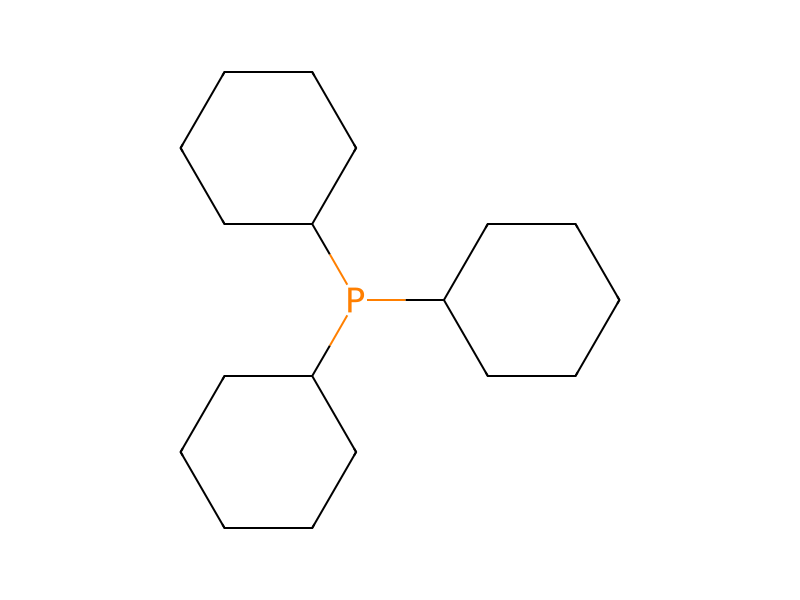
HCID 6422Trifluoroacetic acidHCID 10796Cesium carbonateHCID 75806TricyclohexylphosphineHCID 90412512HCID 90412512, compoundHCID 90413258tert-butyl 4-(4-(4,4,5,5-tetramethyl-1,3,2-dioxaborolan-2-yl)-1H-pyrrolo[2,3-b]pyridin-2-yl)piperidine-1-carboxylate

Product 2

HCID 84468
Trifluoroacetate
HCID 90412090N-benzyl-6-(2-(piperidin-4-yl)-1H-pyrrolo[2,3-b]pyridin-4-yl)pyrazin-2-amine

Reagents, catalysts & solvents 3

HCID 178418476HCID 178418476, compoundCatalystHCID 6344DichloromethaneSolventHCID 312751,4-DioxaneSolvent

Conditions

Temperature
100 °C

Procedure

A mixture of Example 21A (400 mg, 0.94 mmol), N-benzyl-6-bromopyrazin-2-amine (297 mg, 1.12 mmol), bis(triphenylphosphine)palladium(ii) chloride (66 mg, 0.094 mmol), tricyclohexylphosphine (26 mg, 0.094 mmol) and cesium carbonate (921 mg, 2.8 mmol) was purged with nitrogen, then anhydrous dioxane (50 mL) was added. The mixture was heated at 100° C. overnight. The reaction was cooled to room temperature and filtrated; and the solid was washed with dichloromethane (200 mL). The filtrate was concentrated and purified by flash chromatography on silica gel using an ISCO Companion eluting with heptanes/ethyl acetate (30%) to give Boc-protected intermediate that was dissolved in CH2Cl2 (10 mL) then treated with trifluoroacetic acid (1 mL). The mixture was stirred at room temperature for 5 hours and concentrated. The residue was purified by reverse-phase HPLC on Zorbax XDB C-18 using a gradient of 5-40% acetonitrile/water (containing 0.1% trifluoroacetic acid) to afford the title compound as trifluoroacetate salt. MS (DCI/NH3) m/z 385 (M+H)+.

Workup

  1. temperatureThe reaction was cooled to room temperature
  2. filtrationfiltrated
  3. washand the solid was washed with dichloromethane (200 mL)
  4. concentrationThe filtrate was concentrated
  5. custompurified by flash chromatography on silica gel using an ISCO Companion
  6. washeluting with heptanes/ethyl acetate (30%)
  7. customto give Boc-protected intermediate
  8. concentrationconcentrated
  9. customThe residue was purified by reverse-phase HPLC on Zorbax XDB C-18

Sources & evidence

ORD record
ord-13c3b27ef2f14c85a0ded93e92e5180a
Source dataset
uspto-grants-2015_07
DOI
10.6084/m9.figshare.5104873.v1
Patent number
US09073922B2

Reaction notes

On this pageParticipantsConditionsProcedureWorkupSources & evidenceReaction notes