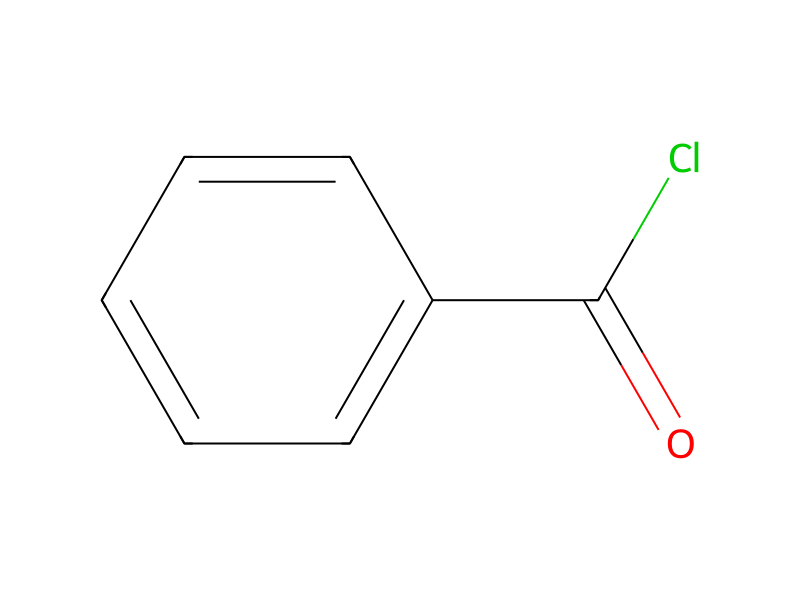
[OH:1][CH:2]1[C:10]2[C:5](=[CH:6][CH:7]=[CH:8][CH:9]=2)[N:4]([CH2:11][CH2:12][CH3:13])[C:3]1=[O:14].C(N(CC)CC)C.[C:22](Cl)(=[O:29])[C:23]1[CH:28]=[CH:27][CH:26]=[CH:25][CH:24]=1>CN(C1C=CN=CC=1)C.ClCCl>[C:22]([O:1][CH:2]1[C:10]2[C:5](=[CH:6][CH:7]=[CH:8][CH:9]=2)[N:4]([CH2:11][CH2:12][CH3:13])[C:3]1=[O:14])(=[O:29])[C:23]1[CH:28]=[CH:27][CH:26]=[CH:25][CH:24]=1To a flame dried flask cooled under argon was added the crude 3-hydroxy-1-propylindolin-2-one (0.1 grams, 0.52 mmol) and DMAP (0.007 grams, 0.057 mmol). This was taken up in 5.0 mL of dichloromethane. While stirring at room temperature triethyl amine (78 μL, 0.57 mmol) was added followed by benzoyl chloride (67 μL, 0.57 mmol). The reaction stirred at room temperature until all of the starting material had been consumed. Once complete, the reaction was diluted with water, and the two layers separated. The aqueous layer was washed with dichloromethane twice. The combined organic solution was dried with sodium sulfate, filtered, and concentrated. Chromatography on silica gel using Hexanes/Ethyl acetate (8:2) afforded the desired compound. Yield, 67% for the two steps. 1H-NMR δ 8.11 (d, 2H), 7.58 (dd, 1H), 7.44 (m, 3H), 7.36 (t, 1H), 7.05 (t, 1H), 6.89 (d, 1H), 6.19 (s, 1H), 3.72 (m, 2H), 1.77 (m, 2H), 1.03 (t, 3H).