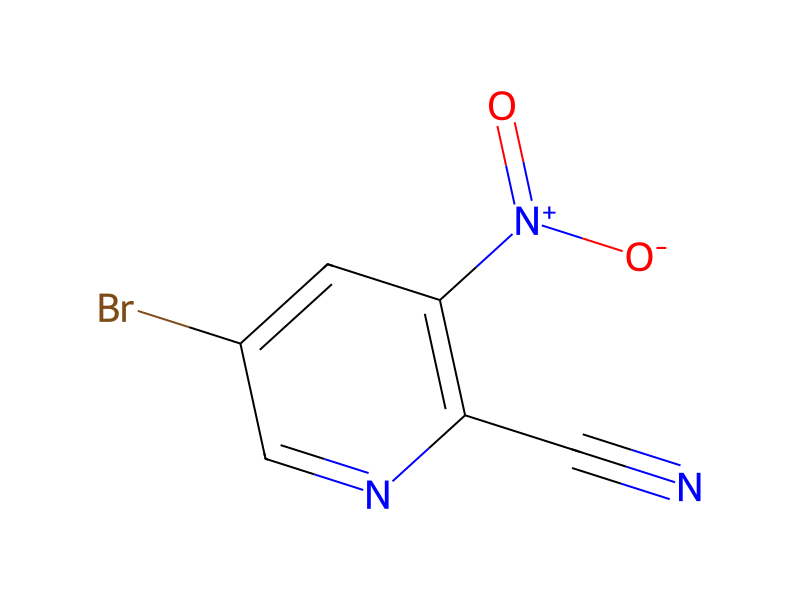
[CH2:1]([C:3]1[C:8]([OH:9])=[CH:7][CH:6]=[CH:5][N:4]=1)[CH3:2].[H-].[Na+].Br[C:13]1[CH:14]=[C:15]([N+]([O-])=O)[C:16]([C:19]#[N:20])=[N:17][CH:18]=1.[N:24]1[CH:29]=[CH:28][CH:27]=[CH:26][C:25]=1[SH:30]>CN(C=O)C.O>[CH2:1]([C:3]1[C:8]([O:9][C:15]2[C:16]([C:19]#[N:20])=[N:17][CH:18]=[C:13]([S:30][C:25]3[CH:26]=[CH:27][CH:28]=[CH:29][N:24]=3)[CH:14]=2)=[CH:7][CH:6]=[CH:5][N:4]=1)[CH3:2]To a solution of 2-ethylpyridin-3-ol (2.5 g, 20.3 mmol) in DMF (20 ml) at 0° C. was added sodium hydride (0.512 g, 21.3 mmol). After 15 minutes, 5-bromo-3-nitropicolinonitrile (4.63 g, 20.3 mmol) was added and the mixture was allowed to warm slowly to ambient temperature and stirred for 2 hours. Pridine-2-thiol (0.804 g, 7.23 mmol) was added followed by sodium hydride (0.182 g, 7.60 mmol) and the mixture was stirred at ambient temperature overnight. Water (200 ml) was added and the mixture was extracted with diethyl ether (3×100 mL), washed with brine, dried over MgSO4, filtered and concentrated in vacuo. The residue was purified over silica gel (25 to 75% EtOAc in Hexanes) to afford 3-(2-ethylpyridin-3-yloxy)-5-(pyridin-2-ylthio)picolinonitrile (1.4 g, 4.19 mmol).
Loading…