HomeMCPWorkbenchSkills
HomeWorkbenchNotificationsMe
llms.txt · MCP GuidePrivacy Policy · Terms of Service · Supportv1.8.0
  1. Home
  2. /Reaction

Toluene → HCID 67960249, compound

HRID 1527832
Notes
Print preview

Reaction equation

HRID 1527832 reaction equation
C1(C)C=CC=CC=1.CSC.B.[Br:12][CH2:13][CH2:14][CH:15]=[C:16]1[C:22]2[CH:23]=[CH:24][CH:25]=[CH:26][C:21]=2[CH2:20][C:19](=[O:27])[C:18]2[CH:28]=[CH:29][CH:30]=[CH:31][C:17]1=2.C(=O)(O)[O-].[Na+]>CO.O1CCCC1>[Br:12][CH2:13][CH2:14][CH:15]=[C:16]1[C:22]2[CH:23]=[CH:24][CH:25]=[CH:26][C:21]=2[CH2:20][C@H:19]([OH:27])[C:18]2[CH:28]=[CH:29][CH:30]=[CH:31][C:17]1=2
ParticipantsConditionsProcedureWorkupSources & evidenceReaction notes

Participants

7

Reactant 4

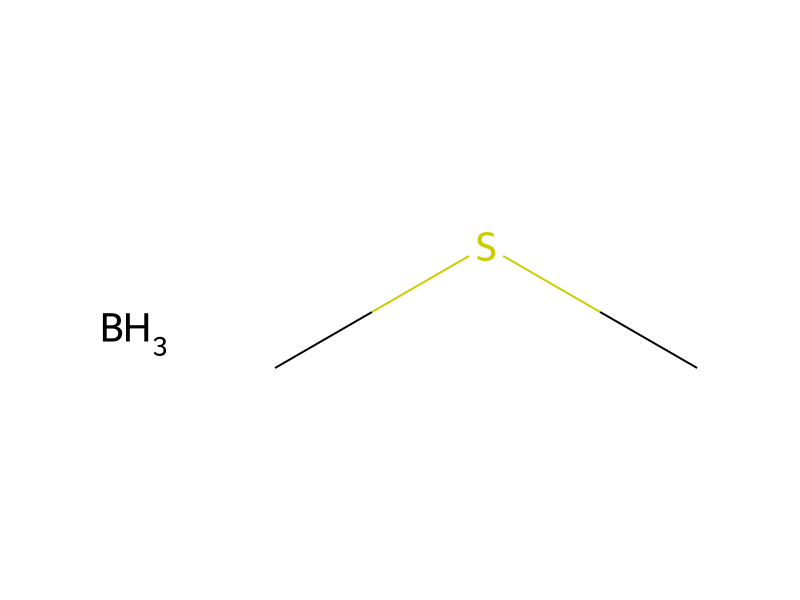
HCID 1140TolueneHCID 516892Sodium BicarbonateHCID 12423031(Dimethyl sulfide)trihydroboronHCID 68425498HCID 68425498, compound

Product 1

HCID 67960249HCID 67960249, compoundYield 89.3%

Reagents, catalysts & solvents 2

HCID 887
Methanol
Solvent
HCID 8028TetrahydrofuranSolvent3×

Conditions

Temperature
-20 °C

Procedure

In a dry 40 mL vial with a septum cap, R-CBS catalyst, 1 M in toluene (3.98 mL, 3.98 mmol), 2.0 M borane-dimethyl sulfide in tetrahydrofuran (1.69 mL, 3.37 mmol), and 10 mL dry tetrahydrofuran were premixed. The premix was cooled to −20° C. in an acetonitrile/dry ice bath. A tetrahydrofuran solution of 5-(3-bromo-propylidene)-5,11-dihydro-dibenzo[a,d]cyclohepten-10-one (6) (1.00 g, 3.06 mmol) which had been stored over molecular sieves was then added dropwise. The reaction was allowed to slowly come to room temperature over ˜90 minutes. When complete, the reaction was cooled to 0° C. and 1 mL methanol added to quench the reaction. After 15 minutes of further stirring, 1 mL saturated sodium bicarbonate was added. The reaction mixture was then concentrated under reduced pressure and the residue separated between water (50 mL) and dichloromethane (50 mL). The organic layer was then separated, evaporated, and the crude residue was purified by silica gel chromatography using a 5-25% hexanes:ethyl acetate gradient. 0.90 g (89%) (S)-5-(3-Bromo-propylidene)-10,11-dihydro-5H-dibenzo[a,d]cyclohepten-10-ol (7a) was obtained as a faintly yellow oil. ESI MS m/z 623.3 (2(M−H2O)+H)+.


Workup

  1. customIn a dry 40 mL vial with a septum cap
  2. additionwas then added dropwise
  3. temperatureWhen complete, the reaction was cooled to 0° C.
  4. customto quench
  5. customthe reaction
  6. concentrationThe reaction mixture was then concentrated under reduced pressure
  7. customthe residue separated between water (50 mL) and dichloromethane (50 mL)
  8. customThe organic layer was then separated
  9. customevaporated
  10. customthe crude residue was purified by silica gel chromatography

Sources & evidence

ORD record
ord-8fde484ce95b4564a691885c152b1f96
Source dataset
uspto-grants-2015_07
DOI
10.6084/m9.figshare.5104873.v1
Patent number
US09090535B2

Reaction notes

Loading…

On this pageParticipantsConditionsProcedureWorkupSources & evidenceReaction notes