Reaction equation

[Br:1][C:2]1[CH:3]=[CH:4][C:5]2[S:9][C:8]([C:10]([OH:12])=O)=[CH:7][C:6]=2[CH:13]=1.[ClH:14].Cl.[NH2:16][C@@H:17]1[CH:22]2[CH2:23][CH2:24][N:19]([CH2:20][CH2:21]2)[CH2:18]1.CN(C(ON1N=NC2C=CC=NC1=2)=[N+](C)C)C.F[P-](F)(F)(F)(F)F.C(N(CC)C(C)C)(C)C>CN(C=O)C>[ClH:14].[N:19]12[CH2:24][CH2:23][CH:22]([CH2:21][CH2:20]1)[C@@H:17]([NH:16][C:10]([C:8]1[S:9][C:5]3[CH:4]=[CH:3][C:2]([Br:1])=[CH:13][C:6]=3[CH:7]=1)=[O:12])[CH2:18]2Participants
6
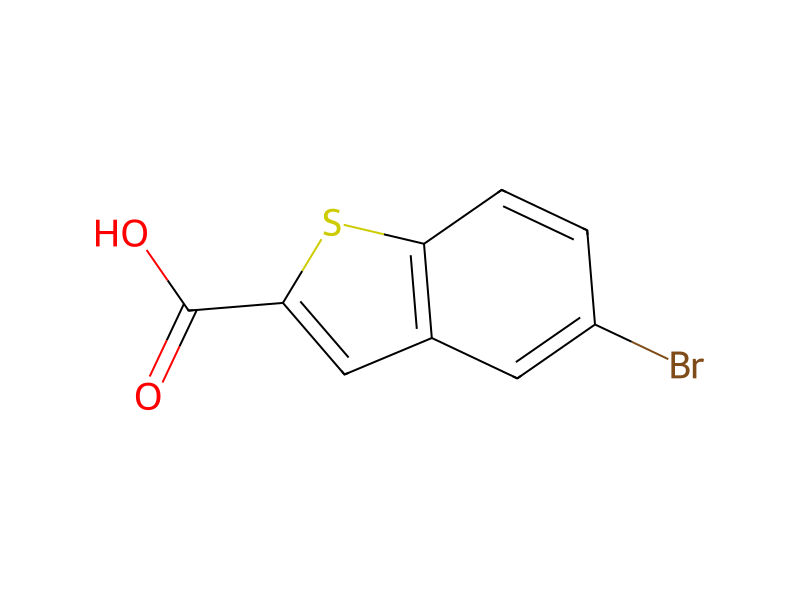
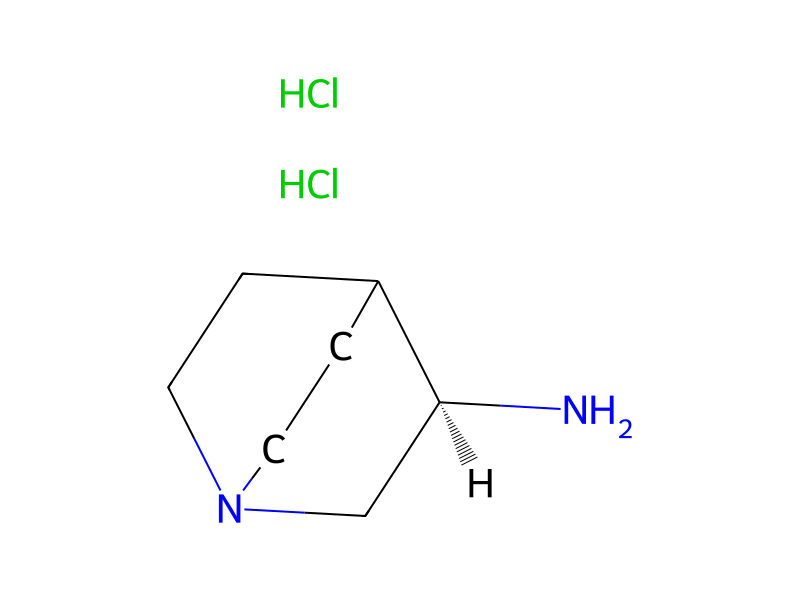
Reactant 4


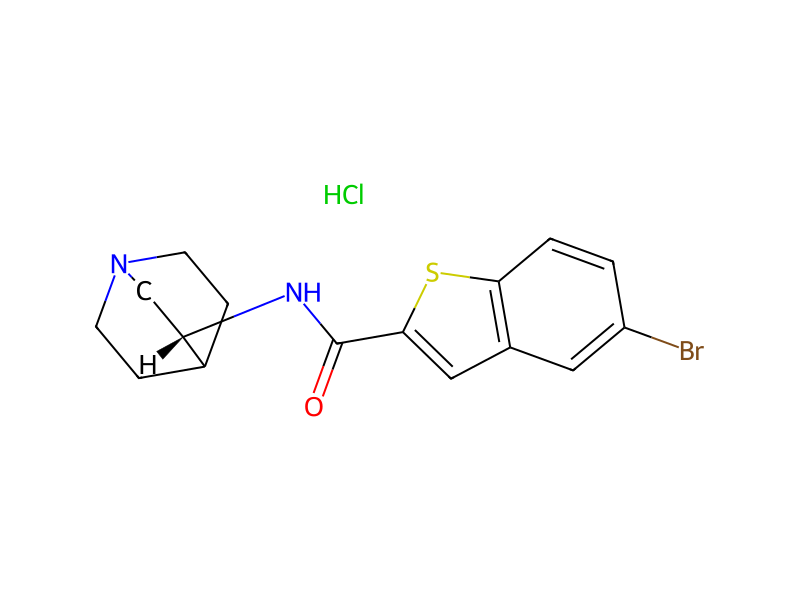
Product 1
Reagents, catalysts & solvents 1

Procedure
133.7 mg (0.52 mmol) of 5-bromo-1-benzothiophene-2-carboxylic acid, 155.4 mg (0.78 mmol) of (R)-3-aminoquinuclidine dihydrochloride, 296.7 mg (0.78 mmol) of HATU, 369.8 mg (2.86 mmol) of N,N-diisopropylethylamine and 1.5 ml of DMF are reacted according to the general procedure (variant A). The reaction mixture is purified by preparative HPLC. The product is dissolved in acetonitrile, and an excess of 1N hydrochloric acid is added. The solvent is then removed. 175 mg (84% of theory) of the title compound are isolated.
Workup
- customThe reaction mixture is purified by preparative HPLC
- dissolutionThe product is dissolved in acetonitrile
- additionan excess of 1N hydrochloric acid is added
- customThe solvent is then removed
Sources & evidence
- ORD record
- ord-85105656da654fbcaa528b3f63b582a0
- Source dataset
- uspto-grants-2010_06
- Patent number
- US07732477B2
Linked notes
Loading…