HomeMCPWorkbenchSkills
HomeWorkbenchNotificationsMe
llms.txt · MCP GuidePrivacy Policy · Terms of Service · Supportv1.8.0
  1. Home
  2. /Reaction

Ammonia → HCID 12272532, compound

HRID 1580157
Notes
Print preview

Reaction equation

HRID 1580157 reaction equation
[NH2-].[Na+].[C:3]1(=[O:12])[C:11]2[C:6](=[CH:7][CH:8]=[CH:9][CH:10]=2)[CH2:5][CH2:4]1.N.[C:14]1([CH3:29])[CH:19]=[CH:18][C:17]([C:20](OC2C=CC=CC=2)=[O:21])=[CH:16][CH:15]=1.Cl>CCOCC>[C:14]1([CH3:29])[CH:19]=[CH:18][C:17]([C:20]([CH:4]2[CH2:5][C:6]3[C:11](=[CH:10][CH:9]=[CH:8][CH:7]=3)[C:3]2=[O:12])=[O:21])=[CH:16][CH:15]=1
ParticipantsProcedureWorkupSources & evidenceReaction notes

Participants

7

Reactant 5

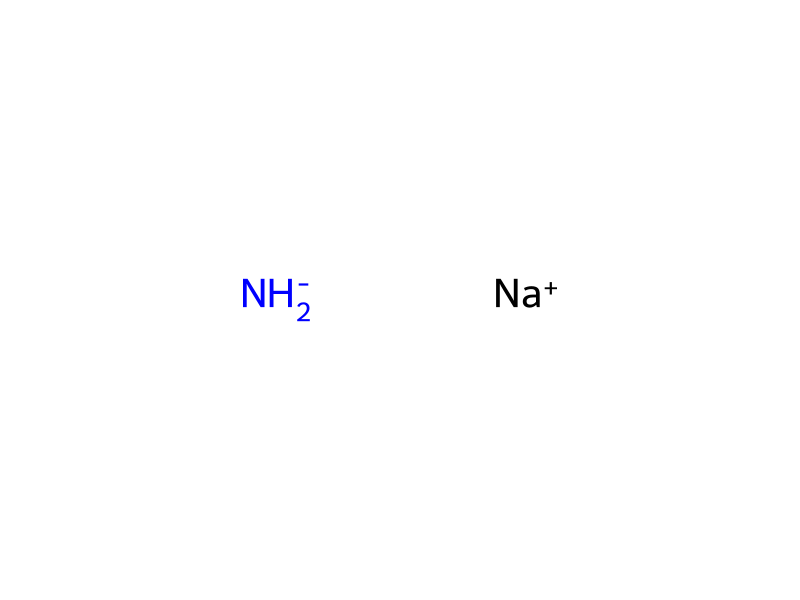
HCID 222AmmoniaHCID 313Hydrochloric AcidHCID 67351-IndanoneHCID 24533Sodium amideHCID 219444Phenyl 4-methylbenzoate

Product 1

HCID 12272532HCID 12272532, compound

Reagents, catalysts & solvents 1

HCID 3283
Diethyl Ether
Solvent
2×

Procedure

To a suspension of 7.8 g. of sodium amide in 100 ml. anhydrous ether under an atmosphere of nitrogen is added 13.2 g. of indan-1-one. Ammonia is evolved and the mixture is stirred and heated under reflux until evolution ceases, after about 1 hour. A solution of 21.2 g. of phenyl p-toluate in 250 ml. of ether is then added dropwise over a period of 15 min. and the resulting mixture is heated under reflux for 11/2 hr. It is then cooled and poured onto 500 g. of ice, and then made slightly acidic by the addition of 2N hydrochloric acid. The organic layer is separated and washed twice with a 10% solution of sodium bicarbonate and once with water. It is then shaken with a saturated aqueous solution of cupric acetate, and the 2-phase system is stirred vigorously overnight. The resulting brown solid produced is filtered off and added to a stirred mixture of 250 ml. of ether and 100 ml of 2N hydrochloric acid. After 1 hr. the ether layer is separated, washed with sodium bicarbonate solution and water and dried over sodium sulfate. Removal of the ether gives a crude crystalline residue which can be recrystallized from ether to give the title product (m.p. 103°-105°).

Workup

  1. additionTo a suspension of 7.8 g
  2. temperatureheated
  3. temperatureunder reflux until evolution ceases, after about 1 hour
  4. temperaturethe resulting mixture is heated
  5. temperatureunder reflux for 11/2 hr
  6. temperatureIt is then cooled
  7. additionpoured onto 500 g
  8. customThe organic layer is separated
  9. washwashed twice with a 10% solution of sodium bicarbonate and once with water
  10. stirringIt is then shaken with a saturated aqueous solution of cupric acetate
  11. stirringthe 2-phase system is stirred vigorously overnight
  12. customThe resulting brown solid produced
  13. filtrationis filtered off
  14. additionadded to a stirred mixture of 250 ml
  15. customthe ether layer is separated
  16. washwashed with sodium bicarbonate solution and water
  17. dry with materialdried over sodium sulfate
  18. customRemoval of the ether
  19. customgives a crude crystalline residue which
  20. customcan be recrystallized from ether

Sources & evidence

ORD record
ord-c1e639f9c9a74bc7bc5e70094a69261b
Source dataset
uspto-grants-1976_01
DOI
10.6084/m9.figshare.5104873.v1
Patent number
US03932430

Reaction notes

Loading…

On this pageParticipantsProcedureWorkupSources & evidenceReaction notes