HomeMCPWorkbenchSkills
HomeWorkbenchNotificationsMe
llms.txt · MCP GuidePrivacy Policy · Terms of Service · Supportv1.8.3
  1. Home
  2. /Reaction

Dimethylamine → 4-Dimethylamino-1-phenyl-3-butene-2-one

HRID 1584637
Print

Reaction equation

HRID 1584637 reaction equation
[CH3:1][N:2]([CH3:13])[CH2:3][C:4]#[C:5][CH2:6][C:7]1[CH:12]=[CH:11][CH:10]=[CH:9][CH:8]=1.C1(CC#C)C=CC=CC=1.C=O.CNC.ClC1C=C(C=CC=1)C(OO)=[O:33]>ClCCl>[CH3:13][N:2]([CH3:1])[CH:3]=[CH:4][C:5](=[O:33])[CH2:6][C:7]1[CH:12]=[CH:11][CH:10]=[CH:9][CH:8]=1
ParticipantsConditionsProcedureWorkupSources & evidenceReaction notes

Participants

7

Reactant 5

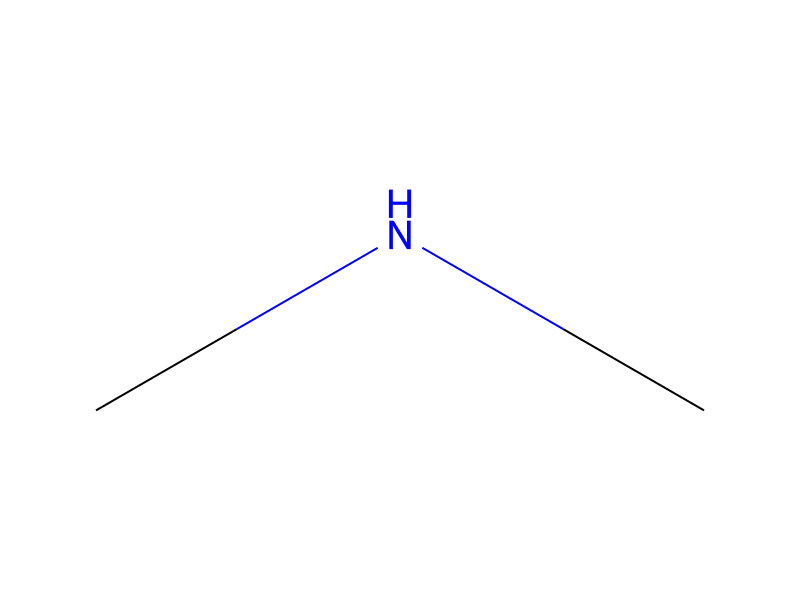
HCID 674DimethylamineHCID 712FormaldehydeHCID 70297m-Chloroperbenzoic acidHCID 575753BenzylacetyleneHCID 212250581-Dimethylamino-4-phenyl-2-butyne

Product 1

HCID 545705994-Dimethylamino-1-phenyl-3-butene-2-one

Reagents, catalysts & solvents 1

HCID 6344DichloromethaneSolvent

Conditions

Temperature
0 °C

Procedure

To an ice cold solution of 1-dimethylamino-4-phenyl-2-butyne (0.5 g; prepared by the Mannich reaction of 3-phenyl-1-propyne with formaldehyde and dimethylamine as per Mornet, et.al. Bull.Soc.Chim.Fr. 1974, 206) in dichloromethane (12 ml) was added in small portions 3-chloroperoxybenzoic acid (0.52 g). After the reaction was stirred at 0° C. for 20 minutes, the mixture was passed over twenty weight equivalents of basic alumina (Brockmann Grade I, 150 mesh) and the N-oxide was eluted using a solution of 10% methanol in dichloromethane. All fractions containing the desired amine N-oxide were combined and evaporated to near dryness in vacuo. The residue was treated successively three times with small portions of methanol (ca. 10 ml) followed by evaporation to near dryness, and the volume of the solution was adjusted to 25 mL by addition of methanol. The methanolic solution of the N-oxide was heated to reflux for approximately 4 hours and cooled. The solvent was evaporated to dryness in vacuo and the residue was chromatographed over silica gel (95:5 ethyl acetate-hexanes was used as the eluant) to give upon evaporation of the solvent in vacuo the desired product as an oil. MS(+ES) m/z: 190 (M+H)+.

Workup

  1. washthe N-oxide was eluted
  2. additionAll fractions containing the desired amine N-oxide
  3. customevaporated
  4. additionThe residue was treated successively three times with small portions of methanol (ca. 10 ml)
  5. customfollowed by evaporation
  6. additionthe volume of the solution was adjusted to 25 mL by addition of methanol
  7. temperatureThe methanolic solution of the N-oxide was heated
  8. temperatureto reflux for approximately 4 hours
  9. temperaturecooled
  10. customThe solvent was evaporated to dryness in vacuo
  11. customthe residue was chromatographed over silica gel (95:5 ethyl acetate-hexanes

Sources & evidence

ORD record
ord-9b00bcf764d74c88946d8334b6a9109c
Source dataset
uspto-grants-1999_08
DOI
10.6084/m9.figshare.5104873.v1
Patent number
US05932745

Reaction notes

On this pageParticipantsConditionsProcedureWorkupSources & evidenceReaction notes


