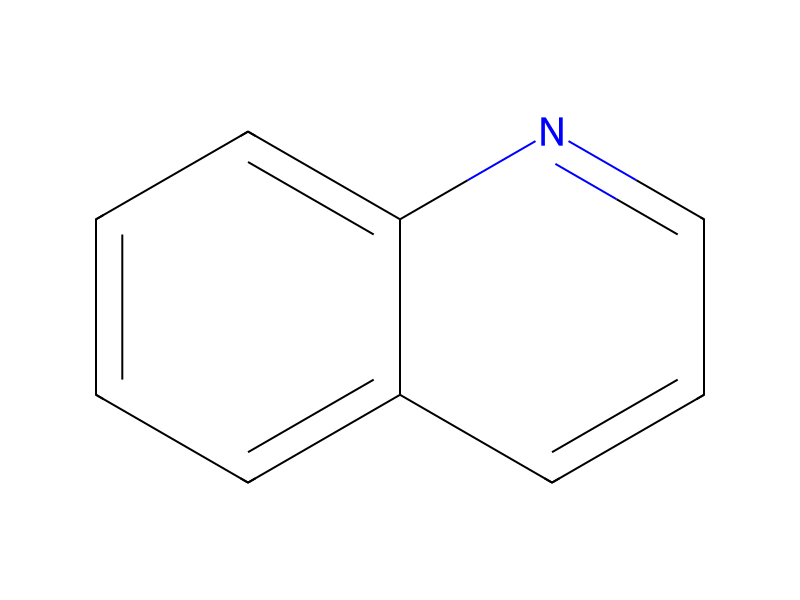
18.4 g of 4-hydroxy-6-(3-nitrophenyl)furo[2,3-d]pyrimidine-5-carboxylic acid are placed in ca. 200 ml of quinoline, and heated for 20 min to 200-220° C. under a constant stream of N2. Then, 0.7 g of Cu2O are added. After 2 hours, an additional 0.4 g of Cu2O is added. 1 hour later, another spatula tip of Cu2O is added and the temperature lowered. The next day, the reaction mixture is mixed with 0.5 litres of 2.5 M HCl, diluted with H2O, stirred, left to stand for 8 h and filtered by suction. The residue is washed with conc. ammonia and with a lot of H2O. The basic filtrate is acidified with conc. HCl, filtered by suction and washed with a lot of H2O. The crude product from the two residues is used directly without further working up m.p.: >300° C. IR: 3091 w, 2853w, 1670ss, 1593w, 1527s, 1496w, 1475w, 1373w, 1348s, 1297w, 1202m, 938m, 900m, 783w, 740w, 703w, 622w.