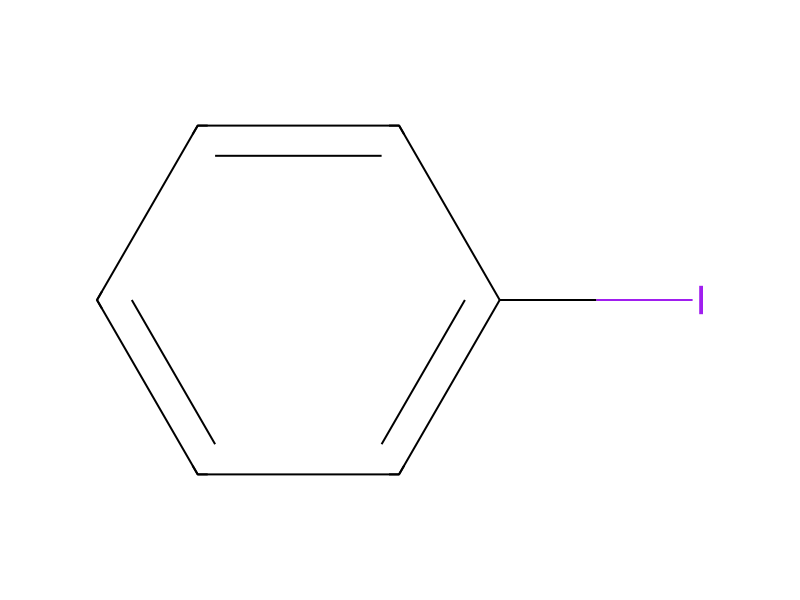
To a solution of 0.19 g (0.78 mmol) of 4,4-dimethyl-1,2,3,4-tetrahydro-7-bromoquinoline and 5.5 g (3.0 mL, 27 mmol) of 4-iodobenzene stirring under argon, were added 0.30 g (2.2 mmol) of potassium carbonate and 0.12 g (0.63 mmol) of copper(I) iodide. The resulting mixture was heated at 185° C. for 96 hours. The reaction was cooled to room temperature, water was added, and the mixture was extracted with methylene chloride (2x). The combined organic layers were washed with brine, dried (Na2SO4), filtered, and concentrated in vacuo to give an oil. The residue was purified by flash chromatography (hexanes) to give the product as a clear oil. PNMR (300 MHz, CDCl3) d 1.33 (6 H, s), 1.84 (2 H, t, J=6.1 Hz), 3.62 (2 H, t, J=6.1 Hz), 6.77 (1 H, d, J=2.0 Hz), 6.81 (1 H, dd, J=8.2, 2.0 Hz), 7.10 (1 H, d, J=8.2 Hz), 7.16-7.23 (3 H, m), 7.39 (2 H, 2 doublets overlapping).