Reaction equation

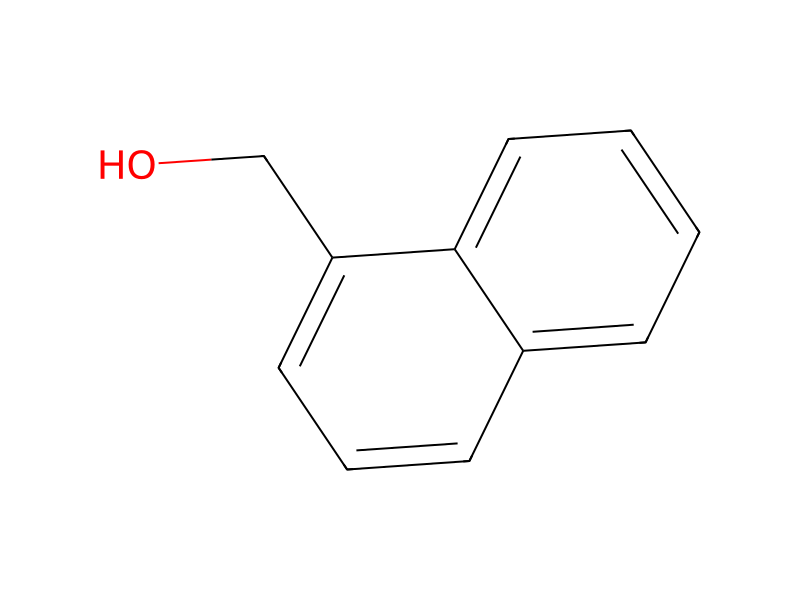
[C:1]1([CH2:11][OH:12])[C:10]2[C:5](=[CH:6][CH:7]=[CH:8][CH:9]=2)[CH:4]=[CH:3][CH:2]=1.[H-].[Na+].[NH2:15][C:16]1[CH:21]=[C:20]([Cl:22])[N:19]=[C:18](Cl)[N:17]=1>C1COCC1>[NH2:15][C:16]1[CH:21]=[C:20]([Cl:22])[N:19]=[C:18]([O:12][CH2:11][C:1]2[C:10]3[C:5](=[CH:6][CH:7]=[CH:8][CH:9]=3)[CH:4]=[CH:3][CH:2]=2)[N:17]=1Participants
5
Reactant 3


Product 1

Reagents, catalysts & solvents 1

Procedure
1-Naphthalenemethanol (227 mg, 1.44 mmol) is added to a slurry of 50% sodium hydride (69 mg, 1.44 mmol) in dry THF (4 ml) at 0° C. After stirring for 30 minutes, 4-amino-2,6-dichloropyrimidine (157 mg, 0.96 mmol) is added and stirred at 22° C. for 72 hours. The solution is quenched with saturated NH4Cl and concentrated in vacuo. The residue is dissolved in methylene chloride and washed 3× saturated NaHCO3, dried with MgSO4, filtered, and concentrated in vacuo. The sample is purified by chromatography using 1:2 ethyl acetate/hexanes and recrystallization from heptane/toluene, mp 160-161° C.
Workup
- stirringstirred at 22° C. for 72 hours
- customThe solution is quenched with saturated NH4Cl
- concentrationconcentrated in vacuo
- dissolutionThe residue is dissolved in methylene chloride
- washwashed 3× saturated NaHCO3
- dry with materialdried with MgSO4
- filtrationfiltered
- concentrationconcentrated in vacuo
- customThe sample is purified by chromatography
- custom1:2 ethyl acetate/hexanes and recrystallization from heptane/toluene, mp 160-161° C.
Sources & evidence
- ORD record
- ord-fb5c01d00e954664a2426336b92669f7
- Source dataset
- uspto-grants-1999_11
- Patent number
- US05981537
Linked notes
Loading…