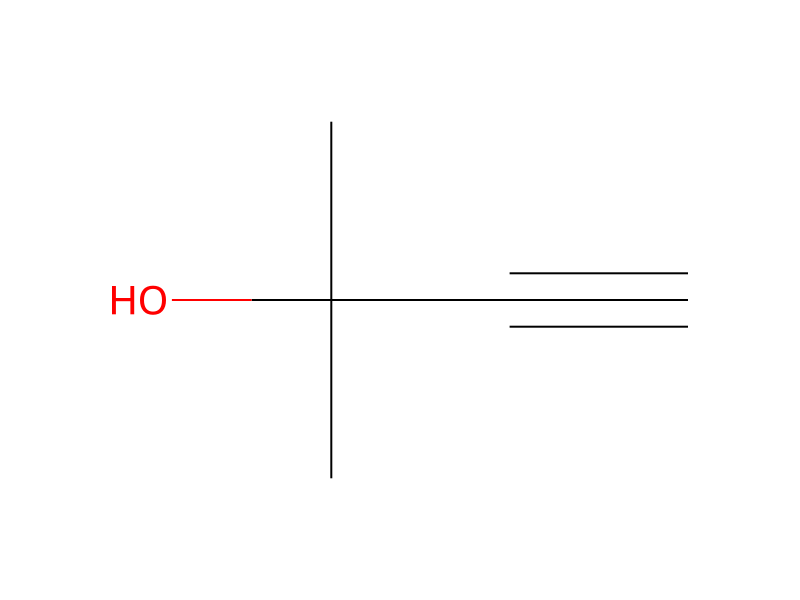
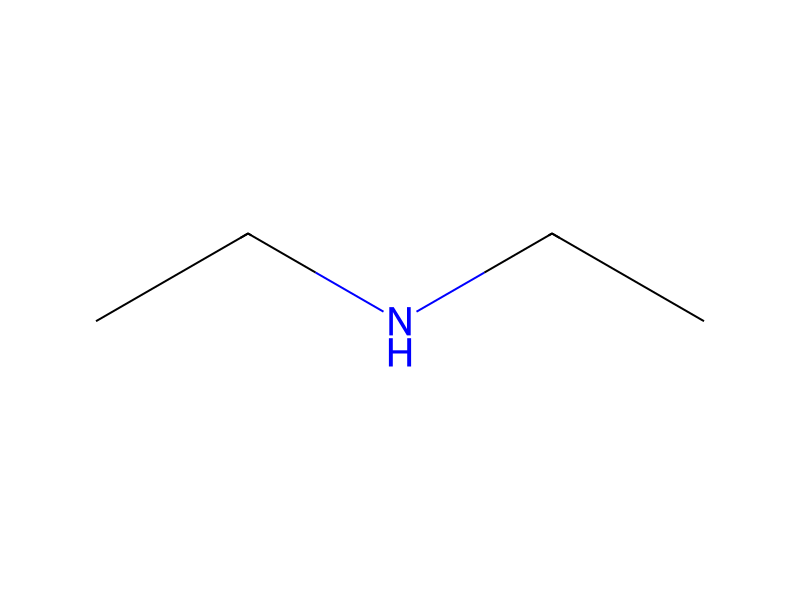
2-Methyl-3-butyn-2-ol → 7-bromo-4,5-dihydro-3-(3-hydroxy-3-methyl-1-butynyl)-5-methyl-6H-imidazo[1,5-a][1,4]benzodiazepin-6-one
HRID 1606977
Reaction equation

[Br:1][C:2]1[C:7]2[C:8](=[O:18])[N:9]([CH3:17])[CH2:10][C:11]3[N:12]([CH:13]=[N:14][C:15]=3I)[C:6]=2[CH:5]=[CH:4][CH:3]=1.[CH3:19][C:20]([OH:24])([C:22]#[CH:23])[CH3:21]>C(NCC)C.Cl[Pd](Cl)([P](C1C=CC=CC=1)(C1C=CC=CC=1)C1C=CC=CC=1)[P](C1C=CC=CC=1)(C1C=CC=CC=1)C1C=CC=CC=1.[Cu]I>[Br:1][C:2]1[C:7]2[C:8](=[O:18])[N:9]([CH3:17])[CH2:10][C:11]3[N:12]([CH:13]=[N:14][C:15]=3[C:23]#[C:22][C:20]([OH:24])([CH3:21])[CH3:19])[C:6]=2[CH:5]=[CH:4][CH:3]=1Participants
6