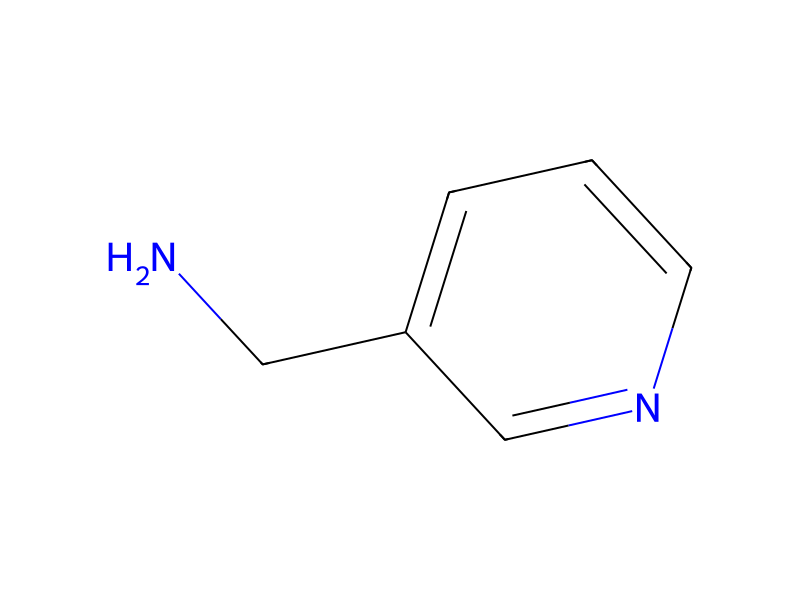
[F:1][C:2]1[CH:7]=[CH:6][C:5]([C:8]2[C:16]3[C:11](=[CH:12][CH:13]=[C:14]([C:17]([OH:19])=O)[CH:15]=3)[NH:10][N:9]=2)=[CH:4][CH:3]=1.[N:20]1[CH:25]=[CH:24][CH:23]=[C:22]([CH2:26][NH2:27])[CH:21]=1>CN(C)C=O.Cl.C(N=C=NCCCN(C)C)C>[N:20]1[CH:25]=[CH:24][CH:23]=[C:22]([CH2:26][NH:27][C:17]([C:14]2[CH:15]=[C:16]3[C:11](=[CH:12][CH:13]=2)[NH:10][N:9]=[C:8]3[C:5]2[CH:4]=[CH:3][C:2]([F:1])=[CH:7][CH:6]=2)=[O:19])[CH:21]=1To a solution of 150 mg of 3-(4-fluorophenyl)-1H-5-indazolecarboxylic acid produced in Production Example I-14 in 2.5 ml dimethylformamide were added a solution of 70 mg of 3-picolylamine in 0.5 ml dimethylformamide and 124 mg of 1-ethyl-3-(3-dimethylaminopropyl)carbodiimide hydrochloride (=WSC.HCl), and the mixture was stirred at room temperature for four days. After removing the solvent by distillation, the residue was dissolved in 25 ml of ethyl acetate. The mixture was sequentially washed with water and brine, dried over anhydrous magnesium sulfate and the solvent was removed. The resulting crude crystals were recrystallized from ethyl acetate-diisopropyl ether, to give 109 mg of the title compound as pale yellow crystals.