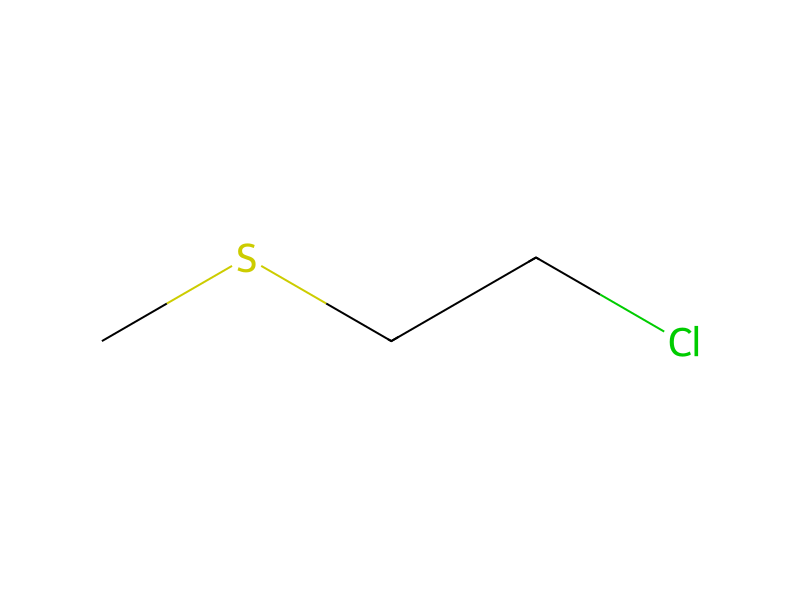
Sodium hydride (0.96 g, 50% suspension in mineral oil) was added to a stirred solution of t-butyl benzyl malonate (5 g) in dry dimethylformamide (50 ml), maintained at 0° C. under an atmosphere of nitrogen. After stirring for 15 minutes, 2-chloroethyl-methyl sulphide (2.21 g) in dimethylformamide (10 ml) was added dropwise, while the temperature of the reaction was maintained below 10° C. The reaction was allowed to warm to room temperature and stirred for 15 hours when water was cautiously added. The reaction mixture was extracted with ethyl acetate (2×100 ml), the ethyl acetate extracts were washed with water (4×), dried (Na2SO4) and evaporated to give 4-methylthio-2-t-butyloxycarbonyl-butanoic acid benzyl ester as an oil (6.4 g). This product was dissolved in trifluoroacetic acid (50 ml) with vigorous stirring at 0° C. under nitrogen. After stirring for 45 minutes, the trifluoroacetic acid was evaporated under reduced pressure at below 35° C. Final traces of trifuoroacetic acid were removed by azeotroping with carbon tetrachloride (3×20 ml), to leave an oily residue, which was dissolved in pyridine (20 ml). To this solution were added piperidine (0.44 ml) and paraformaldehyde (1.47 g), and the mixture heated at 60° C. under nitrogen for 2 hours. The reaction mixture was cautiously poured onto iced water, and the pH adjusted to 1 using concentrated suphuric acid. The mixture was extracted with ether (2×100 ml), and the ether extracts dried (Na2SO4) and evaporated under reduced pressure to yield the crude product (5.4 g) as an oil. This was chromatographed over silica gel, eluting with a mixture of hexane and ethyl acetate, to yield the title ester as a colourless oil (1.22 g). Found: C,64.69; H,6.55. C13H16O2S (0.25 H2O) requires C,64.85; H,6.91%.