HomeMCPWorkbenchSkills
HomeWorkbenchNotificationsMe
llms.txt · MCP GuidePrivacy Policy · Terms of Service · Supportv1.8.3
  1. Home
  2. /Reaction

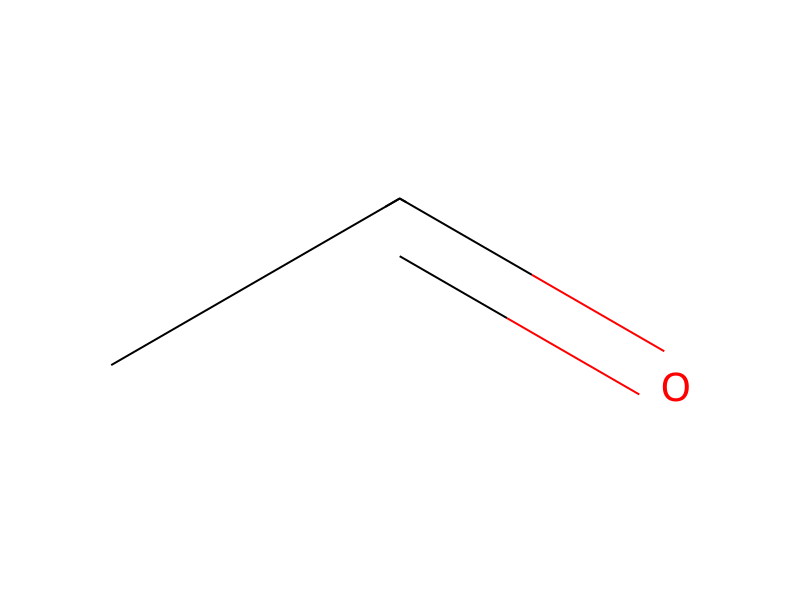
Acetaldehyde → HCID 59242669, compound

HRID 1630471
Print

Reaction equation

HRID 1630471 reaction equation
[C:1]1([C:7]2[CH:12]=[C:11]([N:13]3[CH2:18][CH2:17][NH:16][CH2:15][CH2:14]3)[N:10]=[N:9][C:8]=2[C:19]([F:22])([F:21])[F:20])[CH:6]=[CH:5][CH:4]=[CH:3][CH:2]=1.[CH:23](=O)[CH3:24].C(O[BH-](OC(=O)C)OC(=O)C)(=O)C.[Na+].ClCCl>O1CCCC1>[CH2:23]([N:16]1[CH2:15][CH2:14][N:13]([C:11]2[N:10]=[N:9][C:8]([C:19]([F:22])([F:21])[F:20])=[C:7]([C:1]3[CH:2]=[CH:3][CH:4]=[CH:5][CH:6]=3)[CH:12]=2)[CH2:18][CH2:17]1)[CH3:24]
ParticipantsProcedureWorkupSources & evidenceReaction notes

Participants

6

Reactant 4

HCID 177Acetaldehyde2×HCID 6344DichloromethaneHCID 5049666Sodium triacetoxyborohydride2×HCID 248800314-Phenyl-6-piperazin-1-yl-3-trifluoromethyl-pyridazine

Product 1

HCID 59242669HCID 59242669, compoundYield 23.7%

Reagents, catalysts & solvents 1

HCID 8028TetrahydrofuranSolvent

Procedure

To a mixture of 4-phenyl-6-piperazin-1-yl-3-trifluoromethyl-pyridazine (E1) (0.15 g, 0.49 mmol) in tetrahydrofuran (5 ml), was added acetaldehyde (55 ml, 0.97 mmol). The reaction mixture was stirred at room temperature for 30 min., and then sodium triacetoxyborohydride (0.154 g, 0.73 mmol) was added. The reaction mixture was stirred at room temperature for 16 h. Then, more acetaldehyde (55 ml, 0.97 mmol) and sodium triacetoxyborohydride (0.154 g, 0.73 mmol) were added and the mixture was stirred at room temperature for 4 h. Dichloromethane was then added and the mixture was extracted with a saturated solution of ammonium chloride. The organic phase was separated, dried (Na2SO4), filtered and the solvent evaporated in vacuo. The residue was purified by column chromatography (silica gel; ethyl acetate/10% ammonia in methanol (7M) in dichloromethane 10:0 to 8:2). The desired fractions were collected, the solvent evaporated in vacuo, the residue dissolved in acetonitrile and converted into its hydrochloric acid salt by addition of a saturated solution of hydrochloric acid in diethyl ether. The white solid obtained was filtered and dried affording E2 (0.039 g, 21%). C17H19F3N4.HCl; free base requires 336; Found 337 (MH+).

Workup

  1. stirringThe reaction mixture was stirred at room temperature for 16 h
  2. stirringthe mixture was stirred at room temperature for 4 h
  3. extractionthe mixture was extracted with a saturated solution of ammonium chloride
  4. customThe organic phase was separated
  5. dry with materialdried (Na2SO4)
  6. filtrationfiltered
  7. customthe solvent evaporated in vacuo
  8. customThe residue was purified by column chromatography (silica gel; ethyl acetate/10% ammonia in methanol (7M) in dichloromethane 10:0 to 8:2)
  9. customThe desired fractions were collected
  10. customthe solvent evaporated in vacuo
  11. dissolutionthe residue dissolved in acetonitrile
  12. additionconverted into its hydrochloric acid salt by addition of a saturated solution of hydrochloric acid in diethyl ether
  13. customThe white solid obtained
  14. filtrationwas filtered
  15. customdried

Sources & evidence

ORD record
ord-26de1646bad14e50923927d4b5af50a3
Source dataset
uspto-grants-2014_07
DOI
10.6084/m9.figshare.5104873.v1
Patent number
US08791120B2

Reaction notes

On this pageParticipantsProcedureWorkupSources & evidenceReaction notes


