HomeMCPWorkbenchSkills
HomeWorkbenchNotificationsMe
llms.txt · MCP GuidePrivacy Policy · Terms of Service · Supportv1.8.0
  1. Home
  2. /Reaction

Water → 1-Methyl-2-[(2-sulfanylethyl)sulfanyl]pyridin-1-ium iodide

HRID 1638821
Notes
Print preview

Reaction equation

HRID 1638821 reaction equation
[CH2:1]([SH:4])[CH2:2][SH:3].O.[I-:6].F[C:8]1[CH:13]=[CH:12][CH:11]=[CH:10][N+:9]=1[CH3:14].[OH-].[Na+]>O1CCCC1>[I-:6].[SH:3][CH2:2][CH2:1][S:4][C:8]1[CH:13]=[CH:12][CH:11]=[CH:10][N+:9]=1[CH3:14]
ParticipantsConditionsProcedureWorkupSources & evidenceReaction notes

Participants

6

Reactant 4

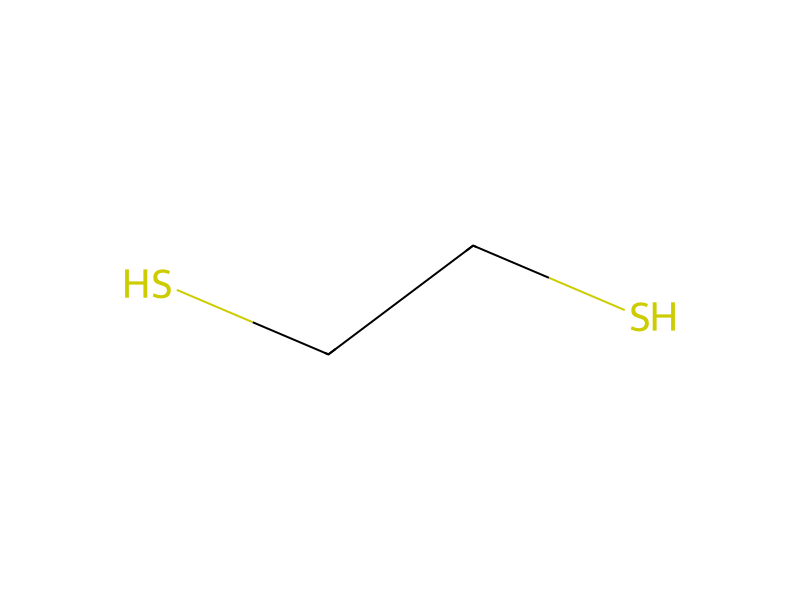
HCID 962WaterHCID 109021,2-EthanedithiolHCID 14798Sodium Hydroxide2×HCID 98561532-Fluoro-1-methylpyridinium iodide2×

Product 1

HCID 150092331-Methyl-2-[(2-sulfanylethyl)sulfanyl]pyridin-1-ium iodide

Reagents, catalysts & solvents 1

HCID 8028
Tetrahydrofuran
Solvent

Conditions

Temperature
23 °C

Procedure

To a mixture of 1,2-ethanedithiol (0.63 mL, 7.5 mmol), water (21 mL) and tetrahydrofuran (4 mL) were added simultaneously 2-fluoro-1-methylpyridinium iodide, described by G. B. Barlin and J. A. Benbow, J.C.S. Perkin II, 790 (1974), (0.90 g, 3.72 mmol) and 1N sodium hydroxide solution (5-6 mL) to keep the pH of the mixture between 6 and 7. When the addition of 2-fluoro-1-methylpyridinium iodide was completed, the reaction mixture was stirred at 23° C. while the pH was kept at 7.1 by the addition of the 1N sodium hydroxide solution. When the pH of the mixture was stabilized at 7.1, the solvents were evaporated under high vacuum until dryness. The solid was triturated in ether (3×10 mL) and in acetonitrile (2×8 mL). The ether solution was dried (MgSO4) and concentrated to give 0.10 g of N-methyl-2(1H)-pyridothione. The acetonitrile solution was dried (MgSO4) and concentrated to give 0.74 g of 2-(2-mercaptoethylthio)-1-methylpyridinium iodide and/or fluoride mixed with some inorganic salts; ir (KBr) νmax : 1617 (pyridinium) cm-1, 1Hmr (DMSO-d6) δ: 2.75-3.1 (m, 2H, CH2SH), 3.4-3.9 (m, CH2S and SH), 4.17 (s, 3H, CH3 on pyridinium), 7.6-9.2 (m, 4H, H's of pyridinium). The acetonitrile insoluble material (0.38 g) was 1,2-di(1-methylpyridinium-2-thio)ethane diiodide or/and difluoride or monoiodidemonofluoride mixed with some inorganic salts; 1Hmr (DMSO-d6) δ: 3.90 (4H, s, SCH2CH2S), 4.21 (6H, s, CH3 's on pyridinium), 7.7-9.1 (8H, m, H's of pyridiniums). The thiol was used without any further purification.


Workup

  1. customthe solvents were evaporated under high vacuum until dryness
  2. customThe solid was triturated in ether (3×10 mL) and in acetonitrile (2×8 mL)
  3. dry with materialThe ether solution was dried (MgSO4)
  4. concentrationconcentrated
  5. customto give 0.10 g of N-methyl-2(1H)-pyridothione
  6. dry with materialThe acetonitrile solution was dried (MgSO4)
  7. concentrationconcentrated

Sources & evidence

ORD record
ord-6f21442b8e1e4b95814a01a25e22a86b
Source dataset
uspto-grants-1989_11
DOI
10.6084/m9.figshare.5104873.v1
Patent number
US04880922

Reaction notes

Loading…

On this pageParticipantsConditionsProcedureWorkupSources & evidenceReaction notes