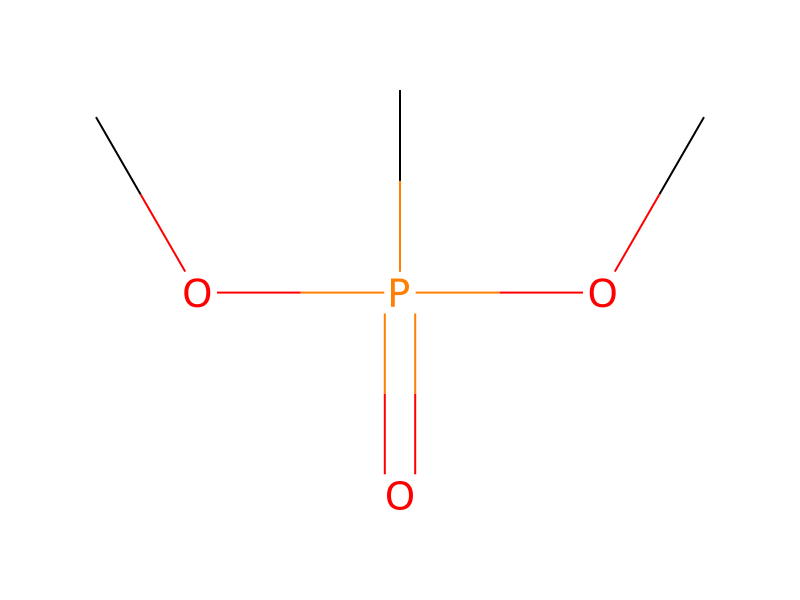
Under argon atmosphere, a solution of n-butyllithium in hexane (1.71N, 29.8 ml, 0.051 mol) was dropwise added to a solution of dimethyl methylphosphonate (6.32 g, 0.051 mol) in anhydrous THF (120 ml) with stirring at -78° C., and the mixture was stirred for 30 minutes. At -78° C., a solution of ethyl 2-methyl-4-nonynoate (4.0 g, 0.02 mol) in anhydrous THF (10 ml) was dropwise added, and the mixture was stirred for 30 minutes. Acetic acid (3.1 ml) and water (20 ml) were then added to the reaction mixture at 0° C. After concentration, water (20 ml) was added to the residue and the resulting mixture was extracted with ethyl acetate (50 ml×2). The ethyl acetate layers were combined, washed with water (20 ml) and with brine (20 ml), and dried over anhydrous sodium sulfate to concentrate. Vacuum distillation of the residue (b.p.=128°-130° C. at 0.16 mmHg) gave dimethyl 3-methyl-2-oxo-5-decynylphosphonate as a colorless, transparent oil (4.75 g, 0.0173 mol, 85% yield). The structure of this product was confirmed by the following data.