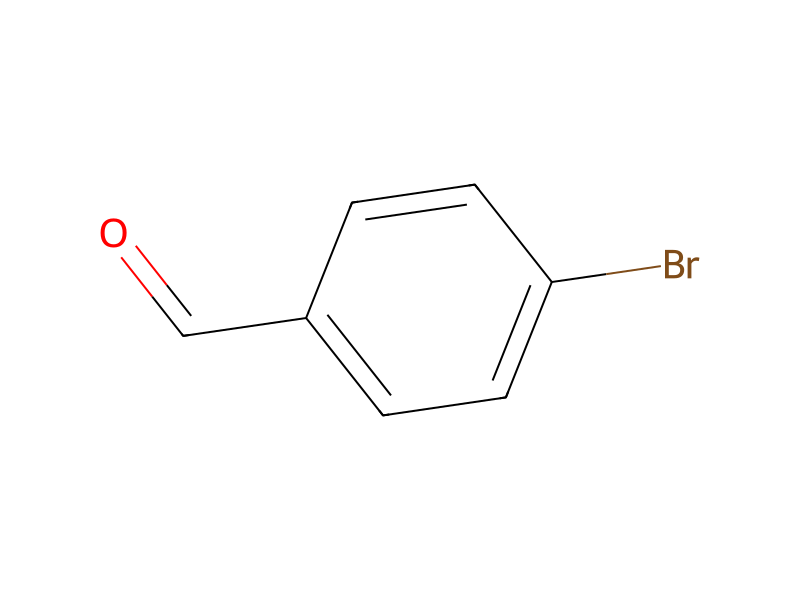
[Br:1][C:2]1[CH:9]=[CH:8][C:5]([CH:6]=O)=[CH:4][CH:3]=1.[N+:10]([C:13]1[CH:18]=[CH:17][C:16]([CH3:19])=[CH:15][C:14]=1[CH2:20][C:21]([OH:23])=[O:22])([O-:12])=[O:11].C(N(CC)CC)C>C(OC(=O)C)(=O)C>[N+:10]([C:13]1[CH:18]=[CH:17][C:16]([CH3:19])=[CH:15][C:14]=1[C:20](=[CH:6][C:5]1[CH:8]=[CH:9][C:2]([Br:1])=[CH:3][CH:4]=1)[C:21]([OH:23])=[O:22])([O-:12])=[O:11]To a mixture of 4-bromobenzaldehyde (19.5 g, 106 mmol) and 2-nitro-5-methyl-phenylacetic acid (20.6 g, 106 mmol; J. G. Atkinson et. al., Tetrahedron Lett., 2857, 1979) in 100 ml of acetic anhydride was added triethylamine (14.7 ml, 106 mmol) and the resulting reddish solution was heated at 40° C. for 70 hours. Most of the acetic anhydride was evaporated under vacuum and the residue was diluted with ethyl acetate and washed with sat. NH4Cl, H2O, and brine. Drying (MgSO4) and evaporation yielded 37.87 g (99%) of product as a yellow solid which was used in the next reaction without purification.