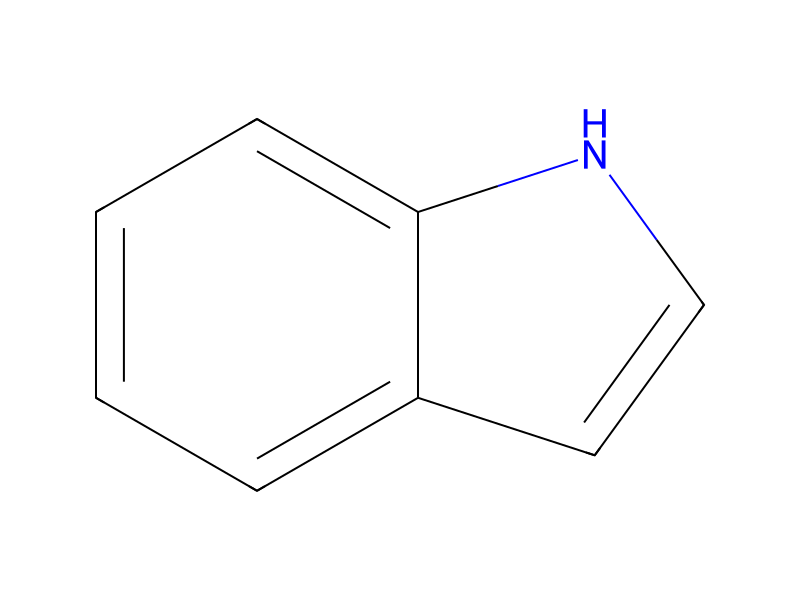
The methylation carried out in this step follows the procedure for indole alkylation reported by Marino et al. in “The Enantioselective Synthesis of (−) Physostigmine Via Chiral Sulfoxides”, J. Am. Chem. Soc. (1992), 114, 5566-5572. 5-Benzyloxy-6-isopropyl-1H-indole (0.855 g, 3.22 mmol) was dissolved in 20 mL of dry THF, and the resulting solution was cooled in an ice bath. Ethyl magnesium bromide (4.9 ml, 4.9 mmol in ether) was added dropwise to the solution, and the solution was then stirred for 4 hours at room temperature. Methyl iodide (1.42 g, 10 mmol) was then added, and stirring was continued for an additional 18 hours at room temperature. The reaction mixture was poured into ice water and extracted with ethyl acetate. The combined organic layers were washed with saturated ammonium chloride, dried (MgSO4), and concentrated in vacuo. The resulting residue was purified with flash chromatography (ethyl acetate/hexanes= 1/9) to yield 325 mg of 5-benzyloxy-6-isopropyl-3-methyl-1H-indole Mass Spec (M+H): 280.