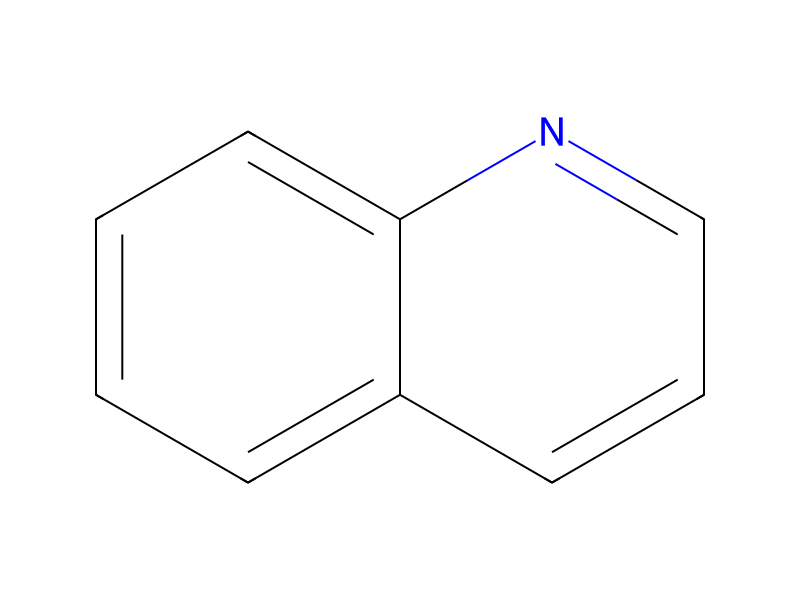
[CH3:1][O:2][C:3]1[CH:4]=[C:5]2[C:9](=[CH:10][C:11]=1[C:12]([F:15])([F:14])[F:13])[NH:8][C:7](C(O)=O)=[C:6]2[CH3:19].Cl>N1C2C(=CC=CC=2)C=CC=1.CCOC(C)=O.[Cu]>[CH3:1][O:2][C:3]1[CH:4]=[C:5]2[C:9](=[CH:10][C:11]=1[C:12]([F:15])([F:13])[F:14])[NH:8][CH:7]=[C:6]2[CH3:19]To a solution of 5-Methoxy-3-methyl-6-trifluoromethyl-1H-indole-2-carboxylic acid (2.0 g, 7 mmol) in 5 ml quinoline was added copper powder (50 mg), and the reaction mixture was heated to reflux for 1.5 hours. Copper powder (50 mg) was added, and the reaction mixture was refluxed for 1 hour. The reaction mixture was cooled, diluted with EtOAc, poured into 50 ml 6 N HCl, and extracted with EtOAc. The combined organic layers were washed with brine, dried over magnesium sulfate, filtered, and concentrated under reduced pressure. The residue was chromatographed (10% EtOAc/Hexanes) to give 5-Methoxy-3-methyl-6-trifluoromethyl-1H-indole (850 mg, 51%) as a solid.